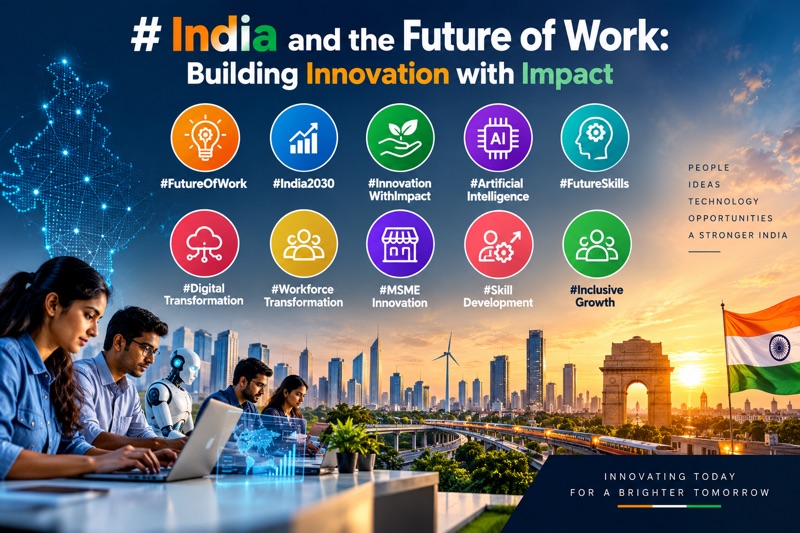
 The future of work will not be defined by technology alone. While automation, digital transformation and artificial intelligence are reshaping industries at unprecedented speed, the true measure of progress will lie in how effectively organizations harness human potential. Technology may transform the way work is done, but people will determine whether that transformation creates lasting value.
This question is especially significant for India. The country is home to the world’s largest working-age population and is fast emerging as a global hub for innovation, manufacturing, digital services and global capability centres. Indian companies are expanding beyond domestic markets, while multinational corporations continue to deepen their investments in India. In many ways, India’s workforce is becoming central to the workforce of the world.
From Demographic Advantage to Capability Advantage
India’s demographic strength is a powerful asset, but talent alone is no longer enough. The real opportunity lies in translating this demographic advantage into a capability advantage. The future will belong to organizations that can continuously build, redeploy and elevate talent at scale. As skills change faster than ever before, competitiveness will depend on the ability to learn, adapt and respond with agility.
For HR leaders, this represents a fundamental shift in mandate. Their role is no longer confined to hiring talent or managing processes. They are now at the centre of enterprise transformation, responsible for ensuring that organizations remain resilient, competitive and future-ready in an environment where roles, skills and expectations are constantly evolving.
The New Reality of Work
The changes underway are not limited to one industry or one category of worker. A young engineer in a manufacturing facility in Pune, a software architect in a global capability centre in Bengaluru, a sales manager in a consumer goods company and a data scientist in a multinational enterprise may work in very different environments, but they face a common disruption: artificial intelligence is changing the nature of their work.
This disruption is not purely technological. New skills are becoming essential, while expectations around growth, flexibility, wellbeing, purpose and belonging are evolving across generations. The workforce of tomorrow will be shaped by the intersection of these forces: technological acceleration, changing employee aspirations and the need for organizations to remain agile.
Moving from Jobs to Skills
To prepare for this future, organizations must move from a jobs-based mindset to a skills-based mindset. The most valuable asset of the future will not be technology itself, but the organizational ability to change, adapt and learn. The winners will not necessarily be those with the largest workforce, but those with the most agile workforce.
AI as an Accelerator, Not a People Strategy
Artificial intelligence will undoubtedly transform work, but it should be understood as a productivity accelerator rather than a substitute for people strategy. AI will become deeply embedded in how work gets done, much like other enterprise technologies have become part of daily operations. However, it should not be treated as a replacement for human judgement, leadership or collaboration.
Organizations will continue to grow through leadership, innovation, collaboration, customer relationships and trust. These are fundamentally human capabilities. The future is therefore not about humans versus machines, but about creating workplaces where technology amplifies human potential.
Building Productive and Meaningful Workplaces
As employee expectations evolve, organizations must build workplaces that are not only productive but also meaningful. Across Indian enterprises and multinational companies alike, employees are seeking growth, belonging and alignment between personal values and organizational values. In a world where talent has more choice, culture becomes a powerful differentiator.
Innovation with Impact
Innovation should not be measured only by the sophistication of tools or the extent to which they are cutting-edge. It should be measured by the impact they create. True innovation makes employees more capable, organizations more resilient and quality of life better. When technology improves human potential and organizational effectiveness, it serves its real purpose.
India’s Opportunity to Lead
For many years, India was regarded primarily as a source of talent. Today, it has the opportunity to become the world’s leading laboratory for the future of work: a place where scale enables innovation, technology meets humanity and economic growth is measured alongside human progress.
For HR leaders, this is both an opportunity and a responsibility. They have a critical role in shaping workplaces where innovation translates into impact, organizations succeed, people thrive and the nation prospers.
#FutureOfWork #India2030 #InnovationWithImpact #ArtificialIntelligence #FutureSkills #DigitalTransformation #WorkforceTransformation #MSMEInnovation #SkillDevelopment #InclusiveGrowth




No comments:
Post a Comment