Showing posts with label transparency. Show all posts

Sunday, January 7, 2024

RERA : A Mixed Bag of Opportunities and Challenges

The Real Estate (Regulation and Development) Act (RERA) has undoubtedly transformed India's real estate landscape since its implementation in 2016. While its impact has been largely positive, 2024 is likely to present a complex mixture of opportunities and challenges for the Act.


Overall, 2024 is likely to be a pivotal year for RERA, shaping its effectiveness and long-term impact on the Indian real estate sector. Addressing the challenges while capitalizing on the opportunities will be crucial to ensure a stable, transparent, and consumer-centric real estate market.

RERA has played a significant role in transforming the Indian real estate sector since its implementation in 2016. The Act has brought transparency, accountability, and consumer protection to the sector, boosting buyer confidence and facilitating a more sustainable and responsible approach to construction. However, as we look ahead to 2024, it's essential to examine both the opportunities and challenges that lie ahead for RERA.

One of the significant opportunities for RERA in 2024 is the potential for increased buyer confidence. The Act's emphasis on transparency and accountability can give homebuyers greater assurance when investing in real estate. With stricter timelines and accountability measures, developers are more likely to prioritize efficient project execution and timely completion, reducing the instances of stalled projects and buyer dispossession. This can significantly improve buyer satisfaction and trust in the market, potentially leading to higher demand and increased sales.

Additionally, RERA's focus on quality and sustainability is another opportunity for the real estate sector in 2024. The Act encourages developers to adopt sustainable and eco-friendly building methods, catering to the growing demand for green homes. By prioritizing quality standards and responsible construction practices, RERA can contribute to a more environmentally conscious and sustainable real estate sector.

Moreover, the regulatory framework of RERA can drive tech-driven innovation in the real estate sector. The Act can catalyze the adoption of PropTech solutions, which enable smoother information flow, efficient market analysis, and an enhanced buyer experience. These technological advancements have the potential to streamline processes, improve efficiency, and provide greater convenience for both buyers and developers.

However, amidst these opportunities, RERA also faces several challenges in 2024 that need to be addressed. One of the key challenges is the varying levels of implementation across states and potential regulatory loopholes. Inconsistent implementation can undermine the effectiveness of the Act and create disparities in the real estate sector. To overcome these challenges, robust enforcement mechanisms and regular amendments to the Act are crucial.

Additionally, liquidity pressures and affordability concerns pose challenges for RERA in 2024. Rising interest rates and ongoing economic uncertainties can impact developer cash flow and project viability. This can potentially lead to price hikes, impacting affordability for buyers, especially in the affordable housing segment. Balancing the need for profitability and affordability is vital to ensure a sustainable and inclusive real estate market.

Furthermore, the burden of strict compliance requirements under RERA can be challenging for smaller developers. The Act's provisions may squeeze out smaller builders from the market, reducing diversity and restricting competition. To address this challenge, streamlined processes and tailor-made regulations for smaller players need to be implemented. This will encourage their participation in the real estate sector, promoting a healthy and competitive market.

Delayed dispute resolution is another challenge that RERA needs to address in 2024. Backlogs in grievance redressal mechanisms can lead to protracted delays in buyer relief, eroding trust in the system. To strengthen the adjudication mechanisms, there should be a focus on streamlining processes and ensuring timely resolution of complaints. This will play a crucial role in maintaining confidence and trust in the real estate sector.

In conclusion, the outlook for RERA in 2024 presents a mixed bag of opportunities and challenges. While the Act has undoubtedly transformed India's real estate landscape, there is still work to be done to ensure its long-term effectiveness and impact. By addressing the challenges and capitalizing on the opportunities, RERA can continue to play a vital role in regulating and developing a fair and sustainable real estate ecosystem in India.

Additional considerations that may influence RERA's outlook in 2024 include upcoming state elections, which might impact policy priorities and the implementation of the Act in certain regions. The potential for amendments to the Act based on stakeholder feedback and emerging market realities should also be taken into account. Moreover, continued technological advancements in the real estate sector can further drive RERA's effectiveness and efficiency. By closely monitoring these developments and proactively addressing the challenges, RERA can continue to evolve and adapt to the changing needs of the Indian real estate sector.

References:

1. "THE REAL ESTATE (REGULATION AND DEVELOPMENT) ACT, 2016 ... - India Code." India Code. https://www.indiacode.nic.in/bitstream/123456789/2158/1/a2016-16.pdf.

2. "India Code: Real Estate (Regulation and Development) Act, 2016." India Code. https://www.indiacode.nic.in/handle/123456789/2158?locale=en.

3. "RERA Act 2016 - ClearIAS." ClearIAS. https://www.clearias.com/rera-act-2016/.

4. "Real Estate (Regulation and Development) Act in India - Godrej Properties." Godrej Properties. https://www.godrejproperties.com/blog/rera-understanding-the-real-estate-regulation-and-development-act-in-india/.

5. "Real Estate (Regulation and Development) Act, 2016 - iPleaders." iPleaders. https://blog.ipleaders.in/real-estate-regulation-and-development-act-2016-2/.

Wednesday, December 20, 2023

Regulation and its Role in Society


In today's fast-paced and interconnected world, regulation plays a pivotal role in shaping and governing various sectors. In the following text, we delve into the importance of regulation, particularly in the context of the Indian pharmaceutical and financial sectors, exploring the thoughts and perspectives of an experienced professional with extensive knowledge in both regulatory bodies and the private sector. With a focus on achieving fairness, efficiency, and economic growth, regulation becomes an essential tool for maintaining order and harmony in society.

Defining the essence of regulation, the  emphasize should  be on its role in setting the rules of the game and establishing a framework for public discourse. It serves as a means of creating a level playing field and fostering transparency, ensuring that all stakeholders clearly understand their roles and responsibilities. By setting boundaries, regulation simultaneously provides a sense of predictability and security, while also addressing the consequences of any breaches. In doing so, it strives to achieve fairness for all involved parties.

One of the key functions of regulation is to enhance efficiency, particularly in sectors such as the financial markets. While pure market forces can determine prices, there is   need for regulation in cases where certain tendencies may impede competition and hinder efficient price discovery. By introducing regulations, governments and regulatory bodies can inject competition and prevent market failures. Consequently, regulation helps promote efficiency, ensuring that resources are allocated optimally.

Beyond its efficiency-driven role, regulation also contributes to maintaining order and managing externalities. The importance of addressing negative externalities, such as pollution from factories, which have adverse effects on neighboring communities and the environment. Regulation provides a framework to mitigate these externalities and protect the greater public good. On the other hand, it also encourages positive externalities, such as promoting investments in infrastructure that benefit the broader society.

To be effective, regulation should be adaptive and dynamic, evolving alongside societal and technological advancements. While maintaining its relevance in a changing world, regulations should also adopt global best practices to ensure harmonization and foster international cooperation. The emphasizes should be on the need for a consultative approach in developing regulations to capture diverse perspectives and expertise. By engaging all stakeholders, including the public and industry experts, regulations can better align with societal needs and aspirations.

In the financial sector, the importance of ongoing comprehensive reviews of regulations to address emerging challenges and reduce compliance burdens. Considering the pace of change in the industry, regular assessments ensure that regulations remain effective and relevant. Through consultation with the public and experts, regulators can fine-tune regulations, eliminating redundant requirements and streamlining reporting procedures. The ultimate goal is to strike a balance between ensuring regulatory compliance and facilitating the smooth operation of financial institutions.

Turning our attention to the Indian pharmaceutical sector, we acknowledge its global leadership in supplying vaccines and medicines. Regulation plays a crucial role in ensuring the quality, safety, and accessibility of healthcare products. As the sector continues to evolve and innovate, there is a need for regulations to keep up with technological advancements and global standards. By harmonizing regulations with international requirements, India can further establish itself as a global leader in the pharmaceutical industry.

Overall regulation forms the backbone of any functioning society, providing structure, fairness, and efficiency across various sectors. Our expert underscores the need for regulations to be dynamic, reflective of societal evolution, and consultative in nature. By engaging stakeholders, authorities can develop regulations that strike a balance between compliance requirements and facilitating growth in the pharmaceutical and financial sectors. Through comprehensive reviews, unnecessary burdens can be identified and eliminated, allowing stakeholders to focus on their core functions while driving economic progress. As India continues its journey as a global leader, robust and adaptive regulations will undoubtedly play a crucial role in ensuring sustained growth and social welfare.

Monday, December 11, 2023

Transparency and Stakeholder Engagement: Key Pillars for Effective Economic Regulation

Introduction

In today's dynamic and fast-paced world, economic regulators play a crucial role in guiding sectors' growth while ensuring the interests of all stakeholders are secured. This article explores the importance of transparency and stakeholder engagement in regulatory processes and emphasizes the need for regulators to adapt to evolving challenges and opportunities. By examining the perspectives of industry leaders, regulators, and the impact of regulatory measures in India, we can gain insights into the significance of effective regulation in fostering sustainable growth and innovation.

Importance of Economic Regulators: Balancing Growth and Innovation

Economic regulators serve as the arbiters of growth by creating a framework that encourages investment, facilitates capital formation, ensures resource sustainability, and protects consumer interests. The primary objective of regulators is to create a conducive environment for businesses to thrive while preventing market abuses and violations of rules. This necessitates a delicate balance between stimulating growth and innovation and maintaining order and consumer protection.

Transparency and Trust as Pillars of Effective Regulation

For regulators to fulfill their role effectively, they must maintain transparency and ensure the trust of all stakeholders. Transparency provides stakeholders with relevant, comprehensive, and correct information in a timely manner, minimizing information asymmetry and enabling informed decision-making. By fostering trust, regulators can create an atmosphere of confidence where businesses can operate efficiently and consumers feel protected.

Addressing Regulatory Overlaps and Consolidation

Inefficiencies and overlaps in regulations can hinder economic growth and innovation. By consolidating similar regulations under a single agency, regulators can streamline compliance requirements and reduce duplication. This alignment of compliances and agencies can ensure regulatory clarity and facilitate ease of doing business, benefiting both businesses and consumers.

Periodic Review and Evaluation of Regulations

Regulations need to be periodically reviewed to assess their effectiveness in achieving their intended goals. This evaluation involves examining whether regulations are fit for purpose, aligned with current needs, and contribute positively to economic growth. Government-led reviews, conducted systematically, can contribute to the elimination of outdated and irrelevant regulations, reducing administrative burdens and fostering innovation.

India's Proactive Approach to Regulatory Reforms

India has demonstrated a proactive approach to regulatory reforms, driven by the objective of promoting ease of doing business and enhancing economic growth. Over the years, the government has repealed many archaic laws and eliminated thousands of compliances, creating a conducive environment for innovation and investment. The focus on reducing regulatory burdens and facilitating a sustainable path for businesses reflects the government's commitment to creating a competitive business landscape.

Public Consultation and Participatory Regulation Making

Public consultation is a crucial aspect of regulation-making processes. By involving stakeholders through a transparent and robust consultative process, regulators can gather diverse perspectives and ensure regulations reflect the interests of all stakeholders. India's experience in the introduction of the Jan Vishwas Amendment Bill of provisions in 2023 exemplifies a successful consultative process, where industry associations like FICCI provided detailed inputs, contributing to key policy changes.

Regulatory Impact Assessment and Benchmarking

To ensure international competitiveness, regulators need to perform regulatory impact assessments (RIA) regularly. RIAs are evidence-based evaluations that assess the impact of regulatory decisions on sectors in the mid to long term. By benchmarking legislation against those prevalent in competing countries, regulators can identify areas for improvement, reduce compliance burdens, and enhance efficiency.

Conclusion

Economic regulators play a vital role in nurturing sustainable growth, innovation, and protecting stakeholders' interests. Transparency, trust, and stakeholder engagement are essential pillars of effective regulation. Aligning compliances, reducing overlaps, periodic review of regulations, and proactive reforms are key steps in maintaining a conducive business environment. India's progress in regulatory reforms exemplifies the government's commitment to facilitating ease of doing business. By embracing public consultation processes, conducting regulatory impact assessments, and benchmarking against international practices, regulators can ensure regulations are responsive to changing needs and foster sustained economic growth.

Saturday, December 9, 2023

The Role of Technology in Sustainable Sourcing

In today's world, technology plays a crucial role in various aspects of our lives, including sustainable sourcing. The discussion on sourcing technology and sustainability has become increasingly important in recent years, as businesses and organizations aim to reduce their environmental impact and promote responsible practices. In this article, we will explore the role of technology in sustainable sourcing and its implications for the future.

Transparency is one of the key aspects of sustainable sourcing. Consumers, businesses, and organizations want to ensure that the products they purchase or source are ethically and sustainably produced. However, without technology, it can be challenging to verify the authenticity and sustainability of products and their supply chains. Thankfully, various tools and technologies have emerged to address this issue.

For instance, blockchain technology can be used to track and trace products throughout their entire supply chain. This allows consumers to know exactly where their products are coming from, ensuring that they are sourced from sustainable and ethical practices. Blockchain technology provides a unified and transparent platform where data points can be captured and verified, giving consumers confidence in the authenticity and quality of the products they purchase.

Furthermore, technology enables the connection of stakeholders within the supply chain. In many cases, the production centers and consumption centers are geographically distant, making it difficult for buyers to know where the right quality of a product is produced. By digitalizing the supply chain and bringing stakeholders onto a digital platform, suppliers and buyers can connect more easily. This connectivity allows for better communication, collaboration, and transparency, leading to more responsible sourcing practices.

Platforms like SourceUp have emerged to connect producers directly with consumers, eliminating the need for intermediaries and reducing the environmental impact of the supply chain. These digital platforms provide a controlled and confined environment where environmental, social, and governmental compliance can be ensured.

Compliance is another crucial aspect of sustainable sourcing. Businesses and organizations need to adhere to various standards and regulations to ensure their operations are environmentally friendly and socially responsible. Technology plays a significant role in helping companies collect and report data points required for compliance.

Strong data points are essential to capture and report compliance-related information, such as carbon sequestration, regional agricultural practices, and labor conditions. Technology enables the collection of these data points in a robust and verifiable manner. They can be stored in transparent platforms where policymakers and stakeholders can access them, make informed decisions, and evaluate the sustainability of a supply chain.

For small and medium enterprises (SMEs), sustainable sourcing can be particularly challenging. Suppliers, especially SMEs, may face difficulties in adopting and implementing sustainable practices due to limited resources and knowledge. Technology can help overcome these challenges by providing relevant information and resources to suppliers.

By leveraging technology, suppliers can get access to best practice guidelines, certification programs, and training materials. This empowers them to improve their sustainability credentials and track their progress towards responsible sourcing. Technology-driven rating systems and certifications can also provide buyers with essential information about the sustainability and ethical standards of their suppliers, enabling them to make informed decisions about their sourcing practices.

In conclusion, technology plays a critical role in sustainable sourcing by enhancing transparency, connecting stakeholders, ensuring compliance, and facilitating the adoption of responsible practices. As businesses and organizations recognize the importance of sustainability in their sourcing strategies, the integration of technology becomes increasingly necessary. By harnessing the power of technology, we can create a more sustainable and responsible supply chain, ultimately benefiting both the environment and society as a whole.

Tuesday, October 24, 2023

Unlocking the Potential of Geographical Indications: Overcoming Limitations in Global Implementation

Introduction

Geographical Indications (GIs) are a form of intellectual property rights that protect the name of a product based on its geographical origin. They are used to identify products that possess specific qualities, reputations, or characteristics attributable mainly to their geographical origin. GIs can be applied to a wide range of products, including food, agricultural products, wines and spirits, handicrafts, and textiles. However, the effective implementation of GIs globally faces several limitations. This article will explore these limitations and propose strategies to address them.

Lack of Appropriate Legislation

One of the major limitations of GIs implementation globally is the lack of specific laws and regulations to protect them. Without adequate legal frameworks, it becomes challenging to establish and enforce GIs effectively. This can lead to situations where products that do not meet the requirements for GIs are marketed and sold as such, misleading consumers and undermining the reputation and value of genuine GI products.

To address this limitation, countries should develop appropriate legislation that specifically addresses the protection of GIs. These laws should clearly define the requirements for GIs, the procedures for registration and enforcement, as well as the roles and responsibilities of different stakeholders. The legislation should take into account the resources, objectives, and contexts of each country to ensure that it can be effectively implemented and enforced.

Providing Training and Capacity Building

Another limitation is the absence of training and capacity building for actors involved in the establishment and management of GIs. Both at the state and local levels, there is a need for comprehensive training to understand the concept of GIs, their benefits, and the processes involved. This is especially important for developing countries where resources and expertise may be limited.

Efforts should be made to provide training and capacity building programs tailored to the specific needs of different stakeholders, such as producers, government officials, and consumer groups. This will enable them to better understand the value of GIs, their role in promoting local economies, and the necessary steps to establish and manage GIs effectively. By investing in training and capacity building, countries can ensure that GIs are implemented and managed by knowledgeable individuals who can effectively support their development.

Lack of Logistics, Stable Quality Standards, and Traceability and Control Systems

The authenticity and quality of products with GIs are crucial to maintaining their reputation and value. However, the lack of logistics, stable quality standards, and traceability and control systems pose significant challenges. Without these systems in place, it becomes difficult to ensure that products with GIs meet the required standards and maintain their unique qualities.

To overcome this limitation, countries need to invest in the development of logistics infrastructure that can facilitate the production, storage, and transportation of GI products. Additionally, setting stable quality standards that are appropriate for each product is essential to maintain consistency and ensure consumer trust. Implementing traceability and control systems to monitor the entire supply chain can help in verifying the origin and quality of GI products. These systems should be designed in a way that is accessible and affordable for small and marginal producers, who may lack the resources to implement and maintain them.

Exclusion of the Poorest Producers

The establishment of GIs can sometimes lead to the exclusion of small and marginalized producers who cannot meet the requirements and standards set for the products. The process of establishing and managing GIs can be complex and costly, often requiring significant investments in infrastructure and technologies.

To address this limitation, efforts should be made to include small and marginalized producers in the establishment and management of GIs. This can be achieved by providing financial and technical assistance to help them meet the necessary requirements. Streamlining the registration process and reducing administrative burdens can also make it easier for small-scale producers to participate in the GI system. It is crucial to ensure that the benefits of GIs are equitably shared among all stakeholders, including those who have traditionally been excluded.

Institutional Appropriation of Value

The institutional apparatus of GIs can sometimes lead to the appropriation of value by powerful agents who register a geographic name without having a strong relationship with the region. This undermines the benefits of GIs for local communities and producers, as they may not receive adequate compensation for their contributions.

To prevent this appropriation of value, transparency and accountability in the registration and management of GIs are essential. Clear criteria and processes for registration, as well as ongoing monitoring, should be established to ensure that only those with legitimate connections to the region can benefit from GIs. Additionally, mechanisms should be put in place to involve local communities and producers in decision-making processes and ensure that they have a stake in the value generated through GIs.

Conclusion

Geographical Indications have the potential to support sustainable development and rural livelihoods by protecting the reputation and value of products with unique geographical origins. However, to fully realize this potential, the limitations of GIs implementation globally need to be addressed. By designing appropriate legislation, providing training and capacity building, establishing monitoring mechanisms for quality control, promoting inclusivity, and ensuring transparency and accountability, countries can create a more supportive environment for GIs. This will unlock their full potential for economic, social, and environmental benefits, benefiting local communities, producers, and consumers alike.

References 

1. [Geographical Indications (GIs) implementation globally: challenges and opportunities](https://www.wipo.int/geo_indications/en/) - World Intellectual Property Organization (WIPO)
2. [GIs: definition and challenges / The GI Support Fund - FACILITE-IG](https://www.facilite-ig.fr/en/the-gi-support-fund/gis-definition-and-challenges) - FACILITE-IG
3. [GEOGRAPHICAL INDICATIONS: PROS AND CONS - Search eLibrary :: SSRN](https://papers.ssrn.com/sol3/Delivery.cfm/SSRN_ID1922347_code1513955.pdf?abstractid=1922347) - Bozic, D., & Mesic, M. (2017)
4. [The benefits and barriers of geographical indications to producers: A review](https://www.cambridge.org/core/journals/renewable-agriculture-and-food-systems/article/benefits-and-barriers-of-geographical-indications-to-producers-a-review/D7308D92A138D121EDBD2055905C9E11) - Mesic, M., Bozic, D., & Cerjak, M. (2018)
5. [geographical indications as a source of competiveness for least developing countries: a case of zambia and mozambique](https://www.wto.org/english/tratop_e/trips_e/colloquium_papers_e/2018_african/chapter_17_2018_african_edition_e.pdf) - UNCTAD
6. [Frequently Asked Questions: Geographical Indications](https://www.wipo.int/geo_indications/en/faq_geographicalindications.html) - World Intellectual Property Organization (WIPO)

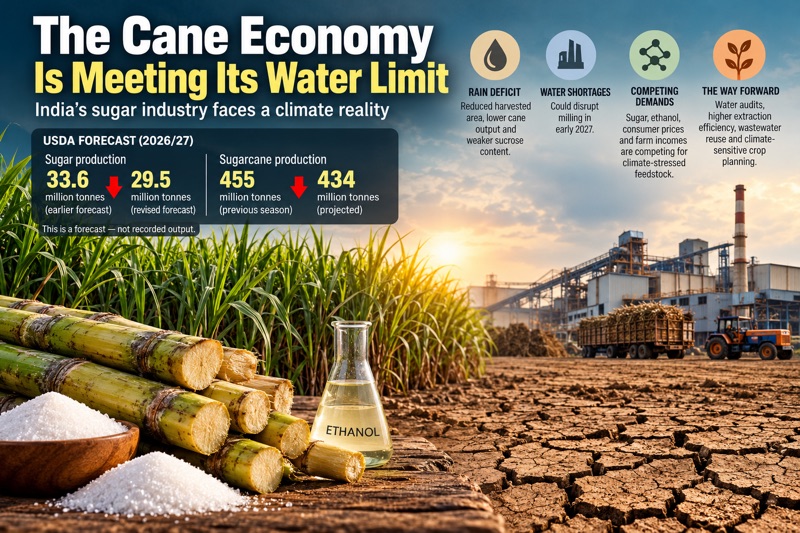
India’s Sugar Industry Faces a Climate Reality

When water becomes more valuable than sugar For decades, India’s sugar economy has been built around a simple assumption: grow more sugarc...