Showing posts with label workforce. Show all posts

Saturday, January 6, 2024

Formalization Benefits in Indian Economy

India, the world's second-most populous country and the fifth-largest economy, has a large and diverse informal and unorganized sector, which accounts for about half of its GDP and employs about 90% of its workforce. The informal and unorganized sector consists of small and micro enterprises, self-employed workers, casual laborers, and home-based workers, who operate outside the formal regulatory and institutional framework, and often lack access to basic services and social protection.

The informal and unorganized sector has some advantages, such as providing employment opportunities, fostering entrepreneurship, and contributing to the economic growth and resilience. However, it also has many disadvantages, such as low productivity, poor quality, low wages, precarious working conditions, tax evasion, and vulnerability to shocks and exploitation.

Recognizing the need to formalize the economy and improve the lives of the informal and unorganized workers, the government has taken several steps in the past decade, such as promoting the use of digital payments, bank accounts, and Aadhaar (a biometric identification system).

Digital payments are electronic transactions that use mobile phones, cards, or online platforms, instead of cash or cheques. Digital payments have increased the convenience, speed, and security of the transactions, and have also reduced the cost, risk, and fraud. Digital payments have also enabled the tracking and recording of the transactions, and have increased the tax compliance and revenue collection.

Bank accounts are financial accounts that allow the deposit, withdrawal, and transfer of money, and offer other services such as credit, insurance, and pension. Bank accounts have improved the financial inclusion and literacy of the people, and have given them access to formal and affordable financial products and services. Bank accounts have also facilitated the saving and investment of the people, and have enhanced their financial security and stability.

Aadhaar is a 12-digit unique identification number that is issued to every resident of India, based on their biometric and demographic data. Aadhaar has provided a verifiable and portable identity to the people, and has linked them to various government and non-government services and schemes. Aadhaar has also enabled the delivery of direct benefits to the citizens, such as subsidies, pensions, scholarships, and wages, by transferring the money directly to their bank accounts, bypassing the intermediaries and eliminating the corruption and leakage.

These steps have had a positive impact on the formalization of the economy and the well-being of the people. According to a study by the National Council of Applied Economic Research (NCAER), the formalization of the economy has increased the GDP growth rate by 0.5 percentage points, the tax-to-GDP ratio by 1.3 percentage points, and the employment elasticity by 0.1 percentage points, between 2016 and 2019. The study also estimates that the formalization of the economy has lifted 5.4 million people out of poverty, and has increased the per capita income by 2.5%.

The formalization of the economy has also brought many benefits to the informal and unorganized workers, such as higher income, better working conditions, greater social protection, and more dignity and empowerment. According to a survey by the Centre for Monitoring Indian Economy (CMIE), the share of informal and unorganized workers in the total workforce has declined from 92.4% in 2011-12 to 88.2% in 2017-18, while the share of formal and organized workers has increased from 7.6% to 11.8%. The survey also reveals that the average monthly income of the formal and organized workers is 2.6 times higher than that of the informal and unorganized workers.

The formalization of the economy is a continuous and complex process, which requires the coordination and cooperation of various stakeholders, such as the government, the private sector, the civil society, and the workers themselves. The formalization of the economy also faces many challenges, such as the lack of awareness, the resistance to change, the digital divide, the implementation gaps, and the unintended consequences. Therefore, the formalization of the economy needs to be accompanied by other measures, such as the simplification and rationalization of the laws and regulations, the provision of incentives and support, the protection of the rights and interests, and the promotion of the skills and innovation, to ensure that the formalization of the economy is inclusive, sustainable, and beneficial for all.

Wednesday, November 1, 2023

The Evolving Landscape of Family Run Businesses in India: Challenges and Opportunities

Introduction

Family run businesses have long been an integral part of the Indian economy, playing a pivotal role in its growth and development. Despite their historical significance, these businesses face numerous challenges in the modern era, particularly in the wake of the burgeoning startup culture. However, with careful management and strategic decision-making, family businesses can not only overcome these hurdles but also capitalize on the unique advantages they possess. This article explores the challenges faced by family run businesses in India and highlights the opportunities that can pave the way to their future success.

Challenges faced by family run businesses in India

Managing Growth: Family businesses are confronted with the juxtaposition of traditional values and practices with the imperatives of an evolving economy. To thrive in the face of new entrants with access to greater capital, technology, and talent, family businesses must prioritize innovation, digitalization, globalization, and diversification.

Succession Planning: The successful transfer of leadership and ownership from one generation to the next is a critical component of family businesses' longevity. Ensuring a smooth transition while preserving trust and harmony among family members presents a unique challenge. Thus, preparing the next generation through education, training, and exposure becomes a crucial aspect of succession planning.

Professionalization: Family businesses need to adopt more formal and transparent governance structures, processes, and systems. By enhancing efficiency, accountability, and credibility, family businesses can attract and retain competent professionals who can complement the family's skills and expertise.

Social Responsibility: Aligning their vision and values with the social and environmental needs of society, and demonstrating their commitment to sustainability and ethics, is imperative for family businesses. Building trust and goodwill through engagement with customers, employees, suppliers, regulators, and communities contributes to both long-term success and social impact.

Opportunities for family run businesses in India

Leveraging Strengths: Family businesses possess unique characteristics that provide them with a competitive advantage. Their long-term orientation, strong culture, loyal customer base, flexible decision-making, and resilience in times of crisis can be put to effective use in fostering a distinctive identity and competitive edge in the market.

Embracing Change: Adapting a proactive and positive attitude towards change enables family businesses to embrace new technologies, explore different markets, develop innovative products, and adopt modern business models. By observing and learning from successful family businesses and startups, both within and outside India, they can stay attuned to industry trends.

Collaboration: Collaboration with other family businesses or non-family businesses that share the same vision and values can lead to fruitful synergies and partnerships. By leveraging external resources, such as mentors, advisors, consultants, investors, incubators, accelerators, associations, and platforms, family businesses can find valuable support for their development and innovation endeavors.

Conclusion

Family run businesses in India have a storied past and continue to play a significant role in the country's economic landscape. However, they face considerable challenges in the modern business environment, necessitating careful navigation and adaptation. By managing growth, planning succession, professionalizing operations, and demonstrating social responsibility, family businesses can position themselves for success. By embracing change, leveraging their unique strengths, and collaborating with like-minded enterprises, they can unlock immense opportunities and secure their place in the future of India's economy.

References:

1. PwC India Family Business Survey 2019. [Online] https://www.pwc.in/assets/pdfs/research-insights/fbs/2019/pwc-india-family-business-survey-2019.pdf.
2. Five Real Challenges faced by Family Businesses in India | eGrowth .... [Online] https://www.egrowth.org/blog/five-real-challenges-faced-by-family-businesses-in-india/.
3. Ushering India’s Family Businesses into a New Era of Endless .... [Online] https://economictimes.indiatimes.com/industry/services/education/ushering-indias-family-businesses-into-a-new-era-of-endless-possibilities/articleshow/89500732.cms.
4. Family Business Challenges | Deloitte | Finance. [Online] https://www.deloitte.com/global/en/services/financial-advisory/perspectives/private-company-issues-and-opportunities.html.

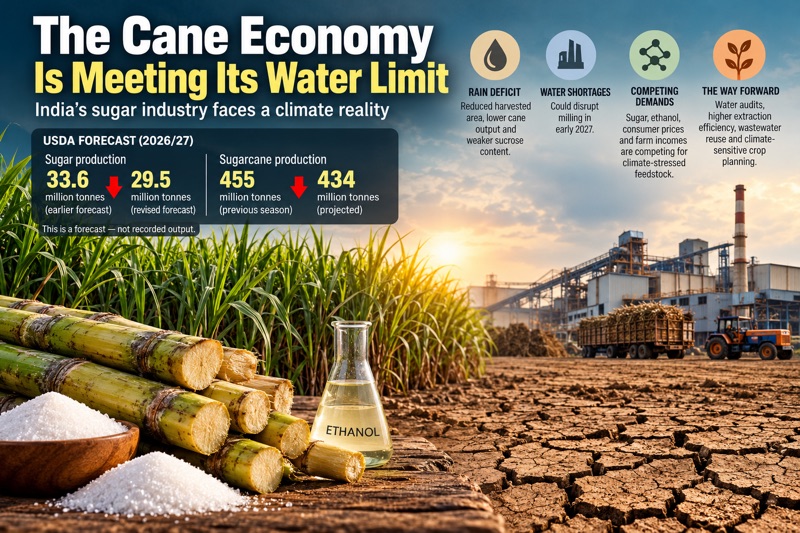
India’s Sugar Industry Faces a Climate Reality

When water becomes more valuable than sugar For decades, India’s sugar economy has been built around a simple assumption: grow more sugarc...