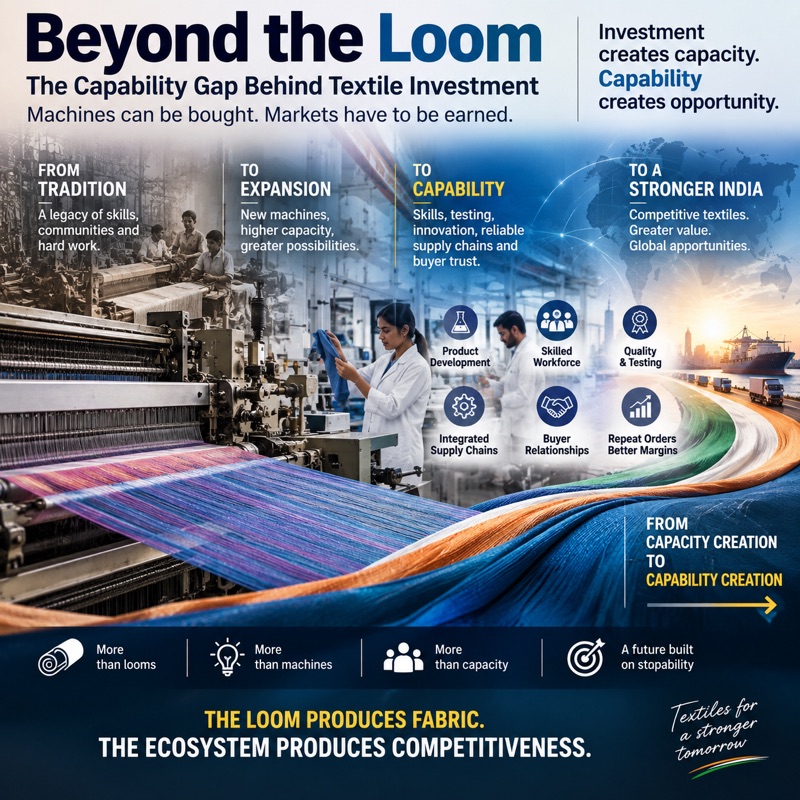
India today stands at this important crossroads. The country has become one of the fastest-growing major economies and has built remarkable strengths in information technology, digital public infrastructure, pharmaceuticals, automobiles, space technology and financial services. Yet economic history reminds us that rapid growth alone does not guarantee long-term prosperity. Countries such as Japan, South Korea and Singapore escaped the middle-income trap because they invested heavily in research, education, innovation and globally recognised brands. Many others achieved respectable growth but failed to transform their economic foundations, causing growth to slow sharply after reaching middle-income levels.
The real challenge for India is not building more factories alone. It is building ideas that the world is willing to pay a premium for. Research and development spending remains modest compared with the world's leading innovation economies. Many businesses still prefer buying existing technology rather than creating new technology. While some companies operate at global standards, technology absorption across industries remains highly uneven. Thousands of micro, small and medium enterprises continue to rely on outdated production methods, limiting productivity and reducing their ability to compete internationally.
Another silent weakness is the limited creation of intellectual property. Patents, industrial designs, proprietary technologies and globally recognised brands are becoming the real currency of modern economic power. Countries that own knowledge increasingly capture the largest share of global profits, while countries that only manufacture products often compete mainly on cost. This creates a dangerous cycle where businesses work harder but earn relatively less value.
The next decade will not be defined only by who produces the most. It will be defined by who invents the most. Artificial intelligence, robotics, biotechnology, quantum computing, advanced materials and green manufacturing are reshaping global competition. Nations investing aggressively in these technologies are creating entirely new industries, while those depending mainly on traditional production models risk falling behind. The future rewards originality more than efficiency.
Education will also become a decisive factor. Producing graduates is no longer enough. Economies need researchers, innovators, designers, engineers, entrepreneurs and problem solvers who can convert ideas into commercially successful products. Universities, research institutions and industries must work together instead of functioning in isolation. Innovation ecosystems grow when knowledge moves quickly from laboratories to factories and finally to global markets.
The consequences of ignoring this transition could be serious. Economic growth may gradually slow even as aspirations continue to rise. Productivity gaps between Indian firms and global competitors may widen. Young people entering the workforce may find fewer opportunities in high-value industries. Export competitiveness may weaken as other nations move further up the technology ladder. Most importantly, India may continue creating jobs without creating enough wealth per worker.
Yet this future is not predetermined. India possesses enormous entrepreneurial energy, a large domestic market, digital capabilities, scientific talent and one of the world's youngest populations. These strengths can become powerful engines of innovation if supported by stronger investment in research, better university-industry collaboration, easier access to technology for MSMEs, stronger protection of intellectual property and greater encouragement for global brand creation.
The middle-income trap is not simply an economic challenge. It is a test of national imagination. Every nation eventually reaches a stage where copying yesterday's success no longer works. That is the moment when courage to innovate becomes more valuable than the ability to manufacture. India's next economic leap will not be measured only by the number of products it exports. It will be measured by the number of ideas the world cannot afford to ignore.
#MiddleIncomeTrap #InnovationEconomy #ResearchAndDevelopment #TechnologyLeadership #ProductivityGrowth #MakeInIndia #IntellectualProperty #GlobalCompetitiveness #FutureEconomy #EconomicTransformation