Thursday, September 21, 2023

Blog on Local and Global Economic Development

Welcome to my blog where I dive deep into the complexities of local and global economic development. As an avid researcher and passionate advocate for sustainable growth, I explore various issues and trends that shape our economies.

Through my blog, I aim to shed light on both local and global economic development and highlight their intertwined nature. I dive into topics such as income inequality, poverty alleviation, job creation, and environmental sustainability, among others.

Drawing from a range of reliable sources, I present well-researched analyses, current statistics, and insightful commentary to provide a comprehensive understanding of economic development issues. Additionally, I explore success stories from around the world, showcasing innovative solutions, policies, and initiatives that have positively impacted communities.

Recognizing the importance of local context, I emphasize the need to understand specific challenges faced by different communities and regions. Understanding this dynamic helps in formulating effective strategies and policies for achieving inclusive and sustainable economic growth.

Whether you are an economist, policy maker, or simply interested in understanding the intricate dynamics that shape our economies, my blog provides a platform for engaging discussions and informative content. Together, we can explore the pathways towards a more equitable and prosperous future for all.

Join me on this journey as we delve into the intricacies of local and global economic development, uncovering the challenges, exploring best practices, and envisioning a world where economies flourish in harmony with social and environmental objectives.

Navigating the Challenges and Opportunities of India's Thriving Startup Ecosystem


Introduction

India's startup ecosystem has experienced a meteoric rise in recent years, solidifying its position as the third-largest startup hub in the world. As of May 31, 2023, there were more than 99,000 startups recognized by the Department for Promotion of Industry and Internal Trade (DPIIT) spread across 670 districts of the country. In 2022 alone, over 26,000 new startups emerged, with this growth trajectory expected to persist. This exponential rise in entrepreneurial activity has not only transformed the economic landscape of the nation but has also begun to make substantial contributions to the global economy. With approximately 50,000 startup registrations and an annual growth rate ranging from 12% to 15%, India's startup ecosystem is undeniably flourishing. The number of new companies formed has been steadily increasing over the past decade, with an astonishing 10,000 companies created in 2015 alone.


However, amidst the remarkable growth story, there remain substantial challenges for those seeking to establish and grow businesses in India. Notably, India has imposed restrictions on foreign ownership of businesses and necessitates stringent local presence requirements for potential investors. These challenges, while daunting, should not deter entrepreneurs but serve as essential points of consideration as they navigate the complexities of the Indian startup landscape.


Challenges Faced by Entrepreneurs in India


Lack of Access to Capital: Despite the increasing availability of funding for startups, the majority of investments remain concentrated in specific sectors such as e-commerce and fintech, leaving startups in other sectors struggling to secure funding.


Regulatory Hurdles: India's regulatory environment is complex, replete with numerous laws and regulations that can be perplexing for startups. This complexity often results in delays and additional costs, making it harder for entrepreneurs to establish and expand their businesses.


Inadequate Infrastructure: Insufficient infrastructure presents a significant challenge for entrepreneurs. Issues like poor transportation, unreliable power supply, and limited access to high-speed internet can hinder business operations.


Lack of Planning: Many entrepreneurs in India fail to adequately plan their businesses, leading to potential failure. This includes issues such as the absence of a clear business plan, inadequate market understanding, and insufficient financial planning.


Hiring the Right Talent: Finding and retaining skilled talent is a persistent challenge. Factors such as a shortage of skilled workers, high employee turnover, and difficulties in attracting top talent pose significant hurdles.


Effective Marketing within Limited Budgets: Marketing is crucial for business success, but many Indian entrepreneurs struggle with limited budgets for marketing activities. This includes issues like the absence of a coherent marketing strategy, inadequate understanding of the target audience, and resource constraints for executing marketing campaigns.


Lack of Guidance and Resources for Growth: Many entrepreneurs lack access to essential resources for business growth. This includes mentorship, support from business incubators or accelerators, and networking opportunities.


Lack of Experience: A substantial proportion of entrepreneurs in India face the challenge of limited experience. This includes a lack of experience in running a business, insufficient industry-specific knowledge, and inadequate financial management skills.


Stiff Competition: Indian startups must contend with fierce competition from established businesses, making it challenging to capture market share.


Bureaucratic Obstacles: Entrepreneurs in India grapple with bureaucratic obstacles that can slow down the startup process. These issues encompass delays in obtaining licenses and permits, as well as navigating complex government agencies.


Lack of Skilled Workers: Finding skilled workers remains a persistent problem for entrepreneurs, particularly concerning technical skills and relevant industry experience.


Accessing Funding and Resources


Despite these challenges, India offers a variety of avenues for entrepreneurs to secure funding and resources:


Bootstrapping/Self-Financing: Many entrepreneurs start with little or no external investment, relying on personal savings and revenue to grow their business. This approach provides full control and minimizes pressure to repay funds.


Friends and Family: Entrepreneurs can raise funds from trusted friends and family who are willing to invest in their vision.


Business Plan/Pitching Events: Participating in pitching events and competitions can lead to winning prize money, grants, and other financial support.


Government Schemes: The Indian government has launched numerous schemes to support startups and small businesses, offering financial assistance, mentoring, and infrastructure facilities. Schemes like Pradhan Mantri Mudra Yojana, Standup India, Startup India Seed Fund Scheme, and Venture Capital Assistance Scheme provide valuable support.


Investor Connect: Startup India Investor Connect facilitates connections between startups and investors, creating opportunities for investment.


Incubators and Accelerators: Incubators and accelerators offer guidance, networking, and access to funding opportunities. These organizations play a pivotal role in nurturing startups.


Crowdfunding: Crowdfunding platforms enable entrepreneurs to raise funds by presenting their ideas to a broad audience, receiving small contributions from each supporter.


Networking Opportunities for Indian Entrepreneurs


To overcome challenges and thrive in the Indian startup ecosystem, networking is essential. Here are some popular networking events and communities for Indian entrepreneurs:


Eventbrite: Eventbrite lists a wide array of networking events in India, including Global Art & Design Education Expo, Shark-Tank Games, and Startup Party Community.


Meetup: Meetup connects entrepreneurs with diverse networking groups in India. Notable groups include Delhi Startups™ Club, BHIVE Startup & Entrepreneur Community, and Adventure Travel Bangalore.


Indie Folio Blog: The Indie Folio Blog showcases networking events that Indian freelancers should consider attending, such as The Advertising Club Events and The Global Entrepreneurship Summit.


The CEO Magazine: The CEO Magazine provides listings of business events and conferences in India. Events like TechSparks, The Global Entrepreneurship Summit, and Vibrant Gujarat Global Summit offer valuable networking and learning opportunities.


Networking Now India: This community of 51,000 entrepreneurs actively supports business growth by organizing events and fostering connections, conversations, and collaborations among entrepreneurs.


 India's burgeoning startup ecosystem presents immense opportunities for entrepreneurs but also challenges that demand strategic navigation. Access to funding and resources is diverse, with options ranging from bootstrapping to government schemes and incubators. Moreover, a vibrant network of events and communities provides platforms for entrepreneurs to connect, learn, and collaborate. By acknowledging and addressing these challenges while leveraging available resources and networking opportunities, entrepreneurs in India can continue to shape a dynamic and promising future for the country's startup landscape.

Citations

https://www.eventbrite.com/d/india/networking/

https://www.meetup.com/topics/business-entrepreneur-networking/in/

https://www.meetup.com/topics/professional-networking/in/

https://blog.indiefolio.com/networking-events-indian-freelancers/

https://www.theceo.in/blogs/top-business-events-and-conferences-in-india-network-learn-and-grow-with-the-ceo-magazine

https://www.instagram.com/networkingnowindia/?hl=en

https://www.startupindia.gov.in/content/sih/en/funding.html

https://www.startupindia.gov.in

https://www.deskera.com/blog/govt-grants-india-business/

https://www.kanakkupillai.com/learn/list-of-government-schemes-to-support-startups-in-india/

https://www.saastitute.com/blog/government-schemes-for-startup-funding

https://digest.myhq.in/top-10-government-schemes-for-startups-in-india/

https://www.theofficepass.com/toppings/common-problems-entrepreneurs-face-starting-startup-india.html

https://www.tutorialspoint.com/6-major-struggles-faced-by-indian-entrepreneurs

https://www.analyticssteps.com/blogs/entrepreneurship-india-2023-challenges-opportunities-and-growth

https://co-offiz.com/15-major-problems-faced-by-entrepreneurs-in-india-2023/

https://www.kanakkupillai.com/learn/top-challenges-facing-indian-startups-and-how-to-overcome-them/

https://sugermint.com/challenges-faced-by-entrepreneurs/


Leveraging E-commerce for the Growth of MSMEs by ICRIER

Introduction

The Annual Survey of Micro, Small, and Medium Enterprises (MSMEs) in India aims to explore the potential of e-commerce platforms in enhancing market access and enabling the growth of MSMEs. It is widely believed that e-commerce platforms can provide new sales channels for MSMEs, allowing them to reach customers in a wider geographical market. However, limited evidence is available on the engagement of MSMEs with e-commerce platforms in India, as this information is often proprietary and not accessible to researchers. This report fills this knowledge gap by conducting a comprehensive primary survey of MSMEs, combining data from integrated and non-integrated enterprises to understand the potential of e-commerce in India.

The survey was conducted between 4 November 2022 and 20 January 2023, covering 2,007 MSMEs across different size categories. The majority of the firms in the sample were micro-sized (65%), followed by small-sized (19%) and medium-sized enterprises (16%). Out of the total sample, 50% of the enterprises were integrated with e-commerce platforms, while the remaining 50% were not. The survey spanned six product categories, including sports goods, toys, processed and preserved food products, apparel, furniture, and handicraft products. It covered several cities in India, such as Ahmedabad, Bhubaneshwar, Delhi, Jaipur, Lucknow, Ludhiana, Jalandhar, Agra, Meerut, Saharanpur, and Chennai. All the enterprises included in the sample were registered on the Udyam portal, a government facility that provides firms with a permanent registration and basic identification number.

The survey questionnaire aimed to gather information on key performance indicators of the firms, including sales, employment, and profitability. It also captured important characteristics of the businesses, such as export orientation and demographic factors of the owners. This allows for a comparative assessment of MSMEs engaged in e-commerce platforms and those that are not. The survey design also takes into account the heterogeneities within the MSME sector, recognizing that factors influencing e-commerce integration and performance may differ across micro, small, and medium enterprises.

Survey Findings

The survey findings shed light on the characteristics and performance of integrated and non-integrated MSMEs in India. The results indicate that firms with younger and more educated owners are more likely to integrate with e-commerce platforms. The survey also revealed that women-owned MSMEs are not far behind male-owned firms in terms of e-commerce integration, despite women's underrepresentation in the overall MSME landscape. Export-oriented firms were found to have a higher propensity for e-commerce integration, suggesting a positive relationship between export orientation and digitalization.

Integrated firms generally exhibited better performance compared to non-integrated firms. They reported higher turnovers, profitability, and a higher share of permanent employees in their workforce. Integration with e-commerce platforms brought several benefits, with a significant percentage of integrated enterprises reporting an increase in total sales and profit margins. Many firms also invested in employee training, new equipment, machinery, and software upon joining e-commerce platforms. Integration was associated with improvements in product design, adoption of new business practices, and organizational methods, indicating investment and innovation at the firm level.

While integrated firms saw several positive outcomes, the survey also identified challenges faced by non-integrated MSMEs. Lack of knowledge and information about digital technologies and e-commerce platforms emerged as key barriers to integration. Policymakers and stakeholders must take into account the potential inequities that may arise between integrated and non-integrated firms and work towards bridging the divide. Investments in technology, digital skills, infrastructure services, financial services, managerial and business skills, and enterprise support and training are crucial in enhancing the capabilities and productivity of MSMEs.

Key Challenges and Policy Recommendations

Based on the survey findings, the report highlights key challenges faced by MSMEs in India and provides policy recommendations to address these challenges. One of the main challenges is the lack of knowledge and information about e-commerce platforms, which hinders the integration of MSMEs. To overcome this barrier, the report suggests the need for awareness programs, capacity-building initiatives, and training programs to enhance digital literacy and provide information on the benefits and process of e-commerce integration.

Access to finance is another challenge for MSMEs, both integrated and non-integrated. The report recommends the development of innovative financing mechanisms, such as linking e-commerce platform sales to loan accounts or leveraging fintech companies and non-banking financial corporations for easier access to loans. It also emphasizes the importance of improving credit assessment processes and expanding the availability of formal finance to MSMEs, especially those without a presence on e-commerce platforms.

Infrastructure development is crucial for the growth of MSMEs and their integration with e-commerce platforms. The report suggests the provision of reliable and affordable internet connectivity, enhanced logistics and transportation networks, and access to electricity and other utilities. Improving physical infrastructure will facilitate smoother online transactions, reduce costs, and enhance the overall competitiveness of MSMEs.

The report also highlights the need for collaborative efforts between government bodies, industry associations, e-commerce companies, and other stakeholders. Policy coordination and dialogue are essential to create an enabling environment for MSMEs to integrate with e-commerce platforms. Cooperation between different stakeholders can lead to the development of supportive regulations, policies, and initiatives that promote MSME growth and facilitate e-commerce integration.

Conclusions

The Annual Survey of MSMEs in India sheds light on the potential of e-commerce platforms in enhancing market access and enabling the growth of MSMEs. The survey findings indicate that integration with e-commerce platforms brings significant benefits to MSMEs, including improved market access, increased sales and profit margins, investment in technology and innovation, and access to formal finance. However, challenges remain, particularly for non-integrated MSMEs, who face barriers such as lack of knowledge and information. Bridging the gap between integrated and non-integrated firms requires investments in digital skills, infrastructure development, and enterprise support. Policy coordination and collaboration among various stakeholders are crucial in creating an enabling environment for MSMEs to leverage e-commerce platforms for their growth.

The report concludes by emphasizing the importance of leveraging the potential of e-commerce platforms to foster inclusive and sustainable growth for MSMEs in India. E-commerce integration can help overcome the limitations of local markets and enable MSMEs to reach a wider customer base, both domestically and internationally. By addressing the challenges and implementing the recommended policy measures, India can unlock the full potential of its MSME sector, contributing to economic development, job creation, and poverty alleviation.
https://drive.google.com/file/d/1QCFrrbBPhf0O4X1asGwC2bxzqX69GWw4/view?usp=drivesdk

Wednesday, September 20, 2023

Unlocking Women's Economic Potential in India: Challenges, Prospects, and Solutions


Introduction


The recent introduction of the #WomenReservationBill in the #IndianParliament signifies a pivotal step toward bolstering women's participation in the nation's political landscape. The proposed legislation, aimed at elevating female representation in both the #LokSabha and #RajyaSabha to 33%, holds the promise of fostering greater #GenderEquality and empowering women across India. This development is poised to have far-reaching effects on women's #EconomicDevelopment, as increased representation in decision-making forums tends to translate into more equitable policies and increased investments in critical areas such as #Education, #Healthcare, and essential #SocialServices. Moreover, the bill's potential impact is not confined to the political arena; studies have affirmed that companies with greater #GenderDiversity on their #CorporateBoards tend to exhibit superior financial performance, demonstrating the multifaceted benefits of gender inclusivity in decision-making processes.


Women's Crucial Role in Economic Growth


Despite the formidable challenges they face, women continue to make substantial contributions to India's economic development. Over recent years, a noticeable trend has emerged, with an increasing number of women entering the workforce and venturing into entrepreneurship. However, a gaping gender gap in economic participation remains, necessitating concerted efforts to ensure equal opportunities for women.


A Global Perspective


The #WorldBank's "Women, Business, and the Law 2022" report offers a global view of the challenges confronting women in achieving full economic participation. Alarmingly, it reveals that approximately 2.4 billion working-age women worldwide are denied equal economic opportunities due to legal barriers, with 178 countries imposing such restrictions. Among these nations, 86 impose restrictions on women's job opportunities, while 95 fail to guarantee equal pay for equal work. This report assesses legal frameworks across 190 countries, encompassing eight key areas affecting women's economic participation, including mobility, workplace regulations, pay parity, marriage, parenthood, entrepreneurship, property rights, and pension provisions. Astonishingly, the global gender pay gap translates into a staggering $172 trillion gap in expected lifetime earnings, nearly twice the annual global GDP. The World Bank calls for governments worldwide to expedite legal reforms to unlock women's full potential, fostering their equal and comprehensive economic participation.


Significant Contributions to the Indian Economy


In addition to these global insights, numerous specific examples illustrate women's substantial contributions to India's economic development:


1. Women in Agriculture: Women are pivotal players in India's agricultural sector, comprising almost half of the workforce and making substantial contributions to agricultural production. Nevertheless, women in agriculture grapple with challenges like land access, credit accessibility, and market entry.


2. Women in Manufacturing: Women increasingly participate in the Indian manufacturing sector, spanning textiles, food processing, and electronics. However, they face obstacles such as low wages and precarious working conditions.


3. Women in Entrepreneurship: The rise of women entrepreneurs spans diverse industries, including technology, healthcare, and retail. Yet, these entrepreneurs often confront obstacles, such as limited access to financing and mentorship.


Key Concerns


The gender inequalities prevailing in India manifest across various sectors, creating substantial impediments to women's economic participation:


1. Labor Market Disparities: The Indian labor market displays marked gender imbalances, with a female labor force participation rate of just 27%, significantly below the global average of 49%. This imbalance is attributed to cultural norms, restricted access to education and training, and insufficient childcare support. Furthermore, women who do enter the labor market frequently face wage disparities, earning 35% less than their male counterparts for comparable work. These inequalities stem from discriminatory hiring and promotion practices, as well as the relegation of women to lower-paying occupations.


2. Gender Disparities in the Business World: In the Indian corporate sphere, women are underrepresented, constituting a mere 13% of directors on the boards of Indian companies, despite comprising nearly half of the population. Factors contributing to this underrepresentation include limited access to capital and resources necessary for business establishment and expansion, coupled with societal and cultural impediments discouraging women from pursuing business careers.


3. Legal Inequalities: The Indian legal framework perpetuates gender discrimination in various ways. For instance, the Hindu Succession Act of 1956 awards sons a larger share of inheritance compared to daughters. Additionally, the legal stance on marital rape remains ambiguous, and several states maintain stringent divorce laws that hinder women's autonomy.


Recommendations


Addressing these gender disparities requires comprehensive and coordinated efforts across multiple fronts:


1. Cultural and Social Norms: Transforming cultural and social norms that dissuade women from labor force participation necessitates education and awareness programs to shift societal perspectives.


2. Skills and Training: Bridging the gender gap demands equipping women with essential workplace skills and training, which can be achieved through government initiatives and private-sector collaboration.


3. Legal Equality: Advocating for legal reforms to rectify gender-based inequalities is critical. Initiatives should include reforms to the Hindu Succession Act and clarity on marital rape laws.


4. Investment in Education and Training: Increased investments in education and training specifically for girls and women are vital for enhancing their workplace capabilities.


5. Family-Friendly Policies: Implementing childcare support and other family-friendly policies can aid women in balancing work and family responsibilities.


6. Promoting Gender Diversity: Encouraging gender diversity in the workplace through government mandates and private-sector programs can foster inclusive environments.


In conclusion, empowering women for inclusive economic growth in India requires a multifaceted approach that addresses cultural, social, legal, and economic aspects. The passage of the Women Reservation Bill is a significant stride towards gender equality, but sustained efforts across sectors are essential to fully harness the economic potential of India's female population


References

  • NITI Aayog: Women's Economic Empowerment in India (2020)
  • Ministry of Women and Child Development: National Policy for Women (2016)
  • Reserve Bank of India: Women in the Workforce in India (2021)
  • World Economic Forum: Global Gender Gap Report 2022 (India ranked 135th out of 146 countries)
  • World Bank: Women, Business and the Law 2023
  • International Labour Organization: Global Wage Report 2022/23: Wages and minimum wages in the time of COVID-19
  • McKinsey Global Institute: The Power of Parity: How advancing women's equality can add $12 trillion to global growth
  • Harvard Business Review: Women in the Workplace 2023
  • United Nations Development Programme: Gender and Economic Development


Navigating India's Thriving E-commerce Landscape: Trends, Challenges, and Opportunities


India's E-commerce Eco-system

The e-commerce ecosystem in India has witnessed remarkable growth and transformation over the past two decades. Fuelled by increasing internet penetration, rising smartphone usage, and favourable government policies, India's e-commerce sector has become one of the fastest-growing in the world. This background note provides an overview of the key components, trends, challenges, and opportunities within India's dynamic e-commerce landscape.


Amazon and Walmart-owned Flipkart are the dominant players in the Indian e-commerce space, competing intensely for market share. Other notable players include Snapdeal, Paytm Mall, niche platforms like Myntra (fashion) and Swiggy (food delivery), and the recent addition of ONDC. The introduction of digital payment systems like UPI (Unified Payments Interface) and the growth of digital wallets have facilitated secure online transactions. Logistics and last-mile delivery have improved significantly, with players like Delhivery, Ekart, and Blue Dart providing robust supply chain solutions.


Proposed E-commerce Policy

The new e-commerce policy of India, which is expected to be released in the coming weeks, is aimed at promoting the inclusive growth of the sector and ensuring a level playing field for all stakeholders. The policy is also expected to address some of the key concerns raised by domestic traders, such as the alleged predatory pricing practices of foreign e-commerce companies and the preferential treatment given to certain sellers by marketplaces.

Some of the key provisions of the new e-commerce policy are expected to include:

* Promoting Indian MSMEs: The policy is expected to include measures to promote Indian MSMEs and startups to participate in the e-commerce sector. This could include providing them with financial assistance, training, and market access.

* Ensuring a level playing field: The policy is expected to ensure a level playing field for all stakeholders in the e-commerce sector, including domestic and foreign companies, marketplaces, and sellers. This could include prohibiting marketplaces from holding equity in sellers selling on their platforms and from selling their own private labels on their platforms.

* Protecting consumers: The policy is expected to include measures to protect consumers from unfair trade practices by e-commerce companies. This could include requiring marketplaces to disclose information about their algorithms and to provide consumers with easy-to-use grievance redressal mechanisms.

* Promoting exports: The policy is expected to include measures to promote exports through e-commerce. This could include providing financial assistance to exporters and helping them to set up online stores.

* Supporting the Open Network for Digital Commerce (ONDC): The policy is expected to support the ONDC, which is a government-backed initiative to create an open e-commerce ecosystem in India. The ONDC will allow buyers and sellers to transact through a single platform, regardless of which marketplace they are registered with.


The Indian government has also introduced several regulations to govern the e-commerce sector, such as FDI (Foreign Direct Investment) policies, data protection laws, and consumer protection rules.

These regulations aim to promote fair competition, and data privacy, and protect the interests of consumers and small businesses.


Role of ONDC in e-commerce evolution

The Open Network for Digital Commerce (ONDC) is a government-backed initiative to create an open e-commerce ecosystem in India. ONDC aims to break down the silos between different e-commerce platforms and make it easier for buyers and sellers to connect with each other. ONDC is still in its early stages, but it has the potential to revolutionize the e-commerce landscape in India. By making it easier for small businesses and regional players to participate in e-commerce, ONDC can help create a more inclusive and competitive market.

Data and references

* According to a McKinsey report, ONDC could increase India's digital consumption to around $340 billion USD and the number of consumers transacting digitally from 165-190 million to 450-500 million by 2030.

* • A report by the Indian Council for Research on International Economic Relations (ICRIER) states that ONDC has the potential to create 3.5 million jobs in India by 2025.

* A survey by Deloitte found that 75% of Indian businesses believe that ONDC will have a positive impact on their business.


Conclusion

India's e-commerce ecosystem continues to evolve rapidly, driven by technological advancements, changing consumer behaviors, and regulatory developments. With its vast consumer base, increasing internet penetration, and growing digital infrastructure, India remains a lucrative market for both domestic and international e-commerce players. However, navigating the complexities of the regulatory landscape while addressing challenges like logistics and profitability will be key to long-term success in this dynamic ecosystem. E-commerce is rapidly evolving in India, and ONDC is playing a key role in this evolution. By creating an open and inclusive e-commerce ecosystem, ONDC is helping to make e-commerce more accessible to businesses and consumers alike.


References 


  • McKinsey report, "India's Digital Opportunity: The Next 10 Years", 2022
  • Indian Council for Research on International Economic Relations (ICRIER) report, "Open Network for Digital Commerce (ONDC): Challenges and Opportunities", 2022
  • Deloitte survey, "ONDC: Impact on Indian Businesses", 2022
  • India Brand Equity Foundation (IBEF) report, "Indian E-commerce Market", 2023
  • KPMG report, "The Future of E-commerce in India", 2022
  • EY report, "India's E-commerce Market: Opportunities and Challenges", 2022
  • Government of India, "Draft E-commerce Policy, 2023"
  • These reports provide insights into the key trends, challenges, and opportunities in India's e-commerce sector. They also highlight the role of ONDC in promoting the inclusive growth of the sector.

Tuesday, September 19, 2023

Handloom Renaissance: Crafting Tomorrow's Textile Landscape


                                                        Source: Maheshwar Artisan


The future of the handloom industry in India is a topic that holds immense significance in the context of cultural heritage, economic sustainability, and fashion evolution. With a rich tapestry of keywords like "handloom," "India," and "future," this discussion ventures into the intricate weaving of tradition and innovation. As we delve into the promising horizons of this age-old craft, we unravel the threads that connect the past, present, and potential of the handloom sector in the dynamic landscape of India.

Handloom weaving is a traditional Indian craft that has been passed down for generations. It is known for its labor-intensive process and the creation of high-quality, durable, and aesthetically pleasing fabrics. This sector has played a significant role in India's history, particularly during the Swadeshi Movement, when Mahatma Gandhi promoted handwoven Khadi fabric as a symbol of self-reliance and resistance against British colonial rule. Today, the handloom sector is vital to India's economy, providing employment to millions and contributing substantially to the textile industry.


Geographical Distribution

Handloom weaving is not confined to a single region in India but is spread across various states such as Uttar Pradesh, West Bengal, Tamil Nadu, and Andhra Pradesh. Each region boasts its unique weaving techniques and designs, enriching the diversity of Indian textiles.

Varanasi, UP: Famed for Banarasi silk sarees with intricate gold and silver threads.

Kanchipuram, TN: Known for vibrant temple-inspired silk sarees, ideal for weddings.

Chanderi, MP: Lightweight, transparent sarees with delicate handwoven patterns.

Maheshwar, MP: Fine cotton and silk fabrics known for distinctive patterns.

Patola, Gujarat: Renowned for double ikat silk sarees with intricate geometric designs.

Pochampally, Telangana: Hub for geometric Ikat sarees created through tie-dye.

Baluchari, WB: Silk sarees with detailed narrative motifs depicting epics.

Dharmavaram, AP: Heavy silk sarees with zari work for grand occasions.

Phulkari, Punjab: Colorful floral embroidery used in sarees, shawls, and dupattas.

Kasavu, Kerala: Signature gold-bordered off-white sarees representing traditional attire.

Jamdani, WB: Fine muslin-like textiles with intricate woven motifs.

Kota, Rajasthan: Kota Doria sarees, known for their airy texture and square patterns.

Sambalpur, Odisha: Sambalpuri sarees, including ikat designs with tie-dye patterns.

Kutch, Gujarat: Renowned for vibrant embroidery and mirror work.

Bhagalpur, Bihar: Celebrated Tussar silk with a natural golden sheen.

Mysore, Karnataka: Popular for pure silk sarees with intricate zari work

Exports and Production

Indian handloom textiles have a global market presence, with exports valued at approximately $360 million in 2020-21, as reported by the Export Promotion Council for Handicrafts. This highlights the international demand for authentic handwoven Indian textiles.

According to the Fourth All India Handloom Census, the number of households engaged in handloom activities was 31.45 lakh.

The production of handlooms in 2021-22 was estimated to be 49,476 crore.
The handloom sector provides direct employment to over 65 lakh people.
The handloom sector contributes nearly 22% of the total cloth produced in the country.

Current Challenges

The handloom sector in India faces several critical challenges:

Lack of Innovation

The resistance to innovation and modernization has hindered the handloom industry's competitiveness in the global market. The failure to adapt to contemporary design trends and consumer preferences has impeded growth.


Exploitative Labor Practices

Skilled artisans, often from marginalized communities, face exploitative labor conditions, receiving meager wages for their labor-intensive work, undermining the industry's image of preserving traditional crafts and empowering rural communities.


Inadequate Marketing and Promotion

A lack of effective marketing and promotion initiatives hampers global awareness and demand for handloom products, making it challenging for weavers to find profitable markets.


Quality Control Issues

Inconsistent quality and durability of handloom products have eroded consumer trust, affecting competitiveness in a market flooded with machine-made alternatives.


Lack of Access to Finance and Technology

Weavers struggle to access financial resources and modern technology, hindering skill improvement, business expansion, and global competitiveness.


Competition from Mass-Produced Imports

Mass-produced, cheaper textile imports from countries like China and Bangladesh pose a significant threat to the survival of traditional handloom weaving in India.


Inefficiencies in Supply Chain

Inefficiencies in the handloom supply chain lead to delays, higher costs, and difficulty in meeting demand, discouraging potential buyers and investors.


Environmental Concerns

Traditional handloom practices often involve non-environmentally friendly dyes and chemicals, contributing to pollution and raising concerns in an era focused on environmental sustainability.


Strengths and Opportunities

Despite these challenges, the handloom sector in India possesses several strengths and opportunities: Increasing awareness of the unique aesthetic appeal and durability of handloom fabrics: Consumers are becoming increasingly aware of the unique aesthetic appeal and durability of handloom fabrics. This is leading to an increase in demand for handloom products. Growing demand for sustainable and ethical fashion: There is a growing trend towards sustainable and ethical fashion. Handloom fabrics are considered to be a more sustainable and ethical choice than fabrics produced by power looms and mills.

Sustainable and Eco-Friendly

Handloom textiles are made from natural fibers, with a less resource-intensive production process. Growing global awareness of environmental sustainability benefits the handloom sector.

Cultural Heritage and Artistry

Handloom products embody India's rich cultural heritage and artistic traditions, appealing to consumers who value authenticity and craftsmanship.


Government Initiatives

The Indian government has launched initiatives like the National Handloom Development Program (NHDP) to provide financial assistance, training, and marketing support to weavers and artisans.

The Handloom Reservation Act, 1985: The Handloom Reservation Act reserves certain items for exclusive production by the handloom sector. This helps to protect the sector from competition from power looms and mills.

The National Handloom Development Programme (NHDP): The NHDP is a government scheme that provides financial and technical assistance to handloom weavers. The scheme aims to improve the productivity, quality, and marketability of handloom products.

The Handloom Export Promotion Council (HEPC): The HEPC is a government-funded organization that promotes the export of handloom products. The HEPC provides assistance to handloom exporters in areas such as market research, product development, and trade promotion.

Digital Marketing and E-commerce

E-commerce platforms enable weavers to reach a global audience, bridging the gap between traditional craftsmanship and modern consumer preferences.


Collaborations and Design Innovations

Collaborations with designers and fashion brands can inject fresh ideas and innovation into the handloom sector, attracting a diverse consumer base.


Skill Development and Training

Investments in skill development and training are essential to enhance productivity and quality, ensuring the sector's sustainability.

Future of the Handloom Sector

The handloom sector in India has a promising future due to increasing consumer awareness, growing demand for sustainable fashion, and government support. By addressing challenges and leveraging strengths, the handloom sector can thrive, preserving tradition while weaving a sustainable and innovative future.


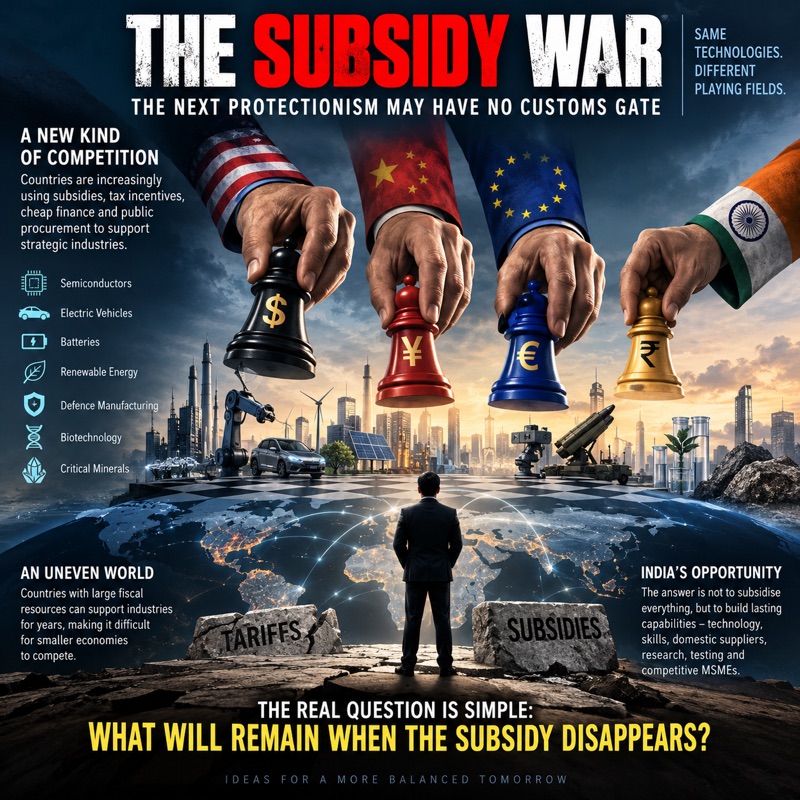
The Subsidy War: When Governments Become Competitors

For much of the last three decades, the visible face of protectionism was the tariff. Governments raised duties, imposed quotas or restricte...