Friday, February 14, 2025

The Expanding Universe of Startups

The startup ecosystem is evolving at an unprecedented pace, driven by technological advancements, investor enthusiasm, and the ever-growing demand for new products and services. From satellite technology to blockchain applications and gaming, the spectrum of innovation is vast. Entrepreneurs and investors alike are looking for opportunities that promise scalability, sustainability, and long-term profitability.

This blog delves into the dynamics of launching a startup, the challenges of securing investment, and the most promising industry categories that are gaining traction.

1. The Fast-Paced Startup Ecosystem: How Quickly Can You Launch a Business?

One of the most common questions among aspiring entrepreneurs is: how quickly can a company be established and operational? The answer varies depending on the industry, regulatory framework, and funding availability. However, in most jurisdictions, setting up a legally recognized company can take anywhere between a few days to three weeks.

Business Registration & Licensing: While most startups can be registered online within a few days, obtaining specific licenses, especially in regulated industries like finance, healthcare, or blockchain, can take longer.

Funding & Investor Backing: A significant number of startups depend on venture capital (VC) or angel investors. The timeline to secure funding can range from a few weeks to several months, depending on the due diligence process and investor interest.

Product Development & Market Entry: While registering a company may be quick, building a viable product, testing it in the market, and scaling it requires strategic planning and execution.


Fast-growing sectors such as SaaS, fintech, and gaming benefit from shorter go-to-market cycles, as they often operate in less regulated environments compared to industries like pharmaceuticals or defense technology.

2. Satellite Technology: A Growing Sphere of Influence

Satellite technology is playing a crucial role in modern industries, influencing sectors like telecommunications, earth observation, navigation, and even financial services. The ability to launch and operate satellites has become more accessible than ever, thanks to advancements in reusable rocket technology and lower costs for satellite manufacturing.

Data & Communication: Many companies are leveraging satellite technology to enhance connectivity, improve global positioning systems (GPS), and provide real-time weather analytics.

Commercialization & Private Players: With firms like SpaceX, OneWeb, and Amazon’s Project Kuiper, there’s increasing private sector investment in satellite-based services.

Regulatory Challenges: Despite the advancements, launching a satellite-based business still requires government approvals and adherence to international space treaties.


The rise in satellite technology presents lucrative opportunities for startups, especially those looking to offer satellite-based data analytics or communication services.

3. The Blockchain Boom: What Categories Are Thriving?

Blockchain, once synonymous with cryptocurrency, is now expanding into multiple industries. While many businesses are exploring blockchain-based applications, some sectors are witnessing higher profitability and adoption rates.

Fintech & Decentralized Finance (DeFi): Smart contracts, digital assets, and decentralized exchanges are reshaping how financial transactions occur.

Supply Chain & Logistics: Blockchain enables end-to-end transparency, helping industries track shipments and verify authenticity.

Gaming & Virtual Assets: Play-to-earn models and NFTs are revolutionizing gaming, making it one of the most profitable blockchain applications.

Healthcare & Data Security: Secure patient records and streamlined insurance claims are among blockchain’s growing use cases in healthcare.

Despite its potential, blockchain adoption faces regulatory hurdles, especially in regions where digital currencies and decentralized applications are under strict scrutiny.

4. The Gaming Industry: A Profitable Tech Frontier

Gaming has emerged as one of the most lucrative startup categories, driven by rising internet penetration, better hardware capabilities, and innovations like cloud gaming, virtual reality (VR), and blockchain-based economies.

Growth Potential: The global gaming market is expected to surpass $300 billion by 2025, driven by mobile gaming, esports, and game streaming platforms.

Monetization Strategies: Unlike traditional one-time purchases, modern games generate recurring revenue through in-app purchases, subscriptions, and digital goods.

Investor Interest: Many venture capitalists are funding gaming startups, particularly those integrating blockchain technology and AI-driven personalized experiences.

Gaming startups that offer unique user experiences, social engagement, and in-game economies are more likely to succeed in the current landscape.

5. Funding & Investor Trends: Where is the Money Flowing?

Securing $15 million or more in funding may seem daunting, but it’s achievable for startups with strong market potential and innovative solutions. Key funding trends include:

Early-Stage Investments: Many startups secure their first funding rounds from angel investors or accelerators, usually in the range of $500,000 to $2 million.

Venture Capital & Series Funding: Once traction is gained, Series A and B funding rounds can raise tens of millions. Gaming, fintech, and AI startups are currently among the biggest recipients.

Government Grants & Subsidies: Many countries offer startup incentives, especially for tech-driven businesses, to boost innovation.

Crowdfunding & Community Investment: Some startups, especially blockchain-based projects and consumer products, raise funds through crowdfunding platforms like Kickstarter or tokenized assets.

The biggest challenge in securing funding is demonstrating clear market demand and a viable business model to investors.

6. The Role of Regulations: Challenges & Compliance

One of the major drawbacks for startups, particularly in emerging tech sectors like blockchain, AI, and fintech, is navigating complex regulatory landscapes.

Data Protection & Privacy Laws: Companies handling user data must comply with frameworks like GDPR (EU) and CCPA (California).

Financial Regulations: Fintech startups must adhere to KYC (Know Your Customer) and AML (Anti-Money Laundering) compliance standards.

Licensing & Approvals: While setting up a company is straightforward, certain industries require additional licensing. For example, healthcare startups must comply with medical regulations, and blockchain firms often need specific legal frameworks for operations.


Startups that proactively address these regulatory challenges stand a better chance of securing investor confidence and achieving sustainable growth.

Final Thoughts: Is It the Right Time to Launch a Startup?

The startup ecosystem is thriving, with countless opportunities across tech, gaming, blockchain, and space technology. However, success depends on:

Choosing the right industry with high growth potential and investor interest.

Ensuring regulatory compliance to avoid legal challenges.

Building a scalable business model that attracts funding.

With the right strategy, funding, and innovation, launching a startup can be a game-changer in today’s digital economy. Whether you are an aspiring entrepreneur or an investor, understanding these trends is key to making informed decisions.


Sunday, February 9, 2025

Why an Educated Leadership Failed in Delhi Politics

The Aam Aadmi Party (AAP), led by Arvind Kejriwal, was once hailed as a beacon of educated leadership in Indian politics. Emerging from the anti-corruption movement in 2012, AAP positioned itself as a party of clean governance, technocratic expertise, and welfare-driven policies. However, in the 2025 Delhi Assembly Elections, AAP faced a crushing defeat at the hands of the Bharatiya Janata Party (BJP), which secured 48 out of 70 seats, leaving AAP with only 22 seats— a dramatic fall from its landslide victories in 2015 and 2020.

This outcome raises a critical question: Why did a party led by highly educated professionals and policy experts fail in Delhi's electoral battleground? This blog explores the reasons behind AAP’s downfall, focusing on the economic sustainability of its policies, political miscalculations, and the limits of technocratic governance in the face of ideological and emotional politics.

1. The Rise and Appeal of AAP’s Economic Model

AAP’s economic governance was built on welfare-driven populism, prioritizing free public services over traditional infrastructure-led development. The party’s flagship policies included:

Free Electricity and Water: Households received up to 200 units of free electricity and 20,000 liters of free water per month.

Mohalla Clinics: A low-cost primary healthcare initiative providing free diagnostics and medicines.

Education Reforms: Government schools saw significant infrastructure upgrades, and the pass percentage in board exams improved.

Public Transport Subsidy: Free bus rides for women and students to promote mobility and gender inclusion.


These policies, combined with an anti-corruption narrative, helped AAP secure massive victories in 2015 and 2020. However, their long-term economic viability remained a major concern.

2. The Economic Sustainability Question

While welfare politics is a time-tested electoral strategy, it requires strong financial planning. AAP’s economic policies relied heavily on subsidies, but Delhi—a city-state with limited revenue sources—found it difficult to sustain this model.

Declining Fiscal Health: Delhi’s revenue surplus, which was ₹8,656 crores in 2015, shrank over the years as subsidies expanded.

Overdependence on Central Grants: Delhi’s budget relied significantly on tax devolution and central grants, which were reduced after conflicts with the BJP-led central government.

Limited Economic Growth Policies: Unlike BJP-ruled states, which focused on large-scale investments and business incentives, AAP’s focus on subsidies over industry led to stagnant economic expansion in Delhi.

A knowledge-based leadership should have addressed these fiscal concerns, but AAP prioritized short-term electoral gains over long-term economic sustainability.

3. The Impact of Corruption Allegations

AAP was born out of the anti-corruption movement, yet by 2024, it found itself embroiled in corruption scandals.

Liquor Policy Scam: Arvind Kejriwal’s government was accused of irregularities in excise policy. The case led to the arrest of key leaders, including Deputy CM Manish Sisodia.

Political Credibility Crisis: The party that built its brand on clean politics faced the same corruption allegations it once fought against.

Voter Disillusionment: Many middle-class voters who supported AAP for its ethical governance promise felt betrayed, leading to vote shifts.


AAP failed to mitigate the damage, as its leaders chose to blame the central government instead of engaging in transparent accountability.

4. Political Strategy Failures: Misreading the Opposition

AAP’s political strategies, which worked in 2015 and 2020, misfired in 2025 due to three key miscalculations:

A. Overestimating "Performance-Based Politics"

AAP assumed that good governance alone could guarantee re-election. However, Indian electoral politics is not just about governance but also about identity, emotions, and alliances.

BJP successfully mobilized lower-income voters by promising direct financial aid rather than subsidies on services.

The Hindutva narrative, strategically used by BJP, influenced many lower-middle-class and urban poor voters.


B. Ignoring the Congress Factor

In the 2025 elections, the Congress Party decided to contest independently, splitting the anti-BJP vote.

In several constituencies, the combined AAP + Congress vote share was greater than the BJP’s winning vote share.

AAP failed to strike a seat-sharing deal, making BJP the direct beneficiary.


C. BJP’s Tactical Mobilization

Unlike previous elections, BJP actively engaged with Delhi’s urban poor and migrants:

Promised direct cash transfers instead of free utilities.

Focused on religious and nationalist themes, effectively outmaneuvering AAP’s welfare appeal.


AAP’s failure to anticipate these strategies made them reactive rather than proactive in the election.

5. The Broader Lesson: The Limits of Educated Leadership

AAP was led by IIT graduates, doctors, lawyers, and ex-bureaucrats—a stark contrast to the traditional caste and identity-based politics of India. While technocratic governance has its merits, the Delhi elections exposed the limitations of a purely policy-driven approach in an emotionally charged democracy.

Where Educated Leadership Faltered:

1. Economic Mismanagement: Failed to balance welfare with financial sustainability.


2. Political Naivety: Did not anticipate Congress’s impact or BJP’s voter outreach.


3. Lack of Grassroots Engagement: Relied too much on governance metrics, ignoring voter sentiment shifts.


4. Failure to Control the Narrative: Allowed corruption charges to dominate public perception.

5. Inflexibility in Strategy: Did not adjust to changing electoral dynamics in real-time.

While education and expertise are valuable in governance, political success requires a blend of policy, strategy, and voter psychology—something that AAP underestimated.

What’s Next for AAP?

AAP’s 2025 defeat is a turning point. To stay relevant in Delhi and beyond, it must:

1. Rework its economic model: Shift from subsidy-heavy governance to sustainable revenue-generating policies.


2. Rebuild its anti-corruption credibility: Address allegations transparently rather than blaming external forces.


3. Develop a more flexible political strategy: Engage in coalition politics where needed and strengthen grassroots presence.


4. Adapt to ideological challenges: While governance matters, narrative-building and emotional connect with voters cannot be ignored.

AAP’s defeat is not just about policies—it is about the reality of Indian politics, where emotions, perceptions, and strategic alliances play a bigger role than pure governance metrics.The question now is: Can AAP reinvent itself, or will it fade into political irrelevance like many reformist movements before it?


Saturday, February 8, 2025

The Evolution of Venture Building: A Decade of Transformation

Introduction
Venture building has undergone a seismic shift over the past decade. From the early 2010s, when startups were just beginning to gain momentum, to today’s rapidly evolving investment landscape, the journey has been both exhilarating and unpredictable. The explosion of capital, changing methodologies, and the evolving role of investors and founders have all played a significant role in shaping the startup ecosystem.

The Early Years: The Startup Boom and Capital Influx

In the early 2010s, startup culture was still in its nascent stage. Venture capital was flowing, but structured support systems were few. By 2015, the world had witnessed an incredible surge in venture funding. Globally, around $1.2 trillion was funneled into startups. India alone received $20 billion, approximately 20% of the global share.

This capital influx fundamentally changed the startup landscape. Several key transformations occurred:

1. Glorification of Founders

With the availability of massive funding, founders were seen as visionaries. Investors competed to fund them, and many founders, encouraged by the funding wave, became overconfident in their capabilities. The startup world was witnessing a cultural shift—being an entrepreneur became a mainstream aspiration.

2. Adoption of Lean Startup Methodology

As capital became readily available, founders started embracing lean startup methodologies to accelerate growth. Instead of waiting 15-20 months for validation, startups could now validate their products within 5-6 months, reducing risks and increasing efficiency.

3. Rise of Engineers as Entrepreneurs

Between 2015 and  number of engineers transitioning into entrepreneurship increased significantly. Many professionals who once sought traditional employment now turned toward launching their own startups, further expanding the ecosystem.

4. The Cloud Revolution

Cloud computing became an integral part of startup operations, reducing infrastructure costs and enabling scalability at an unprecedented rate. Startups no longer needed massive upfront capital for IT infrastructure, leading to the democratization of entrepreneurship.

The COVID-19 Effect and the Great Pivot (2019-2021)

The startup ecosystem was on an upward trajectory until the pandemic disrupted everything in 2020. The early years of the pandemic forced venture builders, investors, and founders to reconsider their models.

1. Investors Became More Risk-Averse
With economic uncertainty, many investors stopped blindly pouring money into startups. Instead, they began looking for sustainable, scalable, and resilient business models.


2. The Rise of Venture Studios and Accelerators
As venture capital became more selective, a new wave of venture building emerged. Investors started forming venture studios—organizations that not only provided capital but actively helped build companies. They offered services like product development, validation, acceleration, and go-to-market strategies.


3. The Democratization of Startup Funding
With traditional funding becoming harder to secure, alternative investment models like crowdfunding, revenue-based financing, and angel syndicates grew in popularity. Even Tier 2 and Tier 3 cities saw an increase in startup activity, as access to investment became more inclusive.

The Post-Pandemic Reality: A Shift in Strategy

By 2021, the industry underwent another significant transformation. A major funding boom occurred in 2021, with 30% of global VC money being deployed in that year alone. However, seasoned investors and large institutions foresaw an impending shift and began strategically reallocating their capital.

Key Changes in the Startup Ecosystem

1. Venture Building Became More Operator-Driven
The passive investment model began to fade. Investors started actively participating in scaling and managing startups, rather than just providing capital.


2. The Emergence of Solo GPs (General Partners)
A new class of investors, known as Solo GPs, began to rise. These are individual investors who operate like mini-venture funds, backing startups with deep industry expertise rather than large institutional capital.

3. A Surge in Mergers & Acquisitions (M&A)
Instead of building from scratch, investors and companies started acquiring smaller startups. Buying businesses for ₹5-10 crore ($600,000 - $1.2 million) became a strategic move for large firms looking to expand quickly.

4. Operational Efficiency Took Center Stage
Startups could no longer rely on excessive funding to sustain themselves. They had to focus on profitability, automation, and AI-driven efficiency. Artificial Intelligence (AI) became a key tool for optimizing operations, improving decision-making, and reducing costs.

What Lies Ahead? The Future of Venture Building

Looking forward, the next decade of venture building will be shaped by:

1. Government Support for Startups
The Indian government and other global institutions are doubling down on supporting startups through initiatives like Startup India, PLI (Production-Linked Incentive) schemes, and MSME financing programs.

2. A New Wave of Founders from Tier 2 & 3 Cities
Previously, startups were concentrated in Bangalore, Delhi, Mumbai, and Hyderabad. But today, a majority of new founders are emerging from smaller cities, tapping into localized markets with unique problems and solutions.


3. More Disciplined Investment Strategies
Investors will no longer pour money blindly. Instead, they will seek data-backed, capital-efficient, and scalable businesses.


4. Technology-Driven Venture Building
AI, blockchain, and no-code development platforms will lower barriers to entry. Startups will be built faster, cheaper, and with greater precision.


5. The Next Big Opportunity: New Age Founders
A fresh wave of first-time founders with a deep focus on execution rather than just fundraising will drive the next phase of innovation.

The Venture Building Revolution

The last decade has been a rollercoaster for startups, investors, and venture builders. From capital excesses to lean operations, from passive investments to operator-driven models, the industry has continuously evolved.

The next wave of startup growth will be built on strategic execution, strong fundamentals, and sustainable business models. As we step into this new era, founders, investors, and venture builders must embrace change, adapt to new realities, and build for the future.

The future of venture building is here. Welcome to Venture Building 2030.


Final Thoughts

The startup ecosystem is no longer about who can raise the most money—it’s about who can build the most sustainable, scalable, and impactful business.


Wednesday, February 5, 2025

Election Freebies vs. Social Security

In the Indian electoral landscape, freebies and social security programs have become central issues in public debate. While some see them as essential welfare measures, others argue that they foster dependency and strain public finances. The question remains: Are election freebies a necessary support for marginalized communities, or do they hinder long-term development?

This blog critically examines election freebies and social security, focusing on their implications for India’s marginalized communities.

Understanding Election Freebies: A Double-Edged Sword

Positive Aspects of Freebies

1. Bridging Socio-Economic Inequality
Freebies such as subsidized food, free electricity, or direct cash transfers help in immediate poverty alleviation. They enable marginalized communities to access basic necessities, preventing extreme deprivation.


2. A Constitutional and Welfare Obligation
Welfare programs—often dismissed as “freebies”—align with constitutional mandates to promote equality and social justice. The Indian Constitution (Article 38, 39, and 41) encourages states to ensure the well-being of disadvantaged groups.


3. Critical During Crises
During the COVID-19 pandemic, direct benefit transfers (DBT), free food grains, and health insurance under PMJAY (Ayushman Bharat) provided life-saving support to millions. This illustrates that freebies, when well-designed, serve genuine welfare purposes.

Negative Aspects of Freebies

1. Encouraging a Culture of Dependency
Unchecked handouts without linking them to skill development or employment opportunities can create a dependency mindset. Instead of empowering people, they may disincentivize work and productivity.

2. Electoral Manipulation
Political parties often announce unrealistic freebies before elections to attract voters. The lack of accountability in implementing these promises weakens public trust in governance.


3. Fiscal Burden and Misallocation of Resources
Excessive spending on election-driven freebies can lead to unsustainable fiscal deficits. For example, Punjab’s rising debt crisis is partially attributed to overgenerous welfare schemes. Misallocating funds to freebies can divert resources from long-term economic infrastructure, education, and job creation.

Election Freebies vs. Social Security: Where Should We Draw the Line?

The core challenge, as highlighted by the Chief Election Commissioner, is the subjectivity in defining a “freebie.” A free electricity scheme might be seen as an essential social security measure for the poor but as fiscal wastefulness by others.

To differentiate between welfare measures and vote-driven freebies, policymakers should assess:

1. Targeting Efficiency – Does the policy genuinely uplift marginalized communities?


2. Economic Sustainability – Can the state afford it without harming fiscal stability?


3. Long-Term Benefits – Does it promote self-reliance rather than short-term dependency?

A Better Alternative: Strengthening Social Security

Rather than short-term freebies, governments should focus on structural welfare reforms:

1. Enhancing Social Security Programs
Expanding universal health coverage, pension schemes, and social insurance ensures long-term financial security for marginalized populations.


2. Investment in Education and Skill Development
Instead of one-time cash transfers, investing in education and vocational training leads to employment generation, reducing long-term reliance on government aid.


3. Job Creation and Sustainable Livelihoods
Freebies should be linked with employment schemes like MGNREGA, which provides both income support and productive work opportunities.


4. Targeted Subsidies and Direct Benefit Transfers (DBT)
Shifting from universal freebies to directly targeted subsidies ensures that only the most vulnerable receive support while preventing misuse and fiscal drain.

 A Balanced Approach Needed

Election freebies have both merits and risks. While some policies genuinely uplift marginalized communities, others act as short-term electoral bribes without sustainable benefits. India needs a clear framework to differentiate genuine welfare from fiscally irresponsible giveaways.

The ideal approach is strengthening social security mechanisms that empower marginalized communities rather than fostering dependency. Election promises should shift from one-time freebies to long-term structural reforms that create self-sufficiency, economic mobility, and inclusive growth.

Key Takeaway: Welfare is essential, but it must be well-structured, economically viable, and designed to promote long-term empowerment rather than short-term political gains.


Learning from Setbacks and Embracing Uncertainty

Introduction

Leadership in today's dynamic world is no longer just about expertise and vision; it is about resilience, adaptability, and learning from setbacks. Organizations like McKinsey are reshaping their leadership selection and development strategies to focus on resilience as a critical trait. The shift from traditional credential-based selection to a potential-driven approach is a significant transformation in talent management. This blog explores the importance of resilience in leadership, the role of experience in different environments, and how emerging markets can foster future leaders.

Why Resilience Matters in Leadership

Leadership has long been associated with competence, strategic thinking, and the ability to inspire teams. However, recent insights suggest that resilience—the ability to recover from setbacks and thrive amid uncertainty—is an equally, if not more, important characteristic. This is particularly relevant for leaders navigating complex crises, whether in corporations, politics, or global institutions.

Traditionally, organizations valued candidates with perfect academic and professional records. However, data from McKinsey suggests that leaders who have encountered setbacks and successfully overcome them often outperform those with flawless records. In other words, experiencing failure and learning from it builds the ability to lead effectively during crises.

Resilient leaders exhibit:

Emotional Strength: The ability to handle stress and maintain composure.

Adaptive Thinking: The capacity to respond to change with flexibility.

Persistence: The drive to keep going despite setbacks.

Self-Awareness: An understanding of their own weaknesses and the ability to learn from failure.


This shift in mindset acknowledges that real-world leadership is not about perfection but about continuous learning, problem-solving, and adaptability.

The Role of Diverse Experiences in Leadership Development

Exposure to diverse environments is crucial in shaping resilient leaders. Leadership programs at global organizations increasingly encourage individuals to step out of their comfort zones by working in different regions, industries, and functions. For example, Carlsberg has emphasized providing its employees with international exposure, allowing them to develop adaptability and cross-cultural understanding.

Providing opportunities to work in unfamiliar settings forces individuals to deal with uncertainty, ambiguity, and problem-solving in real-time—key attributes of resilient leadership. When individuals are placed in environments where they must learn quickly, make tough decisions, and navigate uncertainty, they develop an ability to perform under pressure.

Resilience as a Selection Criterion for Future Leaders

Recruitment and leadership selection processes are evolving. Traditionally, hiring decisions were often biased toward candidates with flawless resumes, prestigious degrees, and uninterrupted career trajectories. However, McKinsey's vast data set of 1.4 million applications per year has led to new insights: a history of setbacks followed by recovery is a better predictor of leadership success than an unblemished record.

This realization has led to:

1. A Shift from Credentials to Potential: Moving away from assessing candidates based on where they studied or their grades, and instead focusing on their problem-solving skills, adaptability, and resilience.


2. Using Technology to Remove Bias: AI-driven analytics are helping organizations identify leadership potential based on demonstrated resilience rather than traditional selection criteria.


3. Valuing Non-Linear Career Paths: Candidates with diverse experiences, career shifts, or even business failures may bring unique insights and leadership capabilities.

In American corporate culture, failure is often seen as a stepping stone to success, provided individuals learn from it and persist. This mindset is becoming more prevalent in global leadership recruitment, emphasizing the importance of resilience over a smooth career path.

Resilience and Talent Investment in Emerging Markets

The discussion on resilience extends beyond corporate leadership into macroeconomic resilience, particularly in emerging markets. Investing in resilient leaders is crucial for economic development and innovation. Emerging markets face unique challenges—political instability, financial crises, and infrastructure gaps—that require leaders who can navigate adversity and drive sustainable growth.

Key strategies to build resilient leadership in emerging markets include:

Encouraging Entrepreneurial Risk-Taking: Policies that support startups and innovation hubs can help develop business leaders who learn resilience through real-world challenges.

Providing Global Exposure: Programs that offer international training and exchange opportunities help emerging market leaders gain diverse experiences and adaptability.

Investing in Education with a Focus on Problem-Solving: Moving beyond rote learning to a curriculum that emphasizes critical thinking, problem-solving, and resilience-building.


By fostering resilience in leadership at both corporate and national levels, emerging markets can create a generation of leaders equipped to handle economic, social, and technological disruptions.

Resilience is becoming a defining trait of effective leadership. Organizations are recognizing that setbacks and challenges shape better leaders than a flawless track record ever could. By shifting hiring practices, embracing diversity in experience, and leveraging technology to remove bias, companies can build stronger leadership pipelines. Moreover, in emerging markets, resilience-driven leadership can be a catalyst for economic stability and innovation.

The world needs leaders who can navigate crises, adapt to change, and inspire confidence in uncertain times. Building resilience is no longer an option—it is a necessity.


Saturday, February 1, 2025

Union Budget 2025-26

The Union Budget for the fiscal year 2025-26, presented by Finance Minister Nirmala Sitharaman, introduces several significant measures aimed at stimulating economic growth, supporting various sectors, and addressing fiscal challenges.

Income Tax Reforms

A notable highlight is the substantial relief provided to the middle class through personal income tax cuts. The government has raised the income tax exemption threshold to ₹1.28 million per annum, up from ₹700,000. Additionally, tax rates for higher income brackets have been reduced. This initiative is expected to enhance household consumption, savings, and investment. However, it will result in an estimated annual revenue loss of ₹1 trillion.

Agricultural Initiatives

The budget introduces a six-year program to boost the production of pulses and cotton, aiming to reduce dependence on imports. State agencies will procure pulses at guaranteed prices to support farmers. Given that India spent a record $5 billion on pulse imports in 2024, this move is significant. The government also plans to increase cotton production, especially extra-long staple cotton, through research and development initiatives.

Fiscal Discipline

The government has set a fiscal deficit target of 4.4% of GDP for 2025-26, down from a revised 4.8% in the current year. Despite the revenue loss from tax reforms, gross market borrowing is projected to increase to ₹14.82 trillion to fund the deficit. The aim is to reduce the debt-to-GDP ratio to 50% by March 2031 from the current 57.1%, aligning with global fiscal policy trends.

Support for Gig Workers

Recognizing the growing gig economy, the budget proposes extending healthcare benefits under the PM Jan Arogya Yojana to gig workers. Plans include creating identity cards and registering these workers on the e-Shram portal, aiming to provide them with better access to welfare initiatives.

Healthcare Investments

The budget allocates ₹99,858.56 crore to the Ministry of Health and Family Welfare, reflecting a 191% increase since 2014-15. This investment underscores the government's commitment to improving healthcare infrastructure and services. Initiatives include promoting medical tourism and establishing daycare cancer centres.

Critical Analysis

While the budget's focus on tax relief for the middle class and support for agriculture is commendable, the significant revenue loss from tax cuts raises concerns about funding for other essential sectors. The increased borrowing to manage the fiscal deficit could lead to higher debt servicing costs in the future. Additionally, the effectiveness of programs for gig workers and healthcare will depend on efficient implementation and monitoring.

In conclusion, the 2025-26 budget presents ambitious plans to stimulate growth and support various sectors. However, careful attention to fiscal discipline and effective execution of proposed initiatives will be crucial to achieving the desired outcomes.

India’s Budget 2025: A Vision for Growth and Transformation

Introduction: The Journey of India’s Economy

As we present India’s Budget 2025, it is essential to reflect on our economic journey—from independence to liberalization and beyond. Born just four years after independence, I have seen India evolve from a struggling economy to an emerging global power. While we have achieved remarkable progress, our aspirations remain high, and this budget aims to address the challenges that stand between India and its goal of becoming a developed nation.

This budget is built on the foundation of economic resilience, fiscal prudence, and a strong vision for the future. It aligns with our aspiration to accelerate growth, enhance productivity, and improve the quality of life for all citizens.

Economic Performance and Key Indicators

1. GDP Growth and Fiscal Targets

India’s GDP growth is projected at 6.8% for FY 2024-25, driven by robust consumption, investment, and industrial expansion.

Fiscal deficit is targeted at 5.3% of GDP, continuing the path of consolidation while ensuring necessary public investments.

The government remains committed to maintaining a balance between fiscal discipline and growth-enhancing measures.


2. Per Capita Income and Economic Progress

India's per capita GDP stands at $2,900, reflecting steady improvements but still behind high-income economies.

While post-liberalization reforms have accelerated growth, there is a strong need for structural reforms to boost productivity and income levels.

Lessons from China and post-war Japan indicate that sustained double-digit growth is needed to propel India towards a high-income economy.


Key Budget Priorities for a Developed India

1. Investing in Human Capital: Education & Skill Development

₹1.5 lakh crore allocated for education with a focus on vocational training, AI-driven learning, and STEM education.

Strengthening higher education and research institutes to enhance India’s global competitiveness.

New skill development initiatives aimed at equipping youth for the demands of Industry 4.0.


2. Boosting Infrastructure & Urban Development

₹10 lakh crore for infrastructure projects, including roads, railways, and smart cities.

Expansion of mass rapid transport systems and urban planning initiatives to support rapid urbanization.

Incentives for green buildings, sustainable energy, and affordable housing projects.


3. Enhancing Ease of Doing Business & Economic Reforms

Reduction in corporate tax rates for MSMEs, enabling easier access to credit.

Simplification of GST and tax compliance frameworks to encourage entrepreneurship.

Push for greater digital governance and transparency to reduce bureaucratic inefficiencies.


4. Strengthening the Manufacturing Sector & ‘Make in India’

₹5 lakh crore dedicated to ‘Make in India’ and PLI (Production Linked Incentive) schemes.

Special emphasis on electronics, semiconductor manufacturing, and defense production.

Reforms in labor laws and land acquisition to promote industrial growth.


5. Financial Inclusion & Digital Economy

Expansion of UPI-based transactions and fintech infrastructure to drive financial inclusion.

Increased access to credit for MSMEs and self-help groups, with priority lending in rural areas.

Strengthening of digital public infrastructure to ensure economic participation from all sectors.


6. Governance, Institutions, & Transparency

New policy measures to improve judicial efficiency and accelerate contract enforcement.

Expansion of e-governance initiatives to ensure transparency in public services.

Strengthening of anti-corruption mechanisms and tax compliance frameworks.


7. Social Security, Healthcare & Equitable Growth

₹2.8 lakh crore allocated to healthcare, focusing on universal health coverage and telemedicine.

Expansion of PM Garib Kalyan Yojana, ensuring food and income security for vulnerable groups.

Affordable housing, rural employment schemes, and pension reforms to address income inequality.

Vision 2047: India as a Developed Nation

The essence of progress lies in aspiration and dissatisfaction. While we have achieved significant milestones, we cannot afford to be complacent. The path to becoming a $10 trillion economy requires sustained reforms, strategic investments, and a relentless focus on innovation and governance.

This budget is a step towards that vision—a budget that not only promotes growth but ensures prosperity for every Indian, bridging the divide between India and Bharat.

We move forward with the belief that India’s best days are yet to come.


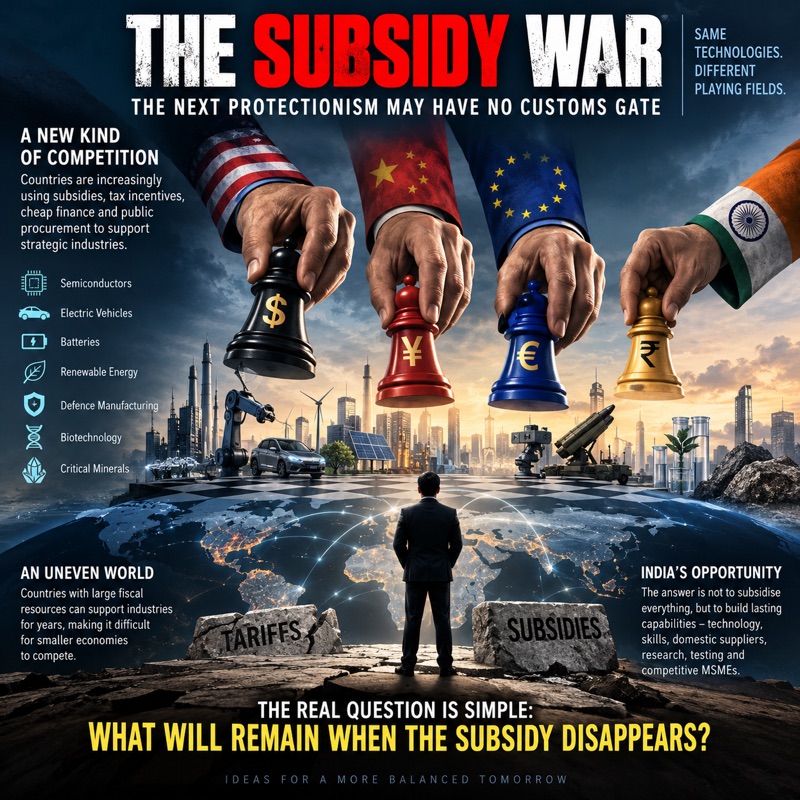
The Subsidy War: When Governments Become Competitors

For much of the last three decades, the visible face of protectionism was the tariff. Governments raised duties, imposed quotas or restricte...