Thursday, April 4, 2024

India's vs Chinese Manufacturing some learning.

Introduction 
With its immense population and plentiful young workforce, India possesses the potential to become a global manufacturing powerhouse. The following lines delves into the reasons why India has not yet claimed its position as a leader in manufacturing despite its favorable conditions, and compares it with China's success story. By examining factors such as education, workforce, regulations, and exchange rates, valuable insights can be gleaned in shaping India's manufacturing future.

India, known for its large population of young individuals and competitive labor costs, has not been able to capitalize on its potential to become the world's leading manufacturing nation. Let's explore the factors hindering India's progress and draw lessons from China's manufacturing success. By understanding the critical elements that have propelled China to its manufacturing dominance, India can strategize and implement reforms to unleash its dormant manufacturing capabilities.

1. Education and Workforce:
The foundation of any manufacturing ecosystem lies in the quality and skillset of its workers. While India boasts a significant population, the lack of well-educated high school graduates poses a challenge. Additionally, a sizable number of high school graduates prefer pursuing higher education instead of entering the manufacturing sector, leading to a scarcity of skilled workers willing to work with their hands. The focus on mass education and vocational training, as witnessed in China, could prove instrumental in providing India with a competent and abundant workforce for manufacturing.

2. Business-Friendly Regulations:
The cumbersome regulations and bureaucratic hurdles in India have long been an impediment to setting up and operating manufacturing facilities. Contrastingly, China recognized the need to foster a favorable business environment and enabled local governments to facilitate growth by streamlining regulations and incentivizing businesses. Emulating China's approach, India must prioritize making regulations more business-friendly, reducing red tape, and promoting ease of doing business to attract and catalyze manufacturing investments.

3. Role of Unions:
China managed to keep wage growth low and curtail the influence of unions, thereby creating an environment where firms could hire more workers and experience rapid growth. In India's democratic setup, curtailing unions to the same extent is challenging. However, exploring alternative ways to maintain competitive labor costs while ensuring fair employee rights merits examination. Balancing worker welfare with economic potential will be crucial in charting India's manufacturing trajectory.

4. Exchange Rates and Competitiveness:
China's deliberate policy of keeping its exchange rate low significantly enhanced the competitiveness of its manufactured goods in the international market. Although this strategy fueled China's manufacturing growth, it resulted in lower purchasing power for Chinese households and imbalanced consumption patterns. India must carefully consider its exchange rate policies to strike a balance between export competitiveness and ensuring domestic purchasing power.

5. Decentralization and Suitable Regulations:
China's success can be attributed, in part, to its decentralized approach to governance, which empowered local authorities to tailor regulations to support local businesses. India's centralized structure could learn from this decentralization model and adapt regulations to regional requirements, allowing for greater flexibility and adaptability. Striking a balance between centralized governance and local autonomy could prove beneficial to foster a conducive manufacturing environment.

India's manufacturing potential remains untapped despite its significant population and cost advantages. By examining the critical factors that have propelled China's manufacturing dominance, India can gain valuable insights to chart its own course. Enhancing the quality of education, nurturing a skilled and motivated workforce, creating business-friendly regulations, balancing labor rights and costs, and leveraging exchange rates effectively are key areas for India to focus on. Learning from China's experiences while adapting them to suit India's unique circumstances presents a promising path forward for India's manufacturing aspirations.

Wednesday, April 3, 2024

Global Political Economy and India.

Introduction 
In the following lines we delve into the notion of a shifting world order and explore factors that may contribute to this change. The rise of China, India, and other emerging economies, along with the weakened state of institutions like the United Nations, has led to a need for reordering global power dynamics. We examine potential contenders for a new world order and analyze their strengths and weaknesses. Additionally, we assess the prospects of countries such as Saudi Arabia and Indonesia and their claims to becoming significant players in the global arena.

The world order is a complex structure that reflects power dynamics among nations, their economic prowess, and their influence in international affairs. With the rise of China, India, and other emerging economies, questions about the stability and sustainability of the existing global order have emerged. Additionally, the weakening of international institutions, primarily the United Nations, has created a void in global governance. Let's discuss and explore the prospects for change in the world order and identify potential competitors for power and recognition.

The Rise of China and India 
China's meteoric rise as an economic behemoth with a state-controlled capitalist model has shifted the balance of power globally. Its rapid economic growth, military modernization, and assertive foreign policy have raised concerns among Western powers. Likewise, India's growing economy and substantial population position it as a potential contender for power and influence. However, both countries face challenges that can hinder their journey towards becoming influential global players.

The European Union and the United States 
The European Union, as a collective force, has the potential to integrate further and present itself as a unified actor on the world stage. However, it faces internal divisions, particularly with Brexit and issues related to economic inequalities among member states. Meanwhile, the United States remains a dominant player globally, leveraging its military might, technological advancements, and economic prowess. However, recent political shifts and challenges to its global leadership have raised questions about its future role.

Indonesia and Other Emerging Economies 
Indonesia, with its large population and growing economy, shows promise as a future global player. However, it faces obstacles such as governance issues and the need for comprehensive reforms. Other countries like Brazil, Mexico, Nigeria, and Saudi Arabia also possess significant potential for growth and influence. We analyze the strengths and weaknesses of these emerging economies and their prospects for shaping a new world order.

The United Nations and the Need for Stronger Global Institutions:
The United Nations, intended to be an international platform for dialogue, cooperation, and conflict resolution, faces numerous challenges. Its powerlessness in addressing conflicts, such as the Israeli-Palestinian issue, exposes its limitations. As the world order evolves, the need for stronger, more inclusive, and effective global institutions becomes paramount. We discuss the possibilities for enhancing the UN's role or potentially developing new platforms that can better address global challenges.

The Importance of Human Capital:
While economic growth and geopolitical influence play significant roles in determining a country's position in the world order, investment in human capital remains crucial. We delve into the role of education, healthcare, and socio-cultural factors in shaping a nation's competitiveness. A focus on human capital development can equip countries with the skilled workforce necessary to excel in the global arena. We examine the efforts of various nations in investing in their human resources.

Conclusion:
The world order is indeed in a state of flux, with the rise of emerging economies, the evolving roles of traditional global powers, and the need for stronger global institutions. China and India, along with the European Union and the United States, hold significant influence and potential in shaping the future world order. However, the challenges they face, including governance issues, internal divisions, and socioeconomic disparities, could impede their progress. Other nations, such as Indonesia, Brazil, Nigeria, and Saudi Arabia, possess potential but must overcome obstacles to become major global players. Additionally, the strengthening of global institutions and investment in human capital are key factors for any country aspiring to shape the world order. Time will tell how these complexities play out and contribute to the transformation of the global power structure.

As the world evolves, it is essential to analyze factors that will shape the future world order, thereby allowing nations to strategize and adapt to emerging challenges and opportunities.

The Social Responsibility of Investment and Technology

Introduction
In today's world, where inequality is a pressing issue, investment patterns and technology play a vital role in shaping the economic landscape. However, a closer examination reveals that these aspects often favor the organized sector, leading to a significant divide in the allocation of resources.Let us delve into the challenges stemming from inadequate investment in agriculture, the disproportionate emphasis on capital-intensive sectors, the implications of rapid technological advancements, and the need for a socially responsible approach towards investment and technology.

The Dichotomy of Investment Allocation

Over the years, investment has predominantly favored the organized sector, which employs a mere 6% of the workforce. Around 80% of total investment flows into this sector, leaving a meager 20% for the remaining 94% of the workforce. This unbalanced distribution exacerbates the disparity between the organized and unorganized sectors. Furthermore, the agricultural sector, which employs 46% of the population, receives only 5% of investment. This disparity perpetuates the lack of employment opportunities in agriculture, hindering rural development.

The Impact of Automation and Mechanization

Beyond the inadequate investment in agriculture, automation and mechanization further compound the unemployment problem. The organized sector witnesses a high degree of automation and mechanization, reducing the need for labor-intensive activities. This trend is also observed in sectors such as construction, where advanced machinery replaces the need for a significant workforce. As a result, employment generation in these sectors is limited, despite substantial investment.

The Dilemma of Jobless Growth

Investment patterns often prioritize sectors that do not generate substantial employment opportunities, leading to concerns about jobless growth. The investment focus on non-employment generating areas contributes to the perception that economic growth is accompanied by an increase in unemployment. This dilemma highlights the importance of targeting investment towards sectors that promote job creation and foster inclusive growth.

The Urbanization Conundrum

A significant portion of investment is directed towards urbanization, which poses its own challenges. Urbanization demands substantial capital due to the high costs associated with infrastructure development and land prices. Consequently, resources for investment in rural areas and agriculture become scarce. This discrepancy perpetuates the rural-urban divide, reflecting a prioritization of urban development at the expense of rural regions.

Technological Advancements and Labor Displacement

Technological advancements, such as artificial intelligence and automation, have the potential to disrupt employment patterns. The rapid pace of technological change creates uncertainty, making it difficult to anticipate the future of various sectors. Emerging technologies like ChatGPT and autonomous vehicles raise questions about the future of teaching and transportation industries, potentially displacing existing jobs or changing the nature of work. This uncertainty necessitates proactive planning and adaptive strategies to mitigate the adverse effects on employment.

Global Concerns of Unemployment and the Role of Capitalism

Unemployment is not a localized issue but a global concern. Automation and technological advancements have led to a displacement of labor worldwide. Prominent figures, such as former U.S. President Donald Trump, have emphasized protecting domestic jobs from outsourcing by imposing stricter trade measures. This global problem underscores the urgent need to address unemployment issues and their relationship with capitalism.

A Socially Responsible Approach to Investment and Technology

To tackle the challenges arising from inequality, unemployment, and the impact of technology, a socially responsible approach to investment and technology is crucial. Governments, alongside other stakeholders, must prioritize investment in sectors that generate employment opportunities, such as agriculture and rural development. Additionally, investments should support skill development and retraining programs to equip workers with the necessary tools to adapt to technological disruptions.

Addressing inequality and unemployment requires a comprehensive and socially responsible approach to investment and technology. By reevaluating investment patterns, focusing on sectors that generate employment, and promoting skill development, governments can foster inclusive growth. Balancing the need for technological advancements with the preservation of labor opportunities is vital for a more equitable and sustainable future. Only through a concerted effort can we overcome the challenges posed by the current investment paradigm and technological disruptions, ensuring a more balanced and prosperous society for all.

Tuesday, April 2, 2024

India's Global Engagement: Shaping the World Order

Introduction
In a world characterized by increasing interconnectivity and interdependence, the role of nations in shaping the global order has become paramount. India, with its rich history, diverse culture, and emerging economic power, finds itself at a critical juncture. We seek to delve into the dynamics of India's engagement with the world, emphasizing the importance of open and proactive diplomacy, economic integration, and careful projection of power.

Benefitting from Globalization

India has experienced tremendous benefits when it has embraced globalization and actively engaged with the world. Opening up its doors to foreign companies and inviting investments has spurred economic growth, created job opportunities, and enabled the exchange of knowledge and technology. Integration into global supply chains, whether in manufacturing or services, has allowed Indian businesses to thrive and compete on a global stage.

The "friendly nation" advantage

India has often been considered a more welcoming and receptive country in comparison to certain other global powers. This friendly image has attracted foreign investments, trade relationships, and collaborations, propelling India's economic development. It is important for India to preserve this perception and avoid presenting itself as an antagonistic force.

Avoiding the Ugly Superpower Syndrome

India must exercise caution in how it presents itself to the world. It is crucial to recognize that flexing muscles and projecting power prematurely can have adverse ramifications. The Chinese concept of "ugliness," which describes a country's aggressive behavior, serves as a cautionary tale for India. By becoming an ugly superpower, India risks alienating potential partners and losing out on crucial trade, investments, and people exchanges.

Inclusive Leadership and Cooperation

As India's influence grows on the global stage, it is imperative to adopt an inclusive approach. Instead of antagonizing other nations, India should strive to forge partnerships and collaborate in shaping the world order. The goal should be to garner support and consensus from countries, ensuring that India's rise benefits not only itself but also its partners.

Lessons from Canada: A Balanced Approach

The recent diplomatic rift between India and Canada highlights the need for a nuanced approach to international relations. Amidst allegations and debates surrounding Indian government involvement in certain incidents, the reaction to Canada's statements condemning these actions was one of indignation. However, it is noteworthy that the response was more cooperative when the United States took a similar stance. This disparity in reactions underscores the need for India to carefully evaluate the image it projects and the consequences it entails.

Strategic Projection of Power

India's emergence as a global player necessitates thoughtful projection of its power and influence. Rather than prematurely asserting itself, India should focus on building alliances, becoming a responsible stakeholder, and demonstrating its commitment to the stability and prosperity of the international community. By doing so, India can shape the world order without alienating potential partners or eliciting fear from others.

Embracing Opportunities, Shaping the Future

In a rapidly evolving world, India stands at a unique crossroad, laden with both opportunities and challenges. To fully leverage the benefits of globalization, India must continue its path of engagement with the world. By fostering an image of friendliness, promoting economic integration, and pursuing a strategic and inclusive approach to power projection, India can consolidate its standing as a vital player in shaping the future world order. Balancing its rise with responsibility and cooperation is crucial to realizing India's aspirations on the global stage.

Historical perspective on India's Engagement with the World

Introduction:
In this issue we delve into the dynamics of India's engagement with the world, focusing on the economic aspects and its impact on the country's growth and development. We also explore the perspectives of two prominent personalities, former Prime Minister Manmohan Singh and former Reserve Bank of India Governor Raghuram Rajan, on this subject. By analyzing their strengths and combining them with our independent observations, we aim to gain a holistic understanding of India's engagement with the global economy.

India's Economic Transformation:

Over the past few decades, India has experienced significant economic growth and has emerged as one of the world's fastest-growing major economies. This transformation has been driven, to a large extent, by a deepening engagement with the global economy. India's integration into the global marketplace has resulted in flourishing trade relations, foreign direct investment, technological advancements, and access to new markets.

Former Prime Minister Manmohan Singh's Perspective:

Prime Minister Manmohan Singh's background as an economist has played a crucial role in shaping his approach to India's engagement with the world. He recognized the importance of opening up the Indian economy, dismantling trade barriers, and attracting foreign investment to achieve sustainable growth. Singh's emphasis on economic diplomacy and multilateralism laid the foundation for India's increased participation in global organizations such as the World Trade Organization and the G20.

Former RBI Governor Raghuram Rajan's Perspective:

Raghuram Rajan's tenure as the RBI Governor coincided with Prime Minister Narendra Modi's first term in office. Rajan, known for his expertise in international finance, brought a fresh perspective to India's economic landscape. He focused on financial sector reforms, strengthening regulatory frameworks, and engaging with global financial institutions to fortify India's economic stability. Under his leadership, India embarked on a path of financial inclusion, robust regulation, and dynamic monetary policies.

PM Modi's Politically Persuasive Approach:

Prime Minister Narendra Modi's strength lies in his political acumen and ability to connect with the masses. His powerful oratory skills and persona have enabled him to rally public support for his policies and initiatives. Modi's international engagements, such as the "Make in India" campaign, "Digital India," and "Act East Policy," have projected India as an attractive investment destination and a capable global player. His persuasive abilities have been instrumental in garnering international partnerships and advancing India's interests on the global stage.

Analyzing India's Engagement with the World:

India's engagement with the world encompasses diverse elements, including economic, political, diplomatic, and cultural dimensions. On the economic front, India has become an integral part of global supply chains, attracting multinational corporations and fostering innovation. The country's participation in international trade agreements and regional economic blocs, such as the Regional Comprehensive Economic Partnership (RCEP), highlights its commitment to economic integration.

Furthermore, India's engagement with the world has extended beyond economic interests. It has actively contributed to global issues such as climate change, sustainable development, and peacekeeping operations. The country's growing presence in international forums and its pursuit of a permanent seat in the United Nations Security Council underscores its aspirations to shape global decision-making processes.

India's engagement with the world has transformed its economy, boosted trade and investment, and increased its geopolitical significance. The combined perspectives of former Prime Minister Manmohan Singh and former RBI Governor Raghuram Rajan shed light on the underlying principles that have guided India's approach to global engagement.

While Singh's analytical approach and economic diplomacy laid the groundwork, Modi's persuasive skills and political acumen have accelerated India's integration into the global economy. As India continues to strengthen its position on the world stage, it must strike a balance between economic growth, national interests, and sustainable development.

India's engagement with the world is a testament to its potential as a major global player, and its continued success will depend on dynamic economic policies, effective diplomacy, and proactive leadership. By harnessing its strengths and adapting to global challenges, India can pave the way for a more prosperous and harmonious world.

Monday, April 1, 2024

RBI Role and Challenges

Introduction
In the following lines we will explore the various aspects related to the Reserve Bank of India (RBI), decision-making processes, and the country's journey towards becoming a world leader. We will delve into topics such as demonetization, the selection of faces on currency notes, the role of citizens, and the overall growth of the economy.

Understanding the RBI's Role

The RBI's primary responsibility is to maintain the value of currency in India. It does so by controlling the amount of money in circulation, ensuring that it aligns with the needs of the economy. To preserve the value of money, the RBI avoids excessive printing and focuses on striking a balance between currency supply and demand. Additionally, the RBI keeps inflation low to build confidence in the economy.

Deciding the Quantity of Currency to Print

The process of determining how much currency to print involves two key aspects: notes and reserves. While printing more notes can increase the money supply, expanding reserves is the primary method. The RBI estimates the required level of reserve growth and adjusts its actions accordingly. For example, to prevent the depreciation of the rupee, the RBI purchases dollars from banks, thereby increasing reserves. This process is essential to maintain stability in the economy.

Understanding Economic Growth

Economic growth is a vital component of becoming a world leader. It can be achieved through three key means: increasing the labor force, enhancing productivity, and obtaining capital. By putting more people to work and ensuring efficient utilization of human resources, productivity can be improved. Additionally, having access to capital, which includes tools and technology, helps boost productivity further.

Becoming a Superpower

Becoming a superpower involves transforming India into a developed nation with a high per capita GDP. To achieve this, every Indian would need to earn around $50,000 per year. With a population of approximately 1.4 billion, India's economy would reach an estimated $75 trillion, four times the size of the current US economy. However, this transformation requires a long-term vision and strategic planning.

Examining RBI's Decisions

When considering the worst decision made by the RBI, one must carefully differentiate between decisions made by the RBI itself and those made upon government request. While demonetization was a decision that caused considerable hardships for the public, it was not an independent choice made by the RBI but rather a government mandate. Nevertheless, demonetization failed to achieve its intended purpose as a significant portion of the demonetized currency returned to the system.

Analyzing Demonetization

The demonetization of the ₹2,000 denomination notes was driven by the need for a rapid withdrawal of currency. The larger denomination made printing easier and faster. However, the removal of these notes seems illogical, as discontinuing their production would have sufficed without declaring them invalid. The government's reasoning behind this decision remains unclear.

The RBI plays a crucial role in maintaining the stability and value of currency in India. Decision-making is a careful process that takes into account economic indicators, growth strategies, and government directives. While some decisions have proven less effective in hindsight, it is essential to learn from past experiences. India's journey to becoming a world leader requires a collective effort, with citizens, policymakers, and the RBI collaboratively driving positive change for a robust and sustainable economy.

Disguised Unemployment Problem in Rural Areas in India.

Introduction:
Agriculture plays a crucial role in rural areas, providing livelihoods to a significant proportion of the population. However, the sector is facing numerous challenges, including disguised unemployment resulting from rapid technological advancements. The following text delves into the implications of mechanization in agriculture, explores the interconnectedness of the agricultural and non-agricultural sectors, and proposes innovative solutions to address the disguised unemployment problem.

The Impact of Technological Change in Agriculture:

Technological advancements, such as mechanization, have revolutionized agricultural practices. Farmers have transitioned from manual labor-intensive activities to using machines for various operations. For example, the manual process of sowing potatoes has been replaced by machinery, leading to increased efficiency and reduced labor requirements. While this shift has enhanced productivity and output, it has also led to a problem known as disguised unemployment.

Disguised Unemployment and its Connection to Agricultural Practices:

Disguised unemployment occurs when the number of people engaged in a sector exceeds the productive capacity required. In the context of agriculture, the increasing mechanization renders many workers redundant while creating a strain on the rural economy. To escape this predicament, individuals must find employment opportunities outside the agricultural sector, but the non-agricultural sector often fails to generate sufficient jobs. Consequently, disguised unemployment persists, perpetuating poverty and hindering overall socio-economic development.

The Significance of Micro-Sector Employment:

To combat disguised unemployment effectively, it is vital to prioritize job generation in the micro-sector. In many economies, micro-units, including small and medium-sized enterprises, account for a significant portion of employment opportunities. For instance, India has an estimated 6,00,00,000 micro-units that contribute to 97.5% of the micro, small, and medium enterprise (MSME) employment. Therefore, nurturing and supporting these micro-units becomes crucial in alleviating the disguised unemployment problem.

Challenges in Boosting the Micro-Sector:

Efforts to enhance the micro-sector face several challenges. Firstly, marketing and distribution pose significant hurdles, particularly for micro and small businesses. Establishing cooperatives can help consolidate efforts, pool resources, and overcome these barriers. Cooperatives can facilitate marketing, distribution, and technology adoption, enabling micro and small enterprises to harness their full potential.

Boosting Income in Agriculture:

To augment employment opportunities in the micro-sector, it is imperative to focus on increasing agricultural incomes. Providing minimum support prices (MSP) for all crops ensures that farmers receive fair compensation, which in turn increases their purchasing power. Consequently, higher demand for agricultural produce leads to overall economic growth and job creation.

The Role of Government Intervention:

Effective government intervention plays a vital role in addressing the disguised unemployment problem. Establishing cooperatives, as mentioned earlier, allows for efficient resource utilization, improved technology adoption, and resolving marketing challenges faced by micro-enterprises. Governments should develop policies that incentivize cooperation among micro and small businesses, fostering a business ecosystem that supports their growth.

A Macro Package for Sustainable Employment:

Solving the disguised unemployment problem requires a comprehensive macro package. This package should encompass three elements: firstly, ensuring workers receive a living wage in line with constitutional provisions; secondly, implementing MSPs for all crops to boost agricultural incomes; and thirdly, promoting the establishment of cooperatives to support the micro-sector. This holistic approach addresses the interdependence of agriculture and non-agricultural sectors, fostering rural development, reducing poverty, and generating sustainable employment opportunities.


Disguised unemployment resulting from technological advancements in agriculture poses a significant challenge for rural economies. Fostering the growth of the micro-sector, increasing agricultural incomes, and implementing government interventions such as cooperatives can help address this issue. By addressing these intertwined factors, economies can mitigate the disguised unemployment problem, paving the way for inclusive and sustainable rural development.

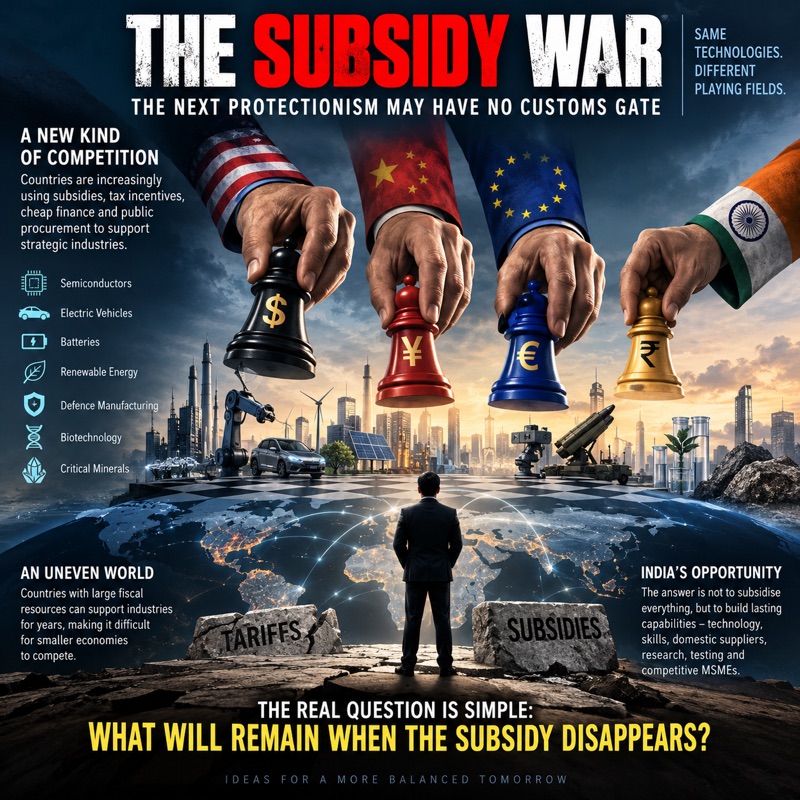
The Subsidy War: When Governments Become Competitors

For much of the last three decades, the visible face of protectionism was the tariff. Governments raised duties, imposed quotas or restricte...