Friday, November 3, 2023

The Sustainable Fashion Movement: Embracing Forest and Plant-Based Cloth

Introduction:

The fashion industry has long grappled with environmental and social challenges, including pollution, waste, and labor exploitation. However, an increasing movement towards sustainable fashion has gained momentum, driven by conscientious consumers, responsible brands, and regulatory bodies. Forest and plant-based cloth have emerged as a crucial component of this sustainable fashion movement, encompassing fabrics made from renewable sources like wood, bamboo, hemp, algae, rose petals, and coffee grounds. These fabrics offer a host of environmental benefits, including biodegradability and lower ecological footprints compared to conventional materials such as cotton and polyester. This article delves into the sustainability of forest and plant-based cloth in the new fashion industry and explores its potential impact on the global fashion landscape over the next five years.

Environmental Benefits of Forest and Plant-Based Cloth:

Forest and plant-based cloth demonstrate significant environmental advantages over traditional materials. Primarily, they possess the remarkable property of being biodegradable, allowing them to decompose naturally without leaving behind harmful residues. This characteristic helps to mitigate the waste problem that plagues the fashion industry, where discarded garments often end up in landfills or contribute to air pollution through incineration, thereby contributing to greenhouse gas emissions. Furthermore, forest and plant-based cloth have lower carbon footprints compared to cotton and polyester. The production of cotton, for instance, necessitates considerable amounts of water, energy, and pesticide use, leading to substantial carbon emissions and water pollution. In contrast, the production of forest and plant-based cloth involves fewer resources such as water, energy, and chemicals, resulting in reduced environmental impacts. Additionally, these fabrics rely on renewable sources, reducing dependence on non-renewable fossil fuels and further aiding in the mitigation of climate change.

Market Growth and Consumer Demand:

The market for fashionable products crafted from non-cotton non-polyester materials is poised for significant growth in the coming years, owing to the escalating demand for sustainable fashion. Industry reports forecast that the market size will reach an impressive USD 72.19 billion by 2028, with a compound annual growth rate (CAGR) of 6.02% during the forecast period (2023-2028). This surge can be attributed to various factors, including heightened consumer awareness and preferences, the commitment of brands to sustainability, and the implementation of regulatory initiatives that promote environmentally conscious practices. As consumers become more conscious of the environmental and social impacts of their fashion choices, the demand for clothing made from sustainable materials has soared. Brands are responding to this demand by incorporating forest and plant-based cloth into their collections, driving market growth and fostering innovation within the industry.

Eco-Sustainability Balance and Trade-Offs:

While forest and plant-based cloth offer substantial environmental benefits, they are not devoid of challenges and trade-offs. One prominent concern revolves around the potential negative impact on land use and biodiversity associated with the cultivation of plant-based materials. Large-scale cultivation of these materials may require extensive land areas, which, if not managed responsibly, could result in deforestation or the conversion of natural ecosystems. Such activities contribute to habitat loss, species extinction, and disruption of ecological balance. To address these issues, sustainable sourcing and cultivation practices, such as agroforestry and regenerative agriculture, must be implemented to minimize the ecological footprint of plant-based fabric production. Additionally, it is imperative to prioritize and ensure biodiversity conservation throughout the supply chain, offering protection to vulnerable ecosystems and species.

Another formidable challenge lies in the social impact of transitioning to forest and plant-based cloth. The fashion industry heavily relies on labor-intensive processes, particularly in regions characterized by lower labor costs. As brands gradually shift towards sustainable materials, it becomes essential to uphold workers' rights and ensure fair wages throughout the supply chain. Efforts should be made to improve labor conditions and provide training opportunities in regions where the fashion industry plays a significant role in local economies, fostering a more equitable and sustainable ecosystem.

Furthermore, widespread adoption of forest and plant-based cloth faces technological barriers. The production of these fabrics often necessitates specialized equipment and intricate processes that may be less readily available compared to conventional materials. Investment in research and development is imperative to surmount these obstacles and optimize production methods for forest and plant-based cloth. Collaborative efforts between brands, textile manufacturers, and technology providers can facilitate the scaling-up of sustainable fabric production by sharing knowledge, expertise, and resources.

Impact on the Global Fashion Industry:

The impact of forest and plant-based cloth on the global fashion industry over the next five years hinges on the speed and scale of their adoption. Several factors will influence their widespread usage, including consumer awareness and preferences, innovation and investment, regulatory standards, collaboration and partnerships, and supply chain resilience. As consumers acquire more knowledge about sustainable fashion and demand environmentally friendly garments, brands will be compelled to invest in research and development and collaborate with industry peers to develop novel technologies and production methods. Regulations and standards aimed at mitigating the environmental impact of the fashion industry will play a pivotal role in driving the adoption of forest and plant-based cloth. Collaborative efforts among stakeholders across the supply chain, spanning from raw material suppliers to garment manufacturers, will be instrumental in ensuring a smooth and seamless transition towards sustainable fashion practices.

Conclusion:

Forest and plant-based cloth present promising solutions to combat the sustainability challenges plaguing the fashion industry. With their biodegradability and lower environmental impacts, these fabrics possess the potential to overhaul the industry and significantly reduce its ecological footprint. However, the successful integration of forest and plant-based cloth into the global fashion supply chain necessitates concerted efforts from brands, consumers, regulators, and suppliers. It demands the addressal of challenges associated with land use, biodiversity, labor conditions, and technological barriers. By embracing sustainable materials and practices, the fashion industry can actively contribute to an environmentally and socially responsible future.

References:

[1] The future of next-gen materials in the fashion industry | World Economic Forum, https://www.weforum.org/agenda/2021/10/these-materials-are-replacing-animal-based-products-in-the-fashion-industry/

[2] 5 of the best eco-friendly fabrics of the future | Vogue India, https://www.vogue.in/fashion/content/5-of-the-best-eco-friendly-fabrics-of-the-future

[3] Non Woven Fabric Market - Analysis, Size, Share & Industry growth, https://www.mordorintelligence.com/industry-reports/nonwoven-fabric-market

[4] Non-Woven Fabrics Global Market Report 2022 - GlobeNewswire, https://www.globenewswire.com/news-release/2022/09/30/2526185/0/en/Non-Woven-Fabrics-Global-Market-Report-2022.html

[5] The State Of Sustainability In The Fashion Industry (And What It Means For Brands) - Forbes, https://www.forbes.com/sites/forbescommunicationscouncil/2023/01/02/the-state-of-sustainability-in-the-fashion-industry-and-what-it-means-for-brands/

[6] Environmental Sustainability in the Fashion Industry, https://www.genevaenvironmentnetwork.org/resources/updates/sustainable-fashion/

[7] Fashion Industry in the next 5 years: Trends, challenges, and innovations - Times of India, https://timesofindia.indiatimes.com/readersblog/fashioninfo/fashion-industry-in-the-next-5-years-trends-challenges-and-innovations-56551/

[8] Fashion industry challenges and global disruptions - McKinsey, https://www.mckinsey.com/industries/retail/our-insights/how-current-global-trends-are-disrupting-the-fashion-industry

[9] Impact of Sustainable and Organic Fabrics Within The Fashion Industry, https://www.forestdigital.co.uk/2021/06/12/impact-of-sustainable-and-organic-fabrics-within-the-fashion-industry/

[10] Forests for Fashion | UNECE, https://unece.org/forests/forests-fashion

[11] A Review of Circular Fashion and Bio-based Materials in the Fashion - Springer, https://link.springer.com/article/10.1007/s43615-023-00303-z

[12] Fast fashion: How clothes are linked to climate change - BBC, https://www.bbc.com/news/science-environment-60382624

[13] Latest Trends of Fashion: Latest Fashion Trends in India | IIAD, https://www.iiad.edu.in/the-circle/how-do-the-latest-trends-affect-the-business-of-fashion/

[14] 11 Fashion Companies Leading The Way In Sustainability - Forbes, https://www.forbes.com/sites/blakemorgan/2020/02/24/11-fashion-companies-leading-the-way-in-sustainability/

[15] Reportlinker, https://www.reportlinker.com/p06323514/?utm_source=GNW

Asia Small and Medium-Sized Enterprise : How Small Firms Can Contribute to Resilient Growth in the Pacific Post COVID-19 Pandemic

Introduction:
The article  highlights the role played by Micro, Small, and Medium Enterprises (MSMEs) in different countries across Asia. This article aims to offer a detailed analysis, focusing on key parameters such as employment generation, contribution to GDP, export performance, innovation, and access to finance within each country. By examining these parameters, we can gain a better understanding of the current state of MSMEs in Asia, identify areas for improvement, and explore potential avenues for growth.

1. China:
MSMEs in China have become essential drivers of economic growth, employing a significant portion of the workforce and contributing to the country's GDP. The enterprises account for approximately 99% of all businesses in China and employ over 60% of the workforce. Additionally, they contribute around 60% to China's GDP. The report also highlights China's focus on innovation, with MSMEs filing a substantial number of patents in recent years. However, despite these impressive figures, challenges such as limited access to finance and regional disparities persist, necessitating policy interventions to ensure sustained growth within the sector.

2. India:
India's extensive MSME sector plays a crucial role in generating employment opportunities and contributing to the country's GDP. With over 63 million MSMEs, this sector employs approximately 111 million people, accounting for nearly 30% of India's total employment. The ADB report indicates that MSMEs contribute around 30% to India's GDP. However, the sector faces challenges such as limited access to affordable credit, cumbersome regulations, and technological gaps that hinder its progress. Initiatives like the "Make in India" campaign aim to address these challenges and enhance the competitiveness of Indian MSMEs.

3. Japan:
Japan's MSMEs face unique challenges due to an aging population and difficulties in business succession. MSMEs in Japan account for approximately 99% of all businesses, their contributions to employment and GDP are relatively lower compared to other countries. Innovation and entrepreneurship play a pivotal role in rejuvenating Japan's MSME sector. While the country has sustained a high level of patent registrations, there is a need to improve access to breakthrough technologies, address capital and labor constraints, and foster collaboration between larger enterprises and MSMEs.

4. Vietnam:
Vietnam's MSME sector has significantly contributed to the country's economic growth and poverty reduction efforts. The MSMEs account for over 98% of the total number of enterprises in Vietnam and employ around 75% of the workforce. It is estimated that this sector contributes approximately 42% to Vietnam's GDP. There is  need to improve the business environment, enhance access to finance, and promote the adoption of digital technologies to unlock the full potential of Vietnam's MSMEs.

5. Philippines:
The Philippines aimed at promoting MSME growth, including simplified registration processes and increased access to financing. Around 99.6% of registered businesses in the Philippines are MSMEs, employing more than 62% of the workforce. These enterprises contribute approximately 35% to the country's GDP. Despite these positive figures, access to finance remains a challenge, particularly for micro-enterprises. Enhancing financial literacy, bridging the financing gap, and improving market access are critical steps to unlock the true potential of Philippine MSMEs.

6. Indonesia:
Indonesia's vibrant MSME sector plays a vital role in employment generation, income growth, and regional development. The report indicates that MSMEs comprise around 99% of all businesses in Indonesia, employing approximately 97% of the workforce. This sector contributes around 61% to the country's GDP. However, to sustain and expand the growth trajectory, challenges such as limited access to finance, inadequate infrastructure, and cumbersome regulatory frameworks must be addressed. Encouraging digitalization, improving financial literacy, and fostering market access for MSMEs can contribute to the holistic development of the sector.

Conclusion:
The MSMEs drive employment, GDP growth, and innovation in their respective countries, challenges such as limited access to finance, skill gaps, and regulatory barriers persist. Policymakers must focus on tailored interventions to overcome these challenges and unleash the full potential of MSMEs. By doing so, countries can ensure sustainable growth, foster inclusive development, and leverage the immense contribution of MSMEs to build resilient and vibrant economies in Asia.
References


[1] "Empowering Inclusive Growth: Unleashing Potential of Women-led MSMEs in South Asia." Deccan Chronicle. Retrieved from: https://www.deccanchronicle.com/business/economy/270923/empowering-inclusive-growth-unleashing-potential-of-women-led-msmes-i.html

[2] "Unleashing Small and Medium-sized Enterprises in Asia and the Pacific: ADB Evaluation." Asian Development Bank. Retrieved from: https://www.adb.org/news/unleashing-small-and-medium-sized-enterprises-asia-and-pacific-adb-evaluation

[3] "Realizing the Potential of Over 71 Million MSMEs in Southeast Asia." ADB SEADS. Retrieved from: https://seads.adb.org/solutions/realizing-potential-over-71-million-msmes-southeast-asia

[4] "Unleashing Small and Medium-sized Enterprises in Asia and the Pacific." YouTube. Retrieved from: https://youtube.com/watch?v=oV5XwM6A2k8

[5] "Regional Policy Dialogue on Unleashing the Potential of MSMEs in the CAREC Region." CAREC Institute. Retrieved from: https://www.carecinstitute.org/events/regional-policy-dialogue-on-unleashing-the-potential-of-msmes-in-the-carec-region/

[6] "Unlocking value in Vietnam's banking market for SMEs and MSMEs." McKinsey. Retrieved from: https://www.mckinsey.com/featured-insights/future-of-asia/countries-and-regions/southeast-asia/southeast-asia-perspectives/unlocking-value-in-vietnams-banking-market-for-smes-and-msmes

[7] "MSMEs' Employment Potentials, Challenges & PSBs' Role in Funding." Lok Sabha. Retrieved from: https://loksabha.nic.in/annex/17/AS/MSME_eng.pdf

Unleashing the Digital Revolution: Southeast Asia's Soaring Internet Economy


Introduction:

The digital boom in Southeast Asia has transformed the region into a vibrant hub for the internet economy. With increasing adoption of digital technologies and services by consumers, businesses, and governments, the digital economy in Southeast Asia is poised for remarkable growth. According to a report by Google, Temasek, and Bain & Company, the digital economy is set to reach unprecedented heights, with a projected gross merchandise value (GMV) of $218 billion and revenues of $100 billion by 2023. Furthermore, the report suggests that the digital economy will more than double its value by 2025, reaching $470 billion in GMV and $220 billion in revenue.

Sector Analysis and Market Growth:

The digital economy in Southeast Asia encompasses six key sectors: e-commerce, online travel, online media, ride-hailing, food delivery, and digital financial services. Among these sectors, e-commerce stands out as the largest and fastest-growing, projected to account for 44% of the total GMV by 2023. This sector is experiencing exponential growth, expanding at a remarkable rate of 23% year-on-year. The second-largest sector, online travel, has been significantly impacted by the COVID-19 pandemic. However, it is expected to make a strong recovery and return to pre-pandemic levels by 2024. Online media follows as the third-largest sector, followed by ride-hailing, food delivery, and digital financial services. Digital financial services, in particular, have witnessed significant monetization potential, increasing their share in the total transaction value from 40% in 2019 to 51% by 2023.

Factors Driving the Digital Boom:

Southeast Asia's digital boom can be attributed to several key factors. Firstly, the region boasts a large and young population, with over 650 million people, more than 400 million internet users, and 360 million smartphone users. This demographic advantage presents immense opportunities for digital market penetration and expansion. Moreover, the internet penetration rate in Southeast Asia still has great potential for growth, with only 63% of the population currently connected. This suggests that there is a vast untapped market for internet-based services, creating a pathway for further digital growth.

In addition to the demographic advantage, Southeast Asia has nurtured a robust startup ecosystem, with numerous unicorns and aspiring unicorns. As of 2023, the region has witnessed the emergence of over 15 unicorns, which are startups valued at over $1 billion, and more than 70 aspiring unicorns valued at over $100 million. These startups have attracted significant investments from global tech giants such as Google, Facebook, Alibaba, Tencent, and Amazon. Such investments not only validate the potential of the region's digital economy but also provide the necessary funds for further innovation and expansion.

Challenges and Navigating the Threats:

While the digital boom presents immense growth opportunities, it is not without its challenges. The uncertain macroeconomic environment, regulatory complexities and fragmentation across different countries, cybersecurity risks, data privacy concerns, talent gap, skill mismatch, and social and environmental issues pose potential threats to the digital economy in Southeast Asia. However, digital economy players can navigate these threats by adopting strategic measures to enhance profitability, sustainability, and social impact.

One of the key strategies is to focus on high-value users and retention. By catering to the needs of their most valuable customers, businesses can foster loyalty and generate repeat business, driving long-term growth. Moreover, expanding into new geographies and segments can help businesses diversify their revenue streams, mitigating risks associated with relying solely on a single market or customer base. The utilization of data and artificial intelligence can provide insights and competitive advantages, enabling businesses to personalize their offerings and deliver superior customer experiences.

Collaboration with ecosystem partners is also instrumental in addressing challenges and driving growth. By forming strategic alliances, businesses can leverage the expertise and resources of other players in the ecosystem, fostering innovation and accelerating market penetration. Additionally, addressing social and environmental challenges can enhance the sustainability and positive impact of the digital economy. This can be achieved by incorporating ethical practices, supporting community initiatives, and mitigating negative environmental impacts.

Conclusion:

The digital boom in Southeast Asia heralds a new era of growth and innovation in the region. With its large and youthful population, expanding internet penetration, and a thriving startup ecosystem, the potential for the internet economy to flourish is enormous. However, this growth is accompanied by challenges such as regulatory complexities, cybersecurity risks, and social and environmental concerns. To achieve sustainable and inclusive growth, businesses must navigate these threats by adopting intelligent strategies that focus on high-value users, diversify revenue streams, leverage data and artificial intelligence, collaborate with ecosystem partners, and address social and environmental issues. By doing so, Southeast Asia's digital economy can continue to thrive, enabling the region to unlock its full potential and emerge as a global digital powerhouse.

References:

1. Bain & Company. (2023). e-Conomy SEA 2023 report: Southeast Asia’s digital economy hits $100 billion in revenue. Retrieved from https://www.bain.com/about/media-center/press-releases/sea/e-conomy-sea-2023/

2. Google. (2023). e-Conomy SEA 2023 report: Southeast Asia’s digital economy hits $100 billion in revenue. Retrieved from https://www.bain.com/about/media-center/press-releases/sea/e-conomy-sea-2023/

3. Google. (2023). e-Conomy SEA 2023 report - Southeast Asia's digital economy. Retrieved from https://economysea.withgoogle.com/report/

4. EDG. (2021). South-east Asia's digital economy to top US$175b in 2021 despite pandemic, report finds. Retrieved from https://www.edb.gov.sg/en/business-insights/insights/south-east-asia-s-digital-economy-to-top-us-175b-in-2021-despite-pandemic-report.html

5. Impact Wealth. (2023). Southeast Asia’s Digital Economy Aims for a $218 Billion Boom in 2023. Retrieved from https://impactwealth.org/southeast-asias-digital-economy-aims-for-a-218-billion-boom-in-2023/

Thursday, November 2, 2023

Agroforestry in India: Challenges, Opportunities, and Pathways for Sustainable Development.

The agroforestry economy of India is a complex and dynamic system that involves the integration of trees, crops, and livestock on the same land. Agroforestry has many benefits for the environment, society, and economy, such as enhancing biodiversity, soil fertility, water conservation, climate resilience, food security, income diversification, and rural development. However, agroforestry also faces many challenges, such as:

- Lack of quality planting material and technical guidance for farmers.
- Inadequate research and extension support for agroforestry systems.
- Poor market infrastructure and value chain development for agroforestry products.
- Restrictive policies and regulations that hinder the production, transport, and trade of agroforestry products.
- Low awareness and acceptance of agroforestry among stakeholders and consumers.

The scope of agroforestry in India is immense, given the country's diverse agro-climatic zones, land use patterns, and socio-cultural contexts. Agroforestry can be practiced in various forms, such as:

- Trees on cropland, where trees are grown along with annual or perennial crops in different spatial or temporal arrangements.
- Trees on pastureland, where trees are grown to provide fodder, shade, and shelter for livestock.
- Trees on wasteland, where trees are grown to reclaim degraded or marginal lands and provide environmental services.
- Trees on homesteads, where trees are grown around houses or farm buildings to provide multiple benefits for the household.

The status of agroforestry in India is improving, especially after the adoption of the National Agroforestry Policy in 2014, which is the first of its kind in the world. The policy aims to promote agroforestry as a mainstream agricultural practice by addressing the key challenges and creating an enabling environment for its development. Some of the initiatives taken under the policy are:

- Establishing a National Agroforestry Board to coordinate and oversee the implementation of the policy.
- Developing a National Agroforestry Mission to provide financial and technical support for agroforestry activities.
- Revising the existing laws and regulations to facilitate the production and movement of agroforestry products.
- Strengthening the research and extension system to generate and disseminate agroforestry knowledge and technologies.
- Enhancing the market linkages and value addition for agroforestry products.
- Creating awareness and capacity building among farmers and other stakeholders on agroforestry.

The opportunity for agroforestry in India is enormous, considering the growing demand for wood and non-wood forest products, both domestically and internationally. Agroforestry can help meet this demand by increasing the supply of quality raw material from farm lands, while reducing the pressure on natural forests. Agroforestry can also contribute to achieving various national and global goals related to sustainable development, such as:

- Doubling farmers' income by 2022, as envisioned by the Prime Minister of India.
- Enhancing the tree cover from 24.56% to 33%,  as mandated by the National Forest Policy of India.
- Mitigating greenhouse gas emissions by 33-35% ,from 2005 levels by 2030, as pledged by India under the Paris Agreement on climate change.
- Restoring 26 million hectares of degraded land by 2030, as committed by India under the Bonn Challenge on forest landscape restoration.

The threats for agroforestry in India are mainly related to the uncertainties and risks associated with climate change, market fluctuations, pests and diseases, and socio-economic factors. Some of the possible threats are:

- Increased frequency and intensity of droughts, floods, storms, heat waves, and other extreme weather events that may affect the growth and survival of trees and crops.
- Reduced availability and quality of water resources that may limit the irrigation potential for agroforestry systems.
- Increased competition and conflict over land resources that may reduce the scope for expanding agroforestry areas.
- Reduced profitability and viability of agroforestry systems due to volatile prices, low demand, high transaction costs, or unfair trade practices for agroforestry products.
- Reduced adoption and acceptance of agroforestry systems due to lack of awareness, knowledge, skills, or incentives among farmers and other stakeholders.

To conclude, agroforestry is a promising option for enhancing the productivity, profitability, diversity, and sustainability of agriculture in India. However, it also faces several challenges that need to be addressed through appropriate policies, programs, researches, innovations, partnerships, and participations. Agroforestry has the potential to transform India's green economy by providing multiple benefits for people and planet..

Source: 

(1) What is Agroforestry Potential in India? CEEW Research. https://www.ceew.in/publications/sustainable-agriculture-india/agroforestry.
(2) Agroforestry: Shaping India’s Green Economy - Hosachiguru Blog. https://www.hosachiguru.com/blog/agroforestry-shaping-indias-green-economy/.
(3) How the agroforestry industry’s empowerment can have significant long .... https://timesofindia.indiatimes.com/blogs/voices/how-the-agroforestry-industrys-empowerment-can-have-significant-long-term-benefits-in-economic-advantages/.

(4) Agroforestry: Significance and Challenges - ClearIAS. https://www.clearias.com/agroforestry/.
(5) P-ISSN: Agroforestry systems: Opportunities and challenges in JPP 2017 .... https://www.phytojournal.com/archives/2017/vol6issue6S/PartV/SP-6-6-241.pdf.
(6) P-ISSN: Agroforestry systems: Opportunities and challenges in JPP 2017 .... https://bing.com/search?q=agroforestry+challenges+and+opportunities+in+India.
(7) Agroforestry systems: Opportunities and challenges in India. https://www.academia.edu/38947922/Agroforestry_systems_Opportunities_and_challenges_in_India.
(8) Agroforestry systems: Opportunities and challenges in India. https://www.academia.edu/78630609/Agroforestry_systems_Opportunities_and_challenges_in_India.

70 Hours and Counting: Mapping the Role of Indian Women in the Economy and the Debate on Working Hours

Indian women have long played a crucial role in the country's economic activities. They can be found working in both the formal and informal sectors, spanning across agriculture, industry, and services. Furthermore, women in India have also excelled as entrepreneurs, successfully initiating and managing their own businesses. Despite their significant contributions, Indian women still face challenges when it comes to economic participation.

According to a 2020 report by the McKinsey Global Institute, Indian women contribute a staggering $770 billion to the Indian economy annually, accounting for approximately 22% of the country's GDP. However, this figure does not reflect the full potential of women's economic participation, as their labor force participation rate is relatively low compared to other nations. The female labor force participation rate in India currently stands at only 23.3%, significantly lower than the global average of 49.6%.

One of the primary reasons contributing to this low participation rate is the burden of unpaid care work that falls disproportionately on women. This includes responsibilities such as childcare and housework, which often limit their ability to engage in paid employment. Additionally, workplace discrimination against women in terms of wages and opportunities acts as another barrier to their economic participation.

Despite these challenges, Indian women have undoubtedly made significant strides in the economic landscape. In recent years, there has been a noticeable increase in the number of women occupying leadership positions within businesses and government. Women have also been initiating and managing their own ventures at an accelerated pace, showcasing their entrepreneurial prowess.

Interestingly, recent data from the 2021-22 Time Use Survey conducted by the National Statistics Office of India reveals that the average Indian woman works approximately 68 hours per week, encompassing both paid and unpaid work. However, it is important to note that this average varies significantly depending on geographical location, socioeconomic status, and other contextual factors. Women residing in rural areas tend to work longer hours than their urban counterparts, and those from lower socioeconomic backgrounds generally bear a heavier workload compared to their more affluent counterparts.

The suggestion put forth by Mr. Murthy, co-founder of Infosys, that Indian youth should work for 70 hours per week has ignited a deliberation across the nation. Mr. Murthy argues that this intensive work ethic is essential for India to emerge as a global economic superpower. However, this viewpoint has generated contrasting opinions. Some individuals support the notion, asserting that India must compete with countries where longer working hours are the norm. On the other hand, opponents argue that such prolonged working hours are detrimental to one's health and well-being while also questioning the sustainability of such a lifestyle. They further highlight the fact that many Indian workers already toil long hours, particularly in the informal sector.

In conclusion, Indian women make remarkable contributions to the country's economy despite facing various challenges. The average Indian woman dedicates 68 hours per week to both paid and unpaid work. The question of whether Indian youth should work for 70 hours per week remains debatable. Supporters contend that it is necessary for India to establish itself as a global economic powerhouse, while dissenters argue that it would lead to detrimental consequences. Ultimately, achieving a balance between economic productivity and personal well-being should be the ultimate aim, ensuring the holistic development and empowerment of all individuals in society.

References:

1. McKinsey Global Institute. (2020). 'The Power of Parity: Advancing Women's Equality in Asia-Pacific.' Retrieved from https://www.mckinsey.com/featured-insights/gender-equality/the-power-of-parity-advancing-womens-equality-in-asia-pacific

2. National Statistics Office of India. (2021-22). 'Time Use Survey.

Wednesday, November 1, 2023

Fighting the Exodus: Strategies to Preserve Canada's Immigrant Population and Counter the Reverse-Immigration Trend

Introduction

Reverse migration, the phenomenon of immigrants leaving their destination country and returning to their origin country or migrating to a third country, poses a significant challenge for nations that heavily rely on immigration for population and economic growth. Canada, known for its multicultural identity and welcoming attitude towards immigrants, is currently facing a reverse-immigration trend. In recent years, an increasing number of newcomers have chosen to leave the country, potentially hindering Canada's progress. This article delves into the reasons behind this reverse-immigration trend and provides recommendations to address this issue by improving policies and programs to retain immigrants.

Reasons for the Reverse-Immigration Trend

1. Worsening housing affordability:
Canada's housing market is infamous for its high prices, making it increasingly difficult for immigrants to find affordable and suitable housing. The lack of accessible housing options may prompt immigrants to consider moving to countries with comparatively lower housing costs.

2. Underemployment:
Immigrants often encounter barriers when trying to find employment that matches their qualifications and skills. Issues such as credential recognition, language proficiency, and discrimination make it challenging for them to secure suitable jobs. Frustrated with limited career prospects, some immigrants may choose to seek better opportunities elsewhere.

3. Lack of integration:
Isolation and feelings of unwelcome may arise among some immigrants in Canada. Experiences of racism, xenophobia, and cultural differences can contribute to a sense of displacement. Homesickness and the desire to be in a more familiar environment, closer to family and friends, might influence immigrants to consider returning to or relocating to their home countries.

Recommendations to Retain Immigrants

1. Enhancing settlement services:
Canada should invest in providing comprehensive support and guidance to immigrants to facilitate their integration into various aspects of Canadian life. Offering information, counseling, mentoring, networking, and training opportunities can help them navigate the housing market, the labor market, healthcare systems, and other essential services.

2. Promoting social inclusion:
Developing a more inclusive society that values diversity and multiculturalism is crucial to retaining immigrants. Governments, along with civil society organizations, should actively combat racism and discrimination. Encouraging civic participation, facilitating intercultural dialogue, and recognizing the contributions of immigrants are important steps in fostering a welcoming and respectful environment.

3. Strengthening citizenship:
Canada should actively encourage immigrants to become Canadian citizens. By lowering citizenship fees and requirements, increasing awareness and accessibility of citizenship ceremonies, and enhancing newcomers' sense of belonging and identity, Canada can create a stronger bond between immigrants and the country.

Conclusion

In response to the reverse-immigration trend, it is imperative for Canada to address the concerns raised by immigrants. By implementing these recommendations, Canada can improve its policies and programs and retain immigrants as valuable contributors to its population and economic growth.

References

(1) Canada faces reverse-immigration trend as newcomers leave in record numbers, new study finds. Retrieved from: https://www.arabianbusiness.com/politics-economics/canada-faces-reverse-immigration-trend-as-newcomers-leave-in-record-numbers-new-study-finds

(2) Immigrants Are Leaving Canada at Faster Pace, Study Shows. Retrieved from: https://www.bloomberg.com/news/articles/2023-10-31/immigrants-are-leaving-canada-at-faster-pace-study-shows

The Evolving Landscape of Family Run Businesses in India: Challenges and Opportunities

Introduction

Family run businesses have long been an integral part of the Indian economy, playing a pivotal role in its growth and development. Despite their historical significance, these businesses face numerous challenges in the modern era, particularly in the wake of the burgeoning startup culture. However, with careful management and strategic decision-making, family businesses can not only overcome these hurdles but also capitalize on the unique advantages they possess. This article explores the challenges faced by family run businesses in India and highlights the opportunities that can pave the way to their future success.

Challenges faced by family run businesses in India

Managing Growth: Family businesses are confronted with the juxtaposition of traditional values and practices with the imperatives of an evolving economy. To thrive in the face of new entrants with access to greater capital, technology, and talent, family businesses must prioritize innovation, digitalization, globalization, and diversification.

Succession Planning: The successful transfer of leadership and ownership from one generation to the next is a critical component of family businesses' longevity. Ensuring a smooth transition while preserving trust and harmony among family members presents a unique challenge. Thus, preparing the next generation through education, training, and exposure becomes a crucial aspect of succession planning.

Professionalization: Family businesses need to adopt more formal and transparent governance structures, processes, and systems. By enhancing efficiency, accountability, and credibility, family businesses can attract and retain competent professionals who can complement the family's skills and expertise.

Social Responsibility: Aligning their vision and values with the social and environmental needs of society, and demonstrating their commitment to sustainability and ethics, is imperative for family businesses. Building trust and goodwill through engagement with customers, employees, suppliers, regulators, and communities contributes to both long-term success and social impact.

Opportunities for family run businesses in India

Leveraging Strengths: Family businesses possess unique characteristics that provide them with a competitive advantage. Their long-term orientation, strong culture, loyal customer base, flexible decision-making, and resilience in times of crisis can be put to effective use in fostering a distinctive identity and competitive edge in the market.

Embracing Change: Adapting a proactive and positive attitude towards change enables family businesses to embrace new technologies, explore different markets, develop innovative products, and adopt modern business models. By observing and learning from successful family businesses and startups, both within and outside India, they can stay attuned to industry trends.

Collaboration: Collaboration with other family businesses or non-family businesses that share the same vision and values can lead to fruitful synergies and partnerships. By leveraging external resources, such as mentors, advisors, consultants, investors, incubators, accelerators, associations, and platforms, family businesses can find valuable support for their development and innovation endeavors.

Conclusion

Family run businesses in India have a storied past and continue to play a significant role in the country's economic landscape. However, they face considerable challenges in the modern business environment, necessitating careful navigation and adaptation. By managing growth, planning succession, professionalizing operations, and demonstrating social responsibility, family businesses can position themselves for success. By embracing change, leveraging their unique strengths, and collaborating with like-minded enterprises, they can unlock immense opportunities and secure their place in the future of India's economy.

References:

1. PwC India Family Business Survey 2019. [Online] https://www.pwc.in/assets/pdfs/research-insights/fbs/2019/pwc-india-family-business-survey-2019.pdf.
2. Five Real Challenges faced by Family Businesses in India | eGrowth .... [Online] https://www.egrowth.org/blog/five-real-challenges-faced-by-family-businesses-in-india/.
3. Ushering India’s Family Businesses into a New Era of Endless .... [Online] https://economictimes.indiatimes.com/industry/services/education/ushering-indias-family-businesses-into-a-new-era-of-endless-possibilities/articleshow/89500732.cms.
4. Family Business Challenges | Deloitte | Finance. [Online] https://www.deloitte.com/global/en/services/financial-advisory/perspectives/private-company-issues-and-opportunities.html.

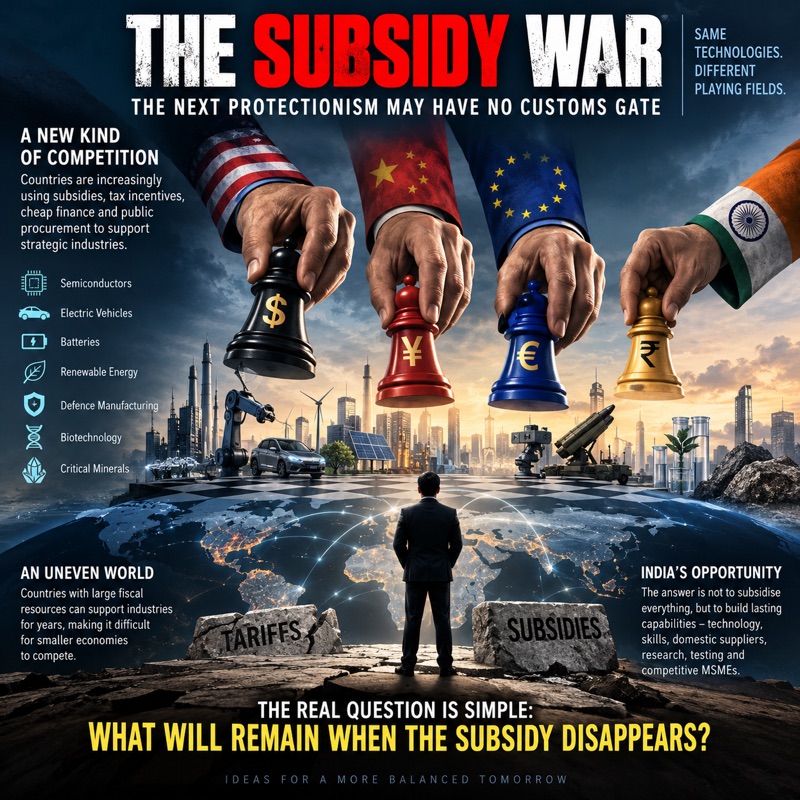
The Subsidy War: When Governments Become Competitors

For much of the last three decades, the visible face of protectionism was the tariff. Governments raised duties, imposed quotas or restricte...