Thursday, February 27, 2025

The Future of Low-Skill Jobs in the Age of Artificial Intelligence

Artificial Intelligence (AI) is rapidly transforming industries, reshaping the nature of work, and raising concerns about job displacement. While automation has historically impacted middle-skill jobs, AI’s growing capabilities now extend to low-skill occupations. These include roles in retail, logistics, and basic administrative work—sectors where repetitive tasks have traditionally been performed by human workers. With AI-driven technologies such as self-checkout kiosks, automated warehouses, and digital customer service agents becoming more prevalent, the future of low-skill jobs is at a crossroads.

However, AI’s impact on low-skill jobs is not solely negative. While some jobs will be eliminated, others will evolve, and new job opportunities will emerge. The key question is: how can workers and policymakers navigate this transition?

How AI is Replacing Low-Skill Jobs

The automation of low-skill jobs is not a futuristic scenario—it is already happening. Several industries are seeing significant AI-driven disruptions:

1. Retail and Customer Service

Self-checkout systems and cashier-less stores (e.g., Amazon Go) are reducing the need for cashiers.

AI-powered chatbots and virtual assistants are replacing human representatives in customer service.

2. Manufacturing and Logistics

Automated warehouses, like those used by Amazon and Alibaba, minimize the need for human warehouse workers.

AI-driven robotics are improving efficiency in factories, reducing the demand for assembly-line workers.

3. Administrative and Clerical Work

AI-driven tools for data entry, scheduling, and document processing are replacing administrative assistants.

Voice recognition and natural language processing are making AI-powered transcription and documentation services more accurate.

These advancements mean that jobs involving repetitive, predictable tasks are at high risk of automation.

Will AI Create New Jobs? The Productivity vs. Employment Debate

Despite job losses in certain sectors, AI is also driving productivity gains, which can lead to the creation of new roles. These opportunities, however, require a different set of skills:

1. AI Oversight and Maintenance

As automation increases, new roles will emerge in maintaining, monitoring, and managing AI-driven systems. For example, a warehouse worker might transition into a role overseeing robotic logistics operations.

2. Jobs in Human-AI Collaboration

AI lacks creativity, empathy, and critical thinking, which are essential in professions like healthcare, education, and creative industries.

Jobs that require human interaction—such as elderly care, mental health counseling, and hospitality—are less likely to be automated.

3. The Rise of the ‘AI-Augmented Worker’

Rather than replacing humans entirely, AI is enabling workers to perform tasks more efficiently. This is evident in sectors like journalism, law, and marketing, where AI assists with research, content generation, and legal analysis.

While AI is expected to replace some low-skill jobs, it is also facilitating the creation of hybrid roles that combine human oversight with AI efficiency.

The Skills Gap: Why Reskilling is Crucial

The major challenge of AI-driven job displacement is the skills gap. Many workers in low-skill roles may struggle to transition into new AI-augmented jobs without proper training. The future workforce will require digital literacy, problem-solving abilities, and adaptability.

What Can Be Done?

1. Investment in Reskilling and Upskilling

Governments and businesses must prioritize training programs to help workers transition into new roles.

Courses in AI fundamentals, programming, and data analysis should be made accessible to workers at risk of job displacement.

2. Public-Private Partnerships for Workforce Development

Companies benefiting from AI should collaborate with governments and educational institutions to fund training initiatives.

Apprenticeships and vocational programs tailored to AI-augmented jobs should be expanded.

3. Social Safety Nets for Transitioning Workers

Policymakers must ensure that displaced workers receive support through unemployment benefits, retraining incentives, and job placement services.
Without proactive efforts to reskill workers, AI-driven job displacement could lead to economic inequality and social unrest.

Which Low-Skill Jobs Will Survive AI?

While many low-skill jobs are at risk, some roles are more resilient to automation:

1. Jobs Requiring Human Interaction and Empathy

Healthcare support roles (e.g., nursing aides, caregivers)

Early childhood education and elderly care

2. Jobs Involving Unpredictable Physical Work

Plumbers, electricians, and construction workers

Cleaning and maintenance staff for unpredictable environments

3. Jobs in the Creative Economy
Artists, musicians, and performers
Content creators and storytellers
While AI can assist in these fields, human intuition, empathy, and adaptability remain irreplaceable.

The Road Ahead: AI as a Partner, Not a Replacement

AI’s growing presence in the workplace is inevitable, but it does not have to lead to widespread unemployment. The future of low-skill jobs will depend on how well workers, businesses, and policymakers prepare for the transition. The focus should be on:

Lifelong Learning: Workers must continually acquire new skills to stay relevant in an AI-driven economy.

AI-Human Collaboration: Instead of fearing AI, industries should leverage it as a tool to enhance productivity and innovation.

Policy Reforms: Governments must ensure an inclusive transition by promoting education, training, and fair labor policies.


The challenge is not whether AI will replace low-skill jobs—it is whether society can adapt quickly enough to create new opportunities.

A Future Defined by Adaptability

AI will undoubtedly reshape the job market, particularly for low-skill workers. However, the outcome is not predetermined. If businesses, workers, and governments take proactive steps toward reskilling, AI collaboration, and economic inclusivity, the future of work can be one of enhanced productivity, new job creation, and shared prosperity.

The key to thriving in the AI age is adaptability. As AI continues to evolve, so must the workforce. Those who embrace learning and adaptability will find themselves not replaced, but empowered by technology.


Wednesday, February 26, 2025

The Economic Worth of Housewives in India: A Long-Overdue Recognition

The recent Hindi movie Mrs has rekindled a crucial debate—how much do housewives contribute to the economy? The film delves into the life of a homemaker, offering a powerful portrayal of the struggles, resilience, and unacknowledged labor of women who dedicate their lives to managing households. The narrative sheds light on the broader question of economic recognition for housewives and their invaluable, yet often invisible, contributions to national productivity.

In India, the role of housewives has historically been overlooked in economic terms. Despite their significant contributions to household management and overall economic stability, their work remains classified as "unpaid labor," absent from formal economic metrics like Gross Domestic Product (GDP). This blog critically examines the economic significance of housewives, tracing historical discussions on this issue and evaluating their actual impact on the Indian economy.

Historical Context: The Neglect of Unpaid Domestic Labor

1. Recognition of Unpaid Labor

Housewives in India, like in many other societies, engage in essential domestic tasks—cooking, cleaning, caregiving, and managing household affairs. These activities contribute significantly to family well-being and, by extension, to economic productivity. However, traditional economic frameworks have failed to recognize this unpaid labor, leaving housewives outside the scope of national income calculations.

Globally, feminist economists and policymakers have long argued that unpaid domestic work should be included in economic assessments. In India, the Supreme Court has also acknowledged the economic significance of a housewife’s labor, suggesting that its worth could be determined through opportunity cost methods—measuring the cost of hiring professionals to perform the same tasks.

2. The Economic Valuation Debate

The debate over recognizing housewives’ contributions dates back decades. In the 1970s, sociologists and economists began discussing “reproductive labor”—the work done within households that enables the economy to function. However, mainstream economic models continued to exclude this category of labor.

In India, the National Sample Survey Office (NSSO) and various academic studies have periodically assessed the economic value of unpaid labor. Reports have suggested that if housewives’ work were compensated at market rates, it could contribute significantly to the GDP. However, formal recognition remains elusive.

3. Cultural and Social Barriers

In traditional Indian society, gender norms have reinforced the notion that domestic work is a woman’s duty rather than a contribution to the economy. This perception has kept unpaid labor invisible in national policy discussions and economic planning. In contrast, paid employment is seen as a more "productive" form of labor, despite housewives indirectly sustaining the labor force by maintaining household structures.

The Economic Contribution of Housewives in India Today

1. GDP Estimates and Economic Impact

Recent estimates suggest that if the unpaid work of housewives were valued in monetary terms, it could add approximately $300 billion annually to India’s GDP. This staggering figure underscores the massive economic impact of housewives’ contributions, even though they remain outside formal employment statistics.

A study by the International Labour Organization (ILO) indicated that women in India spend an average of 7.2 hours per day on unpaid domestic work, compared to just 2.8 hours for men. If this labor were monetized at market rates, it would form a substantial part of national income.

2. Labor Force Participation and Opportunity Costs

The unpaid labor of housewives enables men and other working family members to participate in the formal economy without disruptions. If housewives had to be replaced with hired domestic workers, childcare providers, or home managers, households would incur substantial costs. This economic dependency is rarely acknowledged in official labor force assessments.

Moreover, the absence of financial recognition for housewives affects their personal economic security. Without an independent income, they remain financially dependent on male family members, limiting their autonomy and bargaining power in household decision-making.

3. Social Security and Economic Independence

One of the major economic implications of housewives’ unpaid labor is their lack of access to social security benefits, pensions, or labor rights. Unlike formal employees, housewives do not receive wages, savings incentives, or retirement benefits. This creates long-term financial vulnerabilities, particularly for women who become widowed, divorced, or elderly.

Some policy proposals have suggested implementing a housewives' pension scheme or financial compensation for domestic labor through direct cash transfers. While such ideas have been discussed, they have yet to gain widespread acceptance in policymaking circles.

4. Policy Considerations: Recognizing Housewives’ Contributions

Several policy interventions could help address the economic invisibility of housewives:

Inclusion in GDP calculations: Official economic surveys should begin estimating the monetary value of unpaid domestic work.

Financial incentives: Some countries have introduced housewives' pensions or stipends to acknowledge their labor. India could explore similar measures.

Social security access: Expanding access to health benefits, insurance, and pension plans for housewives would provide them with greater economic security.

Employment support: Policies should encourage flexible work opportunities for housewives, allowing them to balance domestic responsibilities with paid employment.

Changing Perceptions: From the Film Mrs to Real-World Action

The film Mrs serves as a reminder of the underappreciated role of housewives in society. It portrays the inner struggles of a homemaker as she navigates self-worth, identity, and financial independence. This cinematic depiction resonates with millions of women in India who dedicate their lives to unpaid domestic labor, often without recognition.

Beyond its emotional impact, the film contributes to a growing movement demanding policy changes. As discussions on gender equality, financial inclusion, and labor rights evolve, it is crucial to integrate housewives' contributions into mainstream economic planning.

 A Call for Economic Justice

Housewives form the backbone of India's economic structure. Their unpaid labor sustains households, supports the workforce, and enables economic productivity. Yet, despite their immense contributions, they remain absent from national income calculations and policy discussions.

As India aspires to become a $5 trillion economy, it must recognize the real value of all labor—paid and unpaid. A shift in policy, economic thinking, and societal attitudes is necessary to ensure that housewives receive the financial security and recognition they deserve.

The discussion sparked by films like Mrs should not end with cinematic appreciation—it should translate into meaningful policy actions. Only by addressing this long-standing issue can we move toward a more equitable and inclusive economy.


Tuesday, February 25, 2025

Informed Choices and Democracy: A Path to India's Quest for Glory

India's journey toward reclaiming its historical glory has been an ongoing narrative deeply embedded in its collective consciousness. From ancient civilizations like Mohenjo-Daro and Harappa to medieval grandeur and recent aspirations, the quest for glory has defined Indian society. Today, however, this journey is interwoven intricately with democracy—not merely as an end but as an instrument to achieve sustainable progress.

Democracy as an Instrument, Not an End

Democracy isn't simply the act of casting votes; rather, it's a mechanism for continuously refining the quality of leadership and governance. The critical underpinning of a functional democracy lies in the quality of its electorate. As informed voters choose competent leaders, the elected leaders, in turn, formulate and implement superior policies, thereby enhancing public welfare. This forms a virtuous cycle where democratic choices and outcomes progressively improve.

Research has indicated that for democracy to function effectively, a minimum literacy rate of approximately 40% is crucial. India has surpassed this critical threshold substantially, with the literacy rate climbing to over 77% according to the 2011 Census, and further improvements since then. But literacy today extends beyond mere reading and writing; it encompasses awareness, informed decision-making, and the ability to critically engage with socio-political realities. Thus, the debate shifts from basic literacy to education quality, critical thinking, and informed decision-making.

Informed Voters, Right Leaders: The Virtuous Cycle

The central idea behind the effective functioning of democracy is the selection of informed and capable leaders by a population equipped with critical thinking abilities. Empirical evidence suggests that informed electorates consistently vote for better governance, transparency, and policy-driven politics. Thus, continuous debates, informed discussions, and constructive criticism of public policies become vital. Public discourse and debates are fundamental as they shape collective consciousness, enabling voters to make prudent electoral choices.

The inherent interdependence between voter awareness and leadership quality resembles the classic ‘chicken-and-egg’ dilemma. Which comes first: good governance or an enlightened electorate? Practically, they feed into each other. Better education and wider access to information improve the quality of voter decisions, driving accountability among political leaders. Conversely, responsive governance generates further demand for political literacy among citizens.

The Role of Education in Democratic Evolution

As India moves beyond mere literacy, discussions about the quality of education have gained center stage. The quality of education determines the capacity for critical assessment of policy implications, enabling voters to distinguish political rhetoric from tangible developmental commitments. Over the past few decades, India has seen significant advancements in primary education enrollment, school attendance, and higher education opportunities, contributing to a more informed population. Nonetheless, challenges related to quality and equity persist, underscoring the need for continuous improvement in the educational ecosystem.

The data from the Ministry of Education suggests that while India's literacy rate has reached approximately 77% (Census 2021 estimates), regional disparities remain significant. States with better educational outcomes consistently produce politically informed voters who prioritize developmental agendas over identity politics. Thus, bridging educational gaps is essential not only for equity but for sustaining the democratic process and policy effectiveness.

Agricultural Abundance and Democratic Stability

Another dimension in the search for India's past glory and future potential lies in its vast agricultural diversity. India's fertile soil, diverse agro-climatic zones, and abundant natural resources offer enormous potential for prosperity. However, translating this potential into actual development requires policies crafted by competent leaders. In turn, such leaders emerge from a democratic system that prioritizes informed electoral participation.

Critical analysis suggests that agricultural prosperity directly affects electoral behavior, especially in rural India. A study published in the Economic and Political Weekly (2022) found that regions witnessing agricultural growth or distress significantly influence voter sentiment, determining political outcomes. Thus, the effectiveness of the democratic system is partly measured by its ability to turn agricultural potential into actual economic growth, further enhancing the cycle of informed choice and sound governance.

Debate and Dialogue: Strengthening Democracy

Democracy thrives on robust debates, constructive criticism, and public dialogue. Informed debates around economic policies, governance, and social justice form the backbone of a healthy democracy. In recent years, India has seen an improvement in public discourse, partly due to increased access to digital media and technology. However, the quality of debates, their factual accuracy, and the depth of critical thinking remain areas that require considerable enhancement.

With the proliferation of digital media platforms, the spread of information—and misinformation—has accelerated significantly. This calls for responsible communication from both media platforms and leaders, as misinformation can undermine the very democratic process that India seeks to strengthen. It is crucial for voters to critically analyze information, discern facts from misinformation, and engage meaningfully in political processes.

Towards Reclaiming Glory

Whether or not historical narratives of glory are entirely accurate, they undoubtedly shape India's identity and aspirations. The persistent belief in past achievements fuels collective ambitions for future progress. However, glory in the modern democratic context isn't merely about historical pride; it involves achieving tangible socio-economic development, equity, and inclusive growth.

India’s ongoing democratic journey, characterized by improvements in voter education, governance accountability, and policy formulation, reflects a society in transition. Though this path includes inevitable challenges and setbacks, the trajectory remains positive. With increased literacy, informed dialogue, and conscientious voting, India can reclaim a sustainable form of glory: one rooted in equitable growth, social harmony, and empowered citizenry.

In conclusion, democracy in India serves as a powerful instrument—not an end itself—to achieve collective prosperity. As literacy deepens, debates enrich, and voter decisions become more refined, India will move closer to the glory its citizens envision: a nation distinguished by prosperity, justice, and meaningful participation in governance.


Saturday, February 22, 2025

The Government's Fiscal Dilemma: Balancing Spending, Taxation, and Deficits

Governments across the world grapple with the fundamental challenge of balancing public spending, taxation, and deficits. This debate is particularly intense in India, where citizens demand more spending on essential sectors like education, healthcare, and infrastructure while simultaneously advocating for lower taxes and reduced borrowing. However, these demands are inherently contradictory, making fiscal policy a complex balancing act. This blog explores the intricate relationship between government spending, taxation, and fiscal deficits in India, evaluating the legitimacy of various perspectives and proposing a way forward.

The Spending Paradox: Do We Spend Too Much or Too Little?

One common argument is that India spends too much. However, a closer look at expenditure patterns suggests otherwise. For instance:

Education: The National Education Policy (NEP) recommends that India allocate 6% of its GDP to education, but actual spending has hovered around 3-4%.

Healthcare: The recommended spending on healthcare is 2.5% of GDP, yet India currently spends only about 1.5%.

Infrastructure: India has ramped up infrastructure investments, yet per capita spending remains lower than in developed nations.

Law and Order: Public safety and judiciary reforms require higher allocations to enhance governance efficiency.


Clearly, India’s fiscal commitments remain constrained by limited revenue generation, raising the question: if we must spend, where should the money come from?

The Taxation Puzzle: Who Should Pay?

A universal sentiment is that taxation is burdensome. Whether rich or middle-class, most individuals feel overtaxed. Yet, the reality is that India’s tax-to-GDP ratio is among the lowest globally, at around 10-11%, compared to over 30% in many developed economies.

One crucial factor is the income tax exemption limit, which determines who contributes to direct taxes. Ideally, the exemption level should align with per capita income and poverty benchmarks. However, India's exemption levels are relatively high compared to its GDP per capita, reducing the tax base.

Historically, attempts to shift the tax burden solely onto the wealthy have not yielded substantial revenue gains. In the 1970s, India experimented with a maximum marginal tax rate of 97.75%, but this led to widespread tax evasion and black money proliferation rather than increased revenue collection. Consequently, tax rates were rationalized in subsequent decades, leading to improved compliance and economic expansion.

The Deficit Dilemma: Can We Spend Without Borrowing?

A large section of the public believes India’s fiscal deficit is excessive. As of recent estimates, the central government's fiscal deficit hovers around 5 to 6% of GDP, with combined state and central deficits exceeding 9%. High deficits can lead to inflation, crowding out of private investment, and increased interest burdens. Yet, under-spending can stunt economic growth and social development.

A key challenge is how to finance spending without excessive borrowing. Options include:

1. Broadening the tax base: Ensuring more individuals and businesses contribute.

2. Reducing tax exemptions: Aligning exemption levels with per capita income.

3. Enhancing tax compliance: Strengthening enforcement to curb evasion.

4. Public-private partnerships (PPP): Leveraging private investment for infrastructure.

5. Strategic borrowing: Prioritizing debt for productive capital expenditure.

India's fiscal policy must strike a balance between spending, taxation, and deficits. The country spends relatively less on critical sectors, yet its tax base remains narrow. Sustainable fiscal policy requires broadening the tax net while ensuring efficient utilization of public funds. The focus should be on targeted spending that drives economic growth and enhances social welfare while maintaining fiscal discipline. Ultimately, a well-calibrated approach is key to India's long-term economic stability and development.


Friday, February 21, 2025

Gender Issues and the Need for Social Reform

Introduction

A democracy is not solely judged by its electoral process but by how it safeguards and empowers its most vulnerable populations, including women. The true measure of progress lies in the inclusivity and fairness of a society in ensuring gender equality. West Bengal, like many other parts of India, has witnessed tragic incidents highlighting systemic failures in guaranteeing women's safety and dignity. Addressing these issues requires more than legislative interventions; it necessitates a fundamental cultural transformation driven by education, social awareness, and progressive policies.

Understanding the Gender Gap

Gender inequality manifests in various socio-economic indicators, from workforce participation to access to education and healthcare. According to the World Economic Forum’s Global Gender Gap Report 2023, India ranks 127th out of 146 countries, reflecting persistent disparities in economic participation, political empowerment, and health outcomes. In West Bengal, women’s labor force participation remains low, with only 22.3% of women actively engaged in the workforce, compared to 76% of men.

The reasons for these disparities are deeply rooted in societal norms that have historically limited women's autonomy. Even though laws exist to protect women, social stigma and patriarchal values often prevent them from accessing justice or opportunities. Addressing these structural barriers requires a shift in collective consciousness.

The Role of Education in Gender Equality

A key driver of gender reform is education. Studies have shown that higher female literacy rates correlate with lower gender-based violence, better healthcare outcomes, and greater economic independence. In India, the female literacy rate stands at 70.3% (National Statistical Office, 2022), significantly lower than the male literacy rate of 84.7%. In West Bengal, efforts have been made to bridge this gap through schemes like Kanyashree Prakalpa, which provides financial assistance to girls pursuing education. While such initiatives have yielded positive results, their impact remains limited unless accompanied by broader societal change.

Moreover, when young men and women interact as equals in educational and professional settings, they develop mutual respect and understanding, moving beyond rigid gender roles. Exposure to diverse perspectives fosters inclusivity and weakens the hold of regressive traditions that dictate a woman’s place in society.

Women’s Safety: A Persistent Challenge

Despite policy initiatives, gender-based violence remains a stark reality. According to the National Crime Records Bureau (NCRB) 2022, crimes against women in West Bengal have increased by 11% over the past five years. Cases of domestic violence, sexual assault, and workplace harassment continue to make headlines, underscoring the urgent need for reform.

The lack of effective law enforcement and social stigma often prevents survivors from seeking justice. Many cases go unreported due to fear of retaliation or lack of support systems. Strengthening the judicial framework, ensuring faster trials, and implementing stricter punishment for offenders are necessary steps. However, legal measures alone are insufficient. Society must cultivate an environment where survivors feel empowered to speak up without fear of ostracization.

Economic Participation and Women’s Empowerment

A progressive society recognizes women as equal stakeholders in economic and social progress. However, gender pay gaps, workplace discrimination, and limited access to capital hinder women’s economic participation. In India, women earn 20% less than their male counterparts in similar roles (ILO Report 2023). The lack of representation in leadership positions further exacerbates the issue.

Encouraging female entrepreneurship and leadership can have a transformative impact. West Bengal has seen a rise in women-led enterprises, with 25% of Micro, Small, and Medium Enterprises (MSMEs) owned by women. Government support in the form of skill development programs, microfinance schemes, and mentorship initiatives can help bridge the economic divide.

Social Awareness and Cultural Transformation

Real change requires dismantling deep-rooted gender biases. Media, literature, and pop culture play a crucial role in shaping societal attitudes. The portrayal of women in films, advertisements, and news must move away from stereotypes and reinforce the narrative of empowerment.

Community-led initiatives, such as self-help groups and grassroots advocacy campaigns, can further drive awareness. Programs aimed at engaging men in gender discussions are equally critical. Gender equality is not a women’s issue alone; it is a societal concern that demands collective action.

Policy Recommendations for Holistic Reform

To ensure long-term gender equality, a multi-pronged approach is essential. Some key policy recommendations include:

1. Strengthening Education for Girls – Expanding scholarship programs, ensuring digital literacy, and promoting STEM education for girls.

2. Legal and Institutional Reforms – Setting up fast-track courts for gender-based violence cases and ensuring strict implementation of laws like POSH (Prevention of Sexual Harassment at Workplace Act).

3. Encouraging Economic Independence – Providing financial incentives for women entrepreneurs and enforcing equal pay regulations.


4. Enhancing Law Enforcement Accountability – Training police personnel in gender-sensitive handling of cases and increasing women’s representation in law enforcement agencies.

5. Social Awareness Campaigns – Launching mass campaigns to challenge gender stereotypes and engage communities in discussions on equality.

Gender issues in India, particularly in states like West Bengal, are deeply intertwined with historical and cultural narratives. While policy measures provide a foundation, real progress hinges on a societal shift towards inclusivity and equity. By investing in education, fostering economic participation, and challenging entrenched biases, we can move closer to a future where gender equality is not just an aspiration but a lived reality. A truly democratic and progressive society is one that guarantees safety, dignity, and equal opportunities for all, irrespective of gender.
.


Thursday, February 20, 2025

West Bengal: Unraveling a Legacy of Resilience and Change

West Bengal, a state marked by historical upheavals and economic turbulence, has endured significant socio-political transformations that continue to shape its trajectory. Its struggles, both unique and systemic, provide crucial insights into broader challenges within Indian democracy. By examining its past, we can draw lessons to prevent similar crises in other regions.

Historical Upheavals and Their Consequences

The partition of India in 1947 was not merely a geopolitical shift; it was a seismic event that redefined Bengal's social and economic landscape. Unlike Punjab, where the border was drawn in a way that facilitated migration and resettlement, Bengal’s partition resulted in a complex and enduring socio-economic dislocation. The abrupt severance of cultural and economic ties left the state grappling with a massive influx of refugees from East Pakistan (now Bangladesh). This rapid population surge strained West Bengal’s infrastructure, housing, and employment opportunities, triggering long-term socio-economic distress.

In addition to demographic pressure, Bengal suffered from the loss of critical ports due to natural silting and territorial realignments. Once a thriving hub of trade and commerce, the state saw its economic standing decline as three major ports became non-functional. This led to a decline in maritime trade, reduced connectivity, and a dwindling industrial base.

Adding to these challenges, the food crisis of the 1950s and 1960s deepened social unrest. With a large population to support and an agricultural sector struggling with outdated techniques, West Bengal faced chronic shortages and rising discontent. The situation fueled the rise of leftist movements, as peasants and industrial workers sought alternative economic and political structures to address their grievances.

Freight Equalization Policy and Its Aftermath

One of the most damaging economic policies that hindered West Bengal’s industrial growth was the Freight Equalization Policy introduced in the 1950s. This policy mandated that minerals and raw materials be made available at a uniform price across India, effectively negating the natural geographical advantage of resource-rich states like West Bengal, Jharkhand, and Odisha. Under normal economic conditions, these states would have attracted heavy industries due to their proximity to essential raw materials. However, the policy encouraged industries to set up operations in western and southern India instead, where infrastructural and logistical advantages were more developed.

As a result, West Bengal's industrial momentum faltered. The decline of key industries such as jute, steel, and engineering, coupled with reduced investments, led to an economic slowdown. This stagnation contributed to growing dissatisfaction among workers and led to a surge in political activism. The late 1960s and 1970s witnessed the rise of leftist movements, including the Naxalite movement, which emerged as a response to widespread economic and social disenfranchisement. While initially rooted in agrarian distress, the movement soon spread to urban centers, leading to violent protests, strikes, and disruptions in industrial production.

Long-Term Socio-Economic Ramifications

The cumulative impact of these disruptions was profound. By the time economic liberalization arrived in the 1990s, West Bengal had already lost much of its industrial prominence. While other Indian states capitalized on globalization and liberalized markets, Bengal struggled to attract fresh investments. The combination of policy-induced stagnation, political instability, and legacy issues from past economic missteps resulted in slower economic recovery compared to its counterparts.

The continued influence of trade unions, frequent labor strikes, and a rigid industrial policy further discouraged new enterprises. Many businesses relocated to other states where regulatory environments were more favorable. This shift not only affected large-scale industries but also hampered the growth of the small and medium enterprises (SME) sector, which traditionally serves as the backbone of economic resilience in many regions.

Lessons for the Future

West Bengal’s trajectory offers critical lessons for policy formulation and economic planning in India. Several key takeaways emerge from its experience:

  1. Balanced Industrial Policies: Policies that create artificial parity in resource distribution, such as the Freight Equalization Policy, can inadvertently disadvantage certain regions. Economic planning should prioritize regional strengths rather than enforce uniformity.

  2. Infrastructure Development: The decline of Bengal’s industrial sector highlights the importance of maintaining and modernizing infrastructure. Ports, roads, and logistics must be continuously upgraded to sustain economic growth.

  3. Political Stability and Economic Growth: Frequent strikes and politically motivated disruptions deter investments. A stable political environment is crucial for attracting both domestic and foreign investments.

  4. Adaptive Economic Policies: Economic policies must be revisited periodically to adapt to changing dynamics. Bengal's failure to modernize its industries in response to national and global shifts contributed to its prolonged stagnation.

West Bengal's economic and social history underscores the far-reaching consequences of historical decisions and policy missteps. While the state has made progress in recent years, its past challenges continue to inform its present realities. By drawing lessons from its turbulent past, policymakers can ensure a more balanced and equitable development trajectory for all Indian states, preventing similar pitfalls elsewhere. Understanding Bengal’s experience is not just about revisiting history—it is about shaping a more resilient and adaptive economic future for India.

Wednesday, February 19, 2025

Sustainability in Action: A Journey Towards Zero Liquid Discharge and Renewable Energy Leadership

Introduction
In an era where climate change and sustainability have become central to global discourse, businesses and industries are increasingly recognizing the need to adopt responsible environmental practices. This blog delves into the transformative journey of a company that has successfully integrated sustainability into its operations through zero liquid discharge (ZLD), renewable energy adoption, and strategic collaborations. This journey exemplifies how innovation and commitment can drive meaningful environmental impact.

The Sustainability Commitment: Beyond Compliance

Sustainability is often perceived as a corporate buzzword, but for forward-thinking businesses, it is a fundamental principle guiding operations. The commitment to sustainability is not merely about meeting regulatory requirements—it is about creating long-term value while reducing environmental footprints.

One of the most commendable initiatives undertaken is the adoption of Zero Liquid Discharge (ZLD), ensuring that 100% wastewater is treated and reused. This means that the organization effectively eliminates wastewater discharge, a crucial step in water conservation, especially in regions facing severe water scarcity.

Why Zero Liquid Discharge Matters?

Water Conservation: Industries are among the largest consumers of water, and adopting ZLD helps mitigate water wastage.

Environmental Protection: By ensuring that no untreated wastewater enters water bodies, ZLD prevents pollution and preserves aquatic ecosystems.

Regulatory Compliance: As governments enforce stricter environmental laws, industries adopting ZLD are well-prepared for future sustainability mandates.


Scaling Renewable Energy: A Bold Step Towards Energy Independence

One of the most striking aspects of this journey is the organization's commitment to renewable energy. The company has deployed an impressive 2,000 MW of renewable energy capacity through solar and wind power, yet its actual consumption stands at only 350 MW. This means it generates far more clean energy than it consumes, contributing significantly to decarbonization efforts.

Why This Matters?

Energy Surplus & Grid Contribution: By producing excess renewable energy, the company contributes to stabilizing the energy grid and potentially supplying clean power to other users.

Carbon Footprint Reduction: By relying on wind and solar energy instead of fossil fuels, the company significantly reduces greenhouse gas emissions.

Long-Term Cost Savings: Although initial investments in renewable infrastructure can be high, the long-term benefits include energy security and lower operational costs.


The Power of Collaboration and Partnerships

No sustainability journey is complete without strategic partnerships. Collaboration with stakeholders, exporters, and industry peers has played a crucial role in achieving these milestones. By working together, businesses can share best practices, leverage economies of scale, and push for policy changes that benefit the entire sector.

Key Collaborative Approaches

1. Industry Consortiums: Partnering with industry associations to advocate for sustainable industrial policies.


2. Technology Sharing: Collaborating with technology providers to improve waste management and energy efficiency.


3. Supply Chain Sustainability: Encouraging suppliers and exporters to adopt similar green practices, thus extending the impact beyond the organization itself.

Challenges and The Road Ahead

While the organization has made significant strides, the journey is far from over. Key challenges remain, including:

Scaling Innovations: Expanding sustainability practices to all operational levels.

Stakeholder Engagement: Ensuring that sustainability is embraced across the supply chain.

Transparent Communication: Effectively communicating achievements and challenges to stakeholders without exaggeration or greenwashing.


The Bigger Picture: Sustainability as a Business Imperative

Sustainability is no longer an optional corporate social responsibility (CSR) initiative—it is a business necessity. Investors, consumers, and regulatory bodies are increasingly demanding accountability, transparency, and concrete actions. Companies leading the sustainability transition are not just protecting the planet; they are also securing their future relevance and competitiveness.

Walking the Talk on Sustainability

The case study outlined here is a powerful example of what bold leadership, innovation, and strategic partnerships can achieve in the realm of sustainability. By committing to Zero Liquid Discharge, leveraging renewable energy, and fostering collaborations, the organization is setting a benchmark for responsible industrial practices.

However, as sustainability efforts evolve, continuous improvement, adaptation to new technologies, and honest communication will remain critical. The key takeaway? Sustainability is not just about what you say—it’s about what you do.


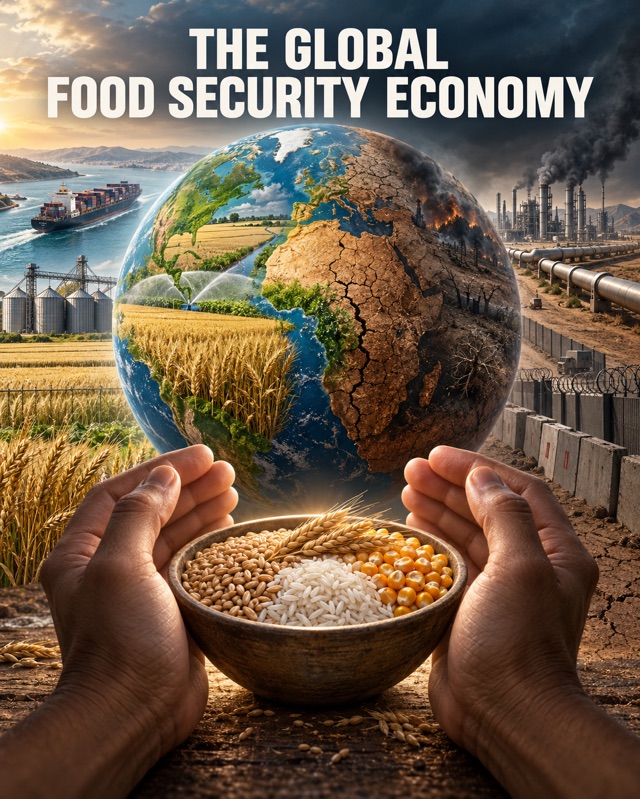
Food Is No Longer Just an Agricultural Commodity

The future of food will not be decided only on farms. It will be decided in energy markets, fertilizer factories, shipping corridors, water...