Friday, March 14, 2025

Traditional Toys, Childhood Health, and the Need for Market Access

Every visit to Delhi Haat brings a wave of nostalgia, reminding me of the simple yet profound joys of childhood toys and traditional entertainment. Unlike today's digital-driven childhoods, traditional toys were not just about fun; they played a crucial role in physical, cognitive, and social development.

The Forgotten Role of Traditional Toys in Health and Development

Toys are often perceived as mere playthings, but their impact on childhood is profound. Traditional toys, such as spinning tops, marbles, wooden blocks, and musical instruments, actively engage children’s senses, motor skills, and creativity. Many of these toys encouraged outdoor activities and physical movement—a stark contrast to modern screen-based entertainment.

For instance, as a child, I remember playing with old bicycle tires, rolling them for miles while running alongside. This simple game not only provided endless hours of fun but also enhanced endurance, coordination, and agility. Such activities were integral to my fitness and played a role in my journey to becoming the Iron Man of Delhi University in 1980.

Another classic example is the Tuntum Motor, a traditional toy that produces rhythmic sounds as it moves. The joy of playing with it was not just in the sound but also in the movement and exercise it encouraged. Unlike passive activities such as watching cartoons or playing video games, toys like the Tuntum Motor naturally engaged children in physical play, which is crucial for their physical and mental well-being.

Health Benefits of Traditional Toys vs. Modern Digital Entertainment

Modern toys, particularly digital and screen-based entertainment, have drastically reduced children's physical activity. A study by the World Health Organization (WHO) highlights that children today spend an average of seven hours a day in front of screens, leading to rising concerns over obesity, attention disorders, and social isolation.

By contrast, traditional toys:

  • Promote Physical Activity – Encouraging running, jumping, cycling, and coordination.
  • Enhance Cognitive Skills – Puzzles, board games, and musical instruments stimulate brain function and creativity.
  • Support Social Development – Many traditional games are played in groups, fostering teamwork and communication.

This contrast raises an important question about the role of toys in shaping childhood development today. Are we prioritizing convenience over children's health?

The Need for Market Access for Traditional Toys

Despite their benefits, traditional toys are increasingly disappearing from mainstream markets. The dominance of global toy brands and electronic entertainment has overshadowed local craftspeople who create handmade, eco-friendly toys. Why is market access so limited for these invaluable childhood tools?

Key challenges include:

  1. Lack of Organized Supply Chains – Unlike mass-produced plastic toys, traditional toys are often handcrafted in rural areas with limited distribution networks.
  2. Low Awareness and Demand – Many parents and children are unaware of the developmental benefits of traditional toys.
  3. Inexpensive but Undervalued – Handmade wooden and cloth toys are often cheaper than high-end electronic toys but lack the marketing push to compete.

However, there is hope and opportunity in reviving the traditional toy industry. Government initiatives such as the "Vocal for Local" and "Make in India" campaigns offer a platform to bring these toys back into mainstream markets. Additionally, Delhi Haat and similar craft markets play a crucial role in providing direct market access to artisans, keeping this cultural and developmental heritage alive.

The Way Forward: Reviving Traditional Toys in a Digital Age

If we recognize the importance of physical activity, cognitive engagement, and cultural preservation, we must actively support traditional toys. This can be achieved through:

  • Educational Awareness Campaigns – Highlighting the health benefits of traditional toys in schools and parenting forums.
  • E-commerce Integration – Providing rural artisans with access to digital marketplaces to sell their handcrafted toys.
  • Policy and Subsidies – Encouraging traditional toy production through government grants and incentives.


Toys are not just playthings; they are childhood companions that shape physical, mental, and emotional well-being. Revisiting our traditional toys not only connects us to our roots but also ensures that future generations benefit from the healthy and active childhoods that many of us cherished. It’s time to give traditional toys the market access they deserve and reclaim their rightful place in shaping healthier childhoods.

Let’s bring back the joy of running, playing, and learning—one traditional toy at a time!

Thursday, March 13, 2025

The Workforce Challenge: Productivity, Retention, and the Role of Modern Tools

In today’s fast-evolving industrial landscape, workforce efficiency and retention are critical factors influencing productivity and profitability. A well-equipped and well-managed workforce can drive sustained economic growth, but businesses face several pressing challenges, particularly in industries that rely on migrant labor. The need for modernization, worker satisfaction, and government support in crucial areas like housing and technology adoption has never been more important. This blog explores these challenges and proposes strategic solutions, backed by data, reasoning, and critical analysis.

The Direct Link Between Efficiency and Productivity

Efficiency levels in the workforce are directly correlated with productivity, which in turn impacts profitability. A well-trained and adequately supported workforce can deliver better output in shorter timeframes, reducing costs and increasing revenue. According to the World Bank, labor productivity growth has been a key determinant of economic expansion in emerging markets, with automation and skill development playing significant roles.

The Role of Modern Tools in Productivity Enhancement

Adopting modern tools and automated machinery is a proven way to increase workforce efficiency. However, many businesses struggle to upgrade their technology due to financial constraints and lack of government support.

The Importance of Technology Upgradation Fund (TUF):
The discontinuation of the Technology Upgradation Fund Scheme (TUFS) in several sectors has created a void, leaving businesses unable to invest in the latest equipment. Without adequate investment, industries relying on traditional labor-intensive methods will fall behind, reducing global competitiveness.

Case Study: Textile Industry in India
The Indian textile sector, which heavily depends on migrant labor, has seen a decline in competitiveness due to outdated technology. A report by the Ministry of Textiles highlighted that textile mills utilizing automated looms experienced a 40% increase in productivity compared to those still relying on manual processes.


The Migrant Labor Challenge: Retention and Well-being

Migrant labor plays a crucial role in many industries, yet retention remains a significant challenge. High attrition rates disrupt business operations, leading to increased hiring costs and loss of skilled workers. Several factors contribute to labor dissatisfaction, including:

1. Poor Living Conditions

Many migrant workers live in substandard housing, lacking basic amenities such as sanitation, ventilation, and proper drinking water. This directly impacts their health and work efficiency.

Data Insight:
According to a National Sample Survey Office (NSSO) report, over 70% of migrant workers in urban areas live in informal housing, often in cramped and unsafe conditions. This dissatisfaction pushes them to frequently change jobs or return to their hometowns.


2. The Need for Government Intervention in Housing

A structured Migrant Worker Housing Scheme could help address this issue. Providing safe, comfortable, and affordable housing would improve retention rates and worker satisfaction.

Governments should collaborate with businesses to develop Public-Private Partnership (PPP) housing models, where industries can co-invest in housing projects with government subsidies.


3. Wages and Job Security

Higher productivity should ideally lead to increased wages, but in many cases, the gap between worker efforts and compensation remains wide.

Economic Impact of Wage Increases:
Studies show that a 10% increase in wages leads to a 5-7% improvement in worker productivity due to higher job satisfaction and reduced absenteeism.


Technology Adoption: A Necessary Investment

While workforce upskilling is essential, integrating automation and digital technology into production processes can also bridge productivity gaps. However, a lack of investment in automation remains a bottleneck.

1. Reviving the Technology Upgradation Fund

Many businesses, particularly in the manufacturing and MSME sectors, struggle to afford expensive machinery due to the lack of financial assistance. The government’s withdrawal of technology upgradation funds has left industries lagging in global competitiveness.

The government should reintroduce technology subsidy schemes specifically targeting labor-intensive industries to encourage modernization.


2. Workforce Digital Training Programs

With the rise of Industry 4.0, workers need to be trained in operating automated systems, AI-driven production lines, and digital monitoring tools. Implementing structured worker upskilling programs can help bridge the gap between labor and technology.

Balancing Workforce Welfare and Business Growth

The challenges of workforce retention, productivity enhancement, and technology adoption must be addressed with a multi-pronged approach:

1. Investing in Better Housing: Improving living conditions will help in retaining skilled migrant labor.


2. Encouraging Wage Growth: Fair compensation improves job satisfaction and overall productivity.


3. Reviving Technology Funds: Providing financial assistance for automation will drive industrial efficiency.


4. Implementing Digital Training Programs: Equipping workers with technical skills will future-proof the labor force.


By addressing these key issues, businesses can create a more sustainable, efficient, and competitive workforce, ultimately driving long-term economic growth.


Tuesday, March 11, 2025

Aging Before Prosperity: The Looming Crisis in Developing Economies

Historically, developed countries navigated their way to economic prosperity before facing the demographic challenge of aging. This sequence allowed them to establish strong social security systems, robust healthcare infrastructure, and stable economic policies before the proportion of elderly citizens became significant. However, many developing nations today are experiencing the opposite trend: they are aging rapidly before achieving sustainable wealth. This reversal of historical patterns threatens to create a cascade of economic and social crises that current development paradigms are unprepared to address.

The Reversal of the Historical Pattern

The industrialized nations of the 20th century—such as the United States, Japan, and much of Western Europe—benefited from prolonged periods of economic expansion before their populations aged significantly. Their transition from youthful workforces to aging societies occurred over decades, allowing time for adjustments in labor markets, pensions, and healthcare systems.

In contrast, many developing countries today—particularly in Asia, Latin America, and parts of Africa—are experiencing a compressed demographic transition. Countries like China, Brazil, and Thailand are seeing their working-age populations shrink while their elderly populations surge, often before achieving high-income status. This demographic shift is driven by declining birth rates and increasing life expectancy, a trend that mirrors the experience of developed nations but at a much faster pace.

For instance:

China's aging challenge: The country’s working-age population peaked in 2015, and its median age is expected to exceed that of the U.S. by 2050. With inadequate pension coverage and a social security system under strain, China faces an economic slowdown exacerbated by its aging workforce.

India’s diverging path: While still benefiting from a demographic dividend, India’s aging population is projected to grow from 8% to 20% of the total population by 2050. Without strong economic growth and labor market reforms, the country risks facing similar challenges in the coming decades.

Latin America's demographic burden: Countries like Brazil and Mexico are aging rapidly but still struggle with economic volatility, informal labor markets, and weak social protection systems.

Why This is a Crisis in the Making

1. Economic Growth Stagnation

A growing elderly population implies a shrinking workforce. With fewer young workers entering the labor market, economic productivity declines. Unlike developed countries that could invest heavily in automation and high-productivity sectors, many developing nations lack the financial and technological resources to compensate for labor shortages.

2. Strained Social Security Systems

In aging developing nations, social security and pension systems remain underdeveloped. Without robust contributions from younger workers, governments face fiscal crises as they struggle to provide for the elderly. The risk of pension insolvency looms large, particularly in middle-income countries that lack the tax base to sustain increasing social expenditures.

3. Healthcare Costs and Infrastructure Deficits

Elderly populations require increased healthcare services, yet many developing countries have fragile healthcare infrastructures. The rise of age-related diseases such as dementia, cardiovascular conditions, and diabetes demands significant investments in medical care, yet healthcare spending in many countries remains inadequate.

4. Rising Dependency Ratios

The dependency ratio—the number of dependents (children and elderly) relative to the working-age population—is rising in many developing nations. Unlike in the past, when high birth rates sustained a young labor force, low fertility rates now mean that fewer workers must support a growing number of retirees, placing immense pressure on public finances.

Can Current Development Models Address This?

Most development strategies have focused on fostering industrialization, infrastructure growth, and financial inclusion. While these remain important, they do not address the demographic sustainability challenge. Economic policies must shift toward:

Investing in human capital: Reskilling older workers and increasing labor force participation among women and the elderly.

Strengthening pension and social protection systems: Expanding coverage to informal workers, who form a significant portion of the workforce in developing countries.

Reforming healthcare systems: Prioritizing long-term care facilities and age-friendly healthcare services.

Encouraging labor migration policies: Allowing younger workers from surplus-labor countries to migrate to aging economies.

Fostering technological adaptation: Encouraging the adoption of automation and AI to compensate for labor shortages.


The Need for Global Cooperation

The international development community must place demographic sustainability at the core of global priorities. This requires:

Mobilizing resources: Countries must invest in future-ready social security and healthcare models.

Generating new knowledge: Research institutions, policymakers, and multilateral organizations should collaborate to develop solutions tailored to each country’s demographic realities.

Strengthening global partnerships: Aging-rich and labor-surplus nations should engage in cooperative migration, investment, and labor exchange programs.

The Crisis is (Almost) Invisible—But It Won’t Stay That Way

The world is facing an unprecedented demographic crisis. Many developing nations will become old before they become rich, challenging the very foundations of their economic models. If we fail to act now, the consequences will be devastating—rising inequality, economic stagnation, and overwhelmed public services. The time to prioritize demographic sustainability is now, before this invisible crisis becomes insurmountable.


Sunday, March 9, 2025

Unlocking Hidden Genius: Expanding Opportunities for Future Scientists and Innovators


Societies thrive when they harness the full potential of their people, particularly in fields that drive technological and economic progress—science, technology, engineering, and mathematics (STEM). While great minds have always shaped the course of history, the world often overlooks the vast reservoir of untapped talent, especially in developing economies. Ruchir Agarwal and Patrick Gaule's study on the missing equation—how best to identify, nurture, and empower young geniuses—raises an important question: How can societies ensure that no promising scientist, inventor, or entrepreneur is left behind?

The Cost of Overlooking Talent

The loss of even one great mind can mean missing out on groundbreaking discoveries. Imagine a world without the contributions of Marie Curie, Albert Einstein, or Srinivasa Ramanujan. These were individuals whose talents were recognized and nurtured, but how many equally brilliant minds remain undiscovered due to lack of opportunity? In developing economies, the barriers to entry into STEM fields are often high due to poor educational infrastructure, socio-economic constraints, and a lack of mentorship.

The World Bank’s 2023 Human Capital Index highlights that children in low-income countries achieve only 56% of their potential productivity due to deficiencies in education and health. This gap is even more pronounced in STEM fields, where access to advanced learning tools and laboratories is limited. Without early interventions, countless young talents remain hidden, unable to contribute to the progress of society.

Identifying Hidden Geniuses: The Role of Early Education

One of the most effective ways to discover talent is through early exposure to STEM disciplines. Studies show that early childhood education plays a crucial role in shaping cognitive abilities, yet many developing economies lack structured programs that introduce complex scientific concepts in engaging ways.

A 2024 study by OECD found that students who had access to STEM-related extracurricular activities before the age of 10 were 70% more likely to pursue careers in science and technology. This underscores the need for programs that introduce students to experimental learning, computational thinking, and problem-solving skills at an early stage.

Governments and private organizations can play a transformative role by:

Investing in STEM-focused early education to cultivate curiosity and critical thinking.

Creating scholarship and mentorship programs to support students from underprivileged backgrounds.

Implementing national talent identification initiatives, similar to China’s Math Olympiad training programs, which have successfully produced world-class mathematicians.

Bridging the Economic Divide: Equalizing Access to Resources

Even when talent is recognized, many young innovators struggle to advance due to financial barriers. Higher education in STEM fields often comes with significant costs, from tuition fees to research expenses. Countries with strong innovation ecosystems—such as the United States and Germany—have developed extensive grant and funding mechanisms to support young scientists. However, many developing nations still lack similar frameworks.

The success of India’s INSPIRE (Innovation in Science Pursuit for Inspired Research) program is a strong case for expanding STEM funding. Since its launch, INSPIRE has supported over 500,000 students, fostering a culture of research and development. Expanding such models globally could provide critical financial backing for young innovators, ensuring that potential is not wasted due to economic constraints.

The Global Competition for Talent

Nations that fail to nurture their top talent risk losing them to countries with better opportunities, a phenomenon known as "brain drain." In many developing economies, bright students often seek higher education abroad, and only a fraction return to contribute to their home country’s economy.

Consider the case of Sub-Saharan Africa, where nearly one-third of STEM graduates leave their home countries for better opportunities. A similar trend is observed in India, where an estimated 30% of AI researchers are employed by foreign firms. Countries that actively invest in retaining their STEM talent—by offering research grants, academic opportunities, and career incentives—see higher innovation and economic growth.

A Roadmap for Empowering Future Innovators

For societies to fully benefit from their scientific and entrepreneurial talent, a multi-pronged strategy is essential:

1. Expanding STEM education at all levels – Governments should ensure that STEM subjects are integrated into school curricula from an early stage.


2. Financial and infrastructural support – Scholarships, research grants, and innovation hubs must be accessible to promising students.


3. Strengthening mentorship networks – Successful scientists and entrepreneurs should mentor young talent, especially in underprivileged communities.


4. Retaining homegrown talent – Countries must create attractive incentives for young innovators to remain and contribute to their economies.


5. Fostering an inclusive innovation culture – Diversity in science and technology leads to more robust solutions; hence, marginalized groups must be included in STEM opportunities.

The challenge of identifying and nurturing future scientists and inventors is one of the most pressing issues of our time. By expanding opportunities in STEM, societies can unlock hidden potential, drive economic progress, and foster innovation that benefits humanity as a whole. Investing in talent is not just an economic necessity but a moral imperative—one that ensures a better future for all.


Friday, March 7, 2025

Empowering Women in the Workforce

Manufacturing has long been a male-dominated industry, particularly when it comes to leadership roles. However, women form a significant portion of the workforce, especially in developing countries where they play a crucial role in production. Despite their contributions, women remain vastly underrepresented in supervisory and managerial positions. This imbalance is not just a social issue—it is a challenge that affects productivity, efficiency, and overall profitability in manufacturing supply chains.

Bridging this leadership gap requires a structured and sustainable approach. Training programs that empower women to take on leadership roles must go beyond technical skills—they should address cultural biases, organizational policies, and industry-wide perceptions.

Women in Manufacturing: The Supervisory Gap

The reality of the manufacturing industry reflects a stark contradiction. In some model factory programs, it has been observed that 85% of the workforce is composed of women, yet only 5% of supervisors are female. This discrepancy highlights a fundamental structural issue: women are contributing significantly to production but are rarely given the opportunity to lead.

Several key factors contribute to this supervisory gap:

1. Lack of Training and Skill Development
Many women in manufacturing enter the workforce at the lowest levels and remain in those positions due to the absence of career progression opportunities. Unlike their male counterparts, they often receive limited access to training programs that could equip them with leadership, decision-making, and technical skills necessary for advancement.


2. Cultural and Societal Norms
In several regions, traditional gender roles and societal expectations impose restrictions on women’s professional growth. Family responsibilities, lack of childcare support, and rigid work policies prevent many women from pursuing leadership roles.


3. Bias in Promotions
Deep-seated biases often lead to men being favored for supervisory positions. Employers sometimes assume that men are naturally better suited for leadership or that women may not be able to handle the pressures of a managerial role. These biases are not always explicit but are reflected in hiring and promotion patterns.
Addressing these challenges requires both industry-wide reforms and targeted interventions.

The Business Case for Women in Leadership

Empowering women in manufacturing leadership is not just about equality; it is also a strategic move for businesses. Studies indicate that gender-diverse leadership improves workplace productivity, enhances problem-solving, and contributes to better decision-making.

Higher Productivity: Research by McKinsey & Company found that companies with diverse leadership teams perform 21% better in profitability compared to those with less diversity.

Lower Attrition Rates: When women see opportunities for career growth, they are more likely to stay in the workforce, reducing high turnover rates.

Improved Innovation: A mix of perspectives in management fosters innovation and adaptability in manufacturing processes.


A key study from the International Labour Organization (ILO) found that companies with gender-inclusive policies experience a 5-20% increase in productivity. This proves that closing the leadership gap is not just a social imperative but also an economic necessity.

Bridging the Gap: The Need for Structured Training Programs

To address these disparities, structured training programs tailored for women in manufacturing are essential. These programs should focus on:

1. Leadership and Management Training
Providing mentorship programs and training on leadership, decision-making, and conflict resolution equips women with the confidence and skills required to step into supervisory roles.


2. Technical Skill Development
Many supervisory roles require technical expertise. Training women in areas such as quality control, production planning, and process optimization ensures that they meet the requirements for promotions.


3. Workplace Policy Reforms
Manufacturing firms should implement gender-inclusive policies, such as flexible work hours and family-friendly benefits, to support women in leadership roles.


4. Awareness and Cultural Shift Initiatives
Sensitization programs targeting male colleagues and top management can help break down biases and create an inclusive work environment where women are encouraged to lead.


5. Industry-wide Collaboration
Governments, industry bodies, and corporations must work together to create nationwide initiatives that promote gender diversity in manufacturing leadership.

Case Studies: Success Stories in Women’s Leadership

Several countries and companies have successfully implemented programs to bridge the leadership gap in manufacturing.

Bangladesh’s Garment Industry: In one of the world’s largest textile industries, several factory owners have introduced women’s leadership training programs, resulting in a 25% increase in female supervisors over five years.

Vietnam’s Women Leadership Initiative: A multinational footwear company in Vietnam launched a leadership development program for female workers, leading to a 40% increase in women being promoted to managerial roles.

India’s Skill Development Missions: The Indian government, in collaboration with private firms, has launched initiatives to upskill female workers, particularly in automotive and textile manufacturing. These programs have led to measurable improvements in employment and wage equality.

These examples prove that when women are given the right training and opportunities, they not only succeed but also contribute to a more efficient and profitable manufacturing industry.

A Call to Action

Bridging the leadership gap in manufacturing requires a multi-faceted approach—one that combines training, policy changes, and cultural shifts. Businesses that fail to recognize the potential of women in leadership will not only miss out on a skilled workforce but will also lag behind in competitiveness.

Governments, corporations, and industry leaders must prioritize gender-inclusive leadership development programs to ensure that women in manufacturing do not remain confined to the lowest tiers of employment. By investing in women’s career growth, the manufacturing sector can drive innovation, improve productivity, and create a more equitable and profitable industry.

Key Takeaways:

✔ Women form a major part of the manufacturing workforce but are underrepresented in leadership roles.
✔ Structural barriers such as lack of training, cultural norms, and biases prevent women from advancing.
✔ Businesses with diverse leadership teams perform better in profitability, productivity, and innovation.
✔ Targeted training programs, policy reforms, and cultural awareness initiatives are crucial to bridging the leadership gap.
✔ Case studies prove that empowering women in manufacturing leadership leads to measurable success.

The time to act is now. Empowering women in manufacturing leadership is not just a social responsibility—it’s an economic strategy for long-term sustainability and success.


Wednesday, March 5, 2025

A Tale of Three States: Economic Growth vs. Social Development in Gujarat, Tamil Nadu, and Bihar

When evaluating the socio-economic development of Indian states, Gujarat and Tamil Nadu often stand out as economic powerhouses. However, a deeper analysis reveals a stark contrast in how economic progress translates into social development. While Tamil Nadu has effectively leveraged its economic growth to improve social indicators, Gujarat presents a paradox—strong economic performance but relatively poor social indicators, making its metrics comparable to Bihar in several aspects. This raises an important question: Why has economic prosperity not percolated to the lower social strata in Gujarat?

Economic Performance: Gujarat vs. Tamil Nadu vs. Bihar

Gujarat: The Industrial Powerhouse

Gujarat has long been an industrial hub, contributing significantly to India’s GDP. With its focus on business-friendly policies, strong infrastructure, and an export-driven economy, the state has consistently achieved high growth rates. In 2022-23, Gujarat's Gross State Domestic Product (GSDP) stood at approximately ₹22.61 lakh crore, making it one of India's fastest-growing states.

Key Economic Indicators of Gujarat:

Per capita income (2023): ₹2,72,000

Industrial output contribution: ~16% of India's total industrial production

Exports (2023-24): Gujarat accounts for nearly 30% of India's total exports

Ease of Doing Business rank: Consistently among the top states

Despite these impressive numbers, Gujarat’s economic model has been criticized for being capital-intensive rather than employment-intensive, leading to uneven income distribution and inadequate percolation of wealth.

Tamil Nadu: A Balanced Growth Model

Tamil Nadu, on the other hand, has pursued an inclusive economic growth model, balancing industrialization with investments in human development. With a GSDP of ₹25.15 lakh crore (2023-24), Tamil Nadu ranks among the top contributors to India's economy.

Key Economic Indicators of Tamil Nadu:

Per capita income (2023): ₹2,75,000

Industrial output contribution: ~14% of India's total industrial production

Exports (2023-24): Tamil Nadu ranks among the top three exporting states

Service sector dominance: IT, healthcare, and education contribute significantly to employment generation


Tamil Nadu’s economic strategy is labor-intensive and inclusive, ensuring better employment distribution across sectors. The state’s focus on education, healthcare, and women empowerment has resulted in a more equitable society.

Bihar: Struggling with Structural Challenges

Bihar, despite economic improvements, remains at the lower end of the development spectrum. Its GSDP in 2023-24 was ₹8.37 lakh crore, significantly lower than Gujarat and Tamil Nadu. The state has a predominantly agrarian economy, with limited industrialization.

Key Economic Indicators of Bihar:

Per capita income (2023): ₹56,000 (among the lowest in India)

Industrial contribution: Less than 5% of GSDP

Low private sector investment: Industrial policy struggles to attract big-ticket investments

High population density and unemployment: Widespread dependence on agriculture and out-migration for jobs


Despite double-digit economic growth in recent years, Bihar continues to lag behind in industrial and social infrastructure, limiting the reach of economic benefits to its people.

Social Indicators: The Gujarat Paradox

While Gujarat performs exceptionally well on economic parameters, its social indicators tell a different story. Surprisingly, in several social indicators, Gujarat’s performance is closer to Bihar rather than Tamil Nadu.

Key Social Indicators Comparison (2023)

The most glaring concern is that Gujarat's social indicators are not significantly better than Bihar’s, despite its economic success. Tamil Nadu, with a similar economic output, has far superior social development, demonstrating how economic growth alone is insufficient for societal progress.

Why Has Economic Growth Not Translated into Social Development in Gujarat?

1. Skewed Development Model

Gujarat’s economic policies have been business-centric rather than welfare-centric. Unlike Tamil Nadu, which invested heavily in public services like education and healthcare, Gujarat has prioritized large-scale industrial projects that do not necessarily improve grassroots living conditions.

2. Low Public Spending on Health and Education

Gujarat lags in social sector expenditure. As per recent budgets:

Tamil Nadu spends 5.2% of its GSDP on health and education

Gujarat spends less than 3.8% of its GSDP

Bihar, despite its economic limitations, allocates 4.5%


3. Poor Nutritional and Health Outcomes

The high percentage of underweight children (39.3%) in Gujarat suggests inadequate nutritional interventions, comparable to Bihar’s 42.9%. Tamil Nadu, through schemes like Amma Canteens and universal midday meals, has significantly improved child nutrition, reducing its underweight percentage to 23.1%.

4. Gender and Social Inclusion Gaps

Sex Ratio: Gujarat (919) is barely better than Bihar (918) and significantly behind Tamil Nadu (987).

Women’s Workforce Participation: Tamil Nadu has one of India’s highest female workforce participation rates, thanks to state-supported women’s entrepreneurship programs and self-help groups, unlike Gujarat, where traditional economic structures limit women's employment.


5. Limited Social Welfare Schemes

Tamil Nadu has implemented universal social security schemes, subsidized public services, and skill development programs. Gujarat, while offering incentives to businesses, has fewer direct social interventions, leaving marginalized communities behind.

Lessons from Tamil Nadu: A Holistic Approach to Development

Tamil Nadu's success is based on a diversified economic approach combined with inclusive policies:

Investment in Human Capital: High public spending on education, health, and social security has improved living standards.

Industrial and Service Sector Growth: The state has a balanced focus on both manufacturing and services, ensuring widespread employment.

Social Protection Programs: Extensive welfare schemes ensure economic benefits reach the poorest sections.

 A Call for Inclusive Development in Gujarat

Gujarat stands at a crossroads. While its economic strength is undeniable, its social indicators paint a concerning picture. The state must take proactive steps to ensure wealth percolation to the lower socio-economic strata, especially through increased investment in education, healthcare, gender empowerment, and social welfare.

Tamil Nadu’s model provides valuable lessons: Economic success must be inclusive to be sustainable. Gujarat’s policymakers must shift focus from corporate-led growth to citizen-centric growth, ensuring that the benefits of prosperity reach the last mile.

If Gujarat aspires to be a true leader in development, it must close its social gaps. Otherwise, despite being an economic giant, it risks remaining socially stunted—an industrial powerhouse with a Bihar-like human development challenge.


Sunday, March 2, 2025

Regenerative Agriculture in India

India’s agriculture sector is at a crossroads. While conventional farming has driven food security and economic growth, it has also led to soil degradation, water depletion, and biodiversity loss. As climate change intensifies, the urgent need to rethink agricultural practices has never been more critical. Regenerative agriculture offers a transformative solution—one that not only sustains but actively restores the health of our farmlands.

What is Regenerative Agriculture?

Regenerative agriculture is a holistic farming approach that focuses on restoring soil health, enhancing biodiversity, and building resilience against climate change. Unlike conventional methods that rely on chemical inputs and intensive tillage, regenerative farming promotes:

Soil regeneration through organic matter enrichment

Minimal soil disturbance to preserve microbial ecosystems

Crop diversity and rotation for pest control and nutrient management

Agroforestry and cover cropping to enhance biodiversity

Efficient water management to prevent soil erosion and improve water retention


This approach goes beyond sustainability—it not only minimizes harm to the environment but actively revitalizes the agricultural ecosystem.

Why India Needs Regenerative Agriculture

India is one of the world’s largest agrarian economies, with over 50% of the population engaged in agriculture. However, the sector is facing a series of challenges:

1. Soil Degradation: Around 30% of India’s agricultural land suffers from declining soil fertility due to excessive chemical use and monocropping.


2. Water Scarcity: With agriculture consuming 80% of India’s freshwater resources, regenerative practices like rainwater harvesting and mulching are crucial for conservation.


3. Climate Change Impact: Unpredictable monsoons, rising temperatures, and extreme weather events are making traditional farming unviable. Regenerative methods help improve resilience.


4. Declining Farmer Incomes: The cost of chemical inputs is rising, and soil degradation is reducing yields. Regenerative farming can increase productivity while reducing input costs.


Challenges in Implementing Regenerative Agriculture

Despite its promise, scaling regenerative agriculture in India faces multiple hurdles:

1. Economic Viability and Farmer Adoption

Most smallholder farmers live on thin margins and hesitate to adopt new practices without immediate economic benefits. Shifting to regenerative farming may take time before yields improve, requiring financial incentives.

2. Knowledge and Capacity Gaps

While many regenerative practices align with traditional Indian farming methods, awareness and technical knowledge remain limited. Extension services and farmer training programs are essential.

3. Market Challenges

Currently, there is no widespread premium market for regeneratively grown produce. Farmers need better market linkages, eco-labeling opportunities, and fair pricing models.

4. Policy and Institutional Support

Government policies still favor chemical-intensive farming, offering limited incentives for regenerative practices. A supportive regulatory and subsidy framework is needed to drive adoption at scale.

Building a Regenerative Agriculture Movement in India

To make regenerative agriculture mainstream, India must focus on three key areas:

1. Farmer-Centric Training and Innovation

Establishing model farms and farmer field schools to showcase successful regenerative practices.

Encouraging farmer-led knowledge sharing networks to exchange experiences.

Leveraging technology (AI-based soil health monitoring, remote sensing) to guide decision-making.


2. Strengthening Market Linkages and Financial Incentives

Developing eco-labeling and certification programs for regeneratively grown produce.

Introducing carbon credit markets, enabling farmers to monetize carbon sequestration.

Providing low-interest loans and insurance schemes to farmers transitioning to regenerative practices.


3. Policy Support and Public-Private Partnerships

Reforming subsidy structures to encourage regenerative inputs like biofertilizers and composting.

Engaging corporates in sustainable sourcing commitments to drive market demand.

Collaborating with NGOs, research institutions, and government bodies to build a national strategy for regenerative agriculture.


From Awareness to Action

The shift to regenerative agriculture is not just an environmental necessity—it is an economic and social imperative. By integrating science, traditional knowledge, and innovation, we can ensure that India’s agricultural future is resilient, productive, and sustainable.

For farmers, businesses, policymakers, and consumers, the time to act is now. Regenerative agriculture is not just about farming—it is about securing the future of our food systems and our planet.

Join the movement. Support regenerative agriculture. Let’s cultivate a healthier tomorrow!


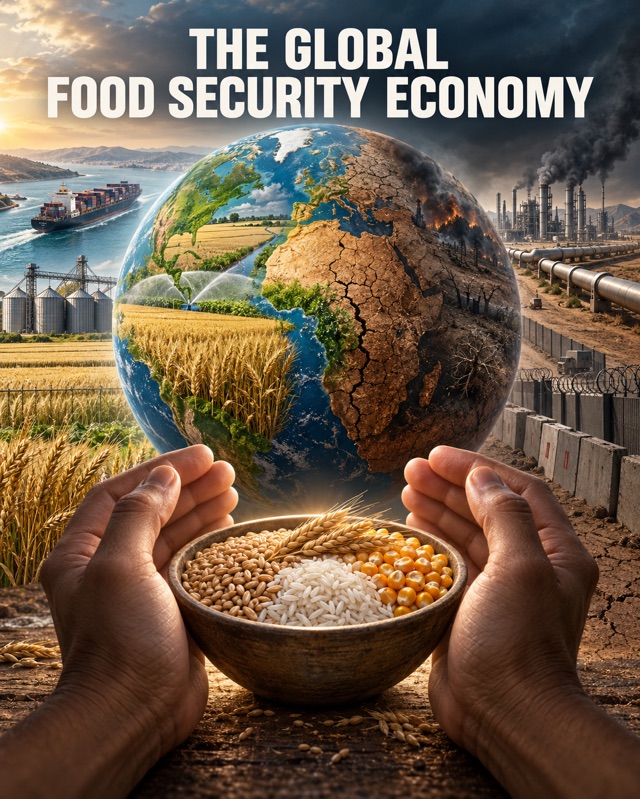
Food Is No Longer Just an Agricultural Commodity

The future of food will not be decided only on farms. It will be decided in energy markets, fertilizer factories, shipping corridors, water...