Wednesday, December 25, 2024

The Hidden Entrepreneurs: Babloo and Anand’s Cobbler Business at Priya Cinema

In the bustling streets near Priya Cinema, two unlikely entrepreneurs, Babloo and Anand, have carved out a niche that exemplifies resilience, craftsmanship, and entrepreneurial spirit. For the past fourteen years, their small cobbler stand has become a thriving business, drawing high-net-worth clients, including embassy personnel and local elites.

Their story is more than just about mending shoes — it highlights the often-overlooked potential of micro-enterprises and the need for policy interventions to support such businesses, enabling them to grow sustainably and contribute more effectively to the local economy.

A Business Built on Skill and Trust

Babloo and Anand's success isn't accidental. Their craftsmanship, reliability, and personalized services have built strong customer loyalty. From luxury shoes to custom repairs, they have developed a unique offering that caters to discerning clients who value quality over quick fixes.

What started as a small operation with basic tools has now evolved into a recognized hub for shoe repairs in the area. Their clientele extends beyond regular passersby to include diplomats and affluent locals, thanks to their reputation for excellence and trustworthiness.

However, despite their success, businesses like Babloo and Anand's often remain informal, lacking access to financial services, government support, and scalability opportunities. This highlights the urgent need for policies tailored to small-scale entrepreneurs who operate in the informal sector.

Policy Support for Micro-Entrepreneurs

To sustain and expand businesses like Babloo and Anand’s, a multi-faceted approach is essential. Here are key areas where targeted policy support can make a significant impact:

1. Formalization and Recognition

Simplified Registration Process: The government should introduce simplified business registration for micro-entrepreneurs, making it easier for cobblers, street vendors, and artisans to formalize their businesses.

Incentivized Formalization: Offering tax breaks or incentives for registering as a formal business entity can encourage small businesses to step into the formal economy.


2. Financial Access and Credit Support

Micro-Financing and Small Loans: Banks and financial institutions, with government backing, should provide low-interest loans to small entrepreneurs. This can help them invest in better equipment, raw materials, and business expansion.

Credit Guarantee Schemes: Implementing credit guarantee schemes for small businesses can reduce the risk for lenders, ensuring that entrepreneurs like Babloo and Anand can access credit without extensive collateral.


3. Training and Skill Development

Advanced Skill Programs: Providing technical training on leather crafting, shoe design, and repair techniques can enhance the skills of cobblers and artisans, allowing them to diversify their services.

Business Management Workshops: Basic training in bookkeeping, digital marketing, and customer relationship management can help micro-entrepreneurs streamline their operations and improve profitability.


4. Market Linkages and Branding

Local Craft Marketplaces: Governments and municipal bodies can facilitate local craft fairs, providing a platform for small artisans to showcase and sell their services to a wider audience.

Online Presence: Supporting micro-businesses in creating online profiles and marketing on platforms like Google My Business can significantly increase visibility and client reach.


5. Infrastructure and Space

Dedicated Workspaces: Municipal authorities can allocate specific zones or stalls for cobblers and artisans near commercial areas, preventing displacement and ensuring stability for such businesses.

Shared Workspaces: Establishing community workspaces for cobblers, tailors, and repair specialists can reduce operational costs and foster collaboration.


Sustainability and Long-Term Growth

To ensure sustainable growth for micro-entrepreneurs like Babloo and Anand, it is crucial to integrate their business model into the larger urban development framework:

Sustainable Materials and Eco-Friendly Practices: Encouraging the use of eco-friendly materials and sustainable practices can attract environmentally conscious customers.

Upscaling to Niche Markets: By branding their services as “luxury repair services,” Babloo and Anand could tap into the premium market, charging higher rates for their exceptional craftsmanship.

Community Engagement and CSR: Large corporations and embassies can adopt cobblers and small artisans as part of their Corporate Social Responsibility (CSR) initiatives, offering grants, training, and support.


A Blueprint for Empowering Local Artisans

Babloo and Anand’s story serves as a reminder that micro-enterprises are the backbone of urban economies. Their resilience, skill, and entrepreneurial drive are assets that deserve recognition and structured support. By implementing policies that ease formalization, provide financial access, and foster skill development, the government can uplift thousands of similar artisans across the country.

Supporting small entrepreneurs isn't just about economic development — it's about preserving the rich tapestry of local craftsmanship and fostering inclusive growth that benefits every stratum of society.


Thursday, December 19, 2024

Challenges in India's Agriculture Sector

Agriculture, the backbone of India’s economy, has long been a source of livelihood for millions. Yet, despite its pivotal role, the sector faces persistent challenges that hinder its full potential. Stagnant productivity, frequent natural disasters, declining employment opportunities, and low growth rates continue to be significant roadblocks. This blog delves into these challenges with data-driven insights, critical reasoning, and potential solutions.

1. Stagnant Productivity: A Persistent Concern

The stagnation in agricultural productivity is a pressing issue. Despite technological advancements and policy interventions, the growth in crop yields has plateaued in recent years.

Cereal Productivity: India’s cereal productivity averages around 3.2 tonnes per hectare, far below countries like China (6.2 tonnes per hectare) and the USA (7.1 tonnes per hectare).

Irrigation Dependency: Over 50% of Indian agriculture remains rain-fed, exposing it to monsoonal unpredictability.

Lack of Modernization: A significant proportion of Indian farmers still rely on traditional farming techniques, limiting yield potential.

Soil Degradation: Excessive use of chemical fertilizers and monocropping have led to declining soil health.

Fragmented Landholdings: With average farm sizes shrinking to 1.08 hectares, economies of scale are increasingly difficult to achieve.


Way Forward

Promoting precision farming and sustainable agricultural practices.

Expanding the scope of soil health cards with actionable recommendations.

Scaling up farmer cooperatives to overcome land fragmentation challenges.

2. Frequent Natural Disasters: A Growing Threat

Natural disasters, exacerbated by climate change, have become more frequent and severe, devastating agricultural output and rural livelihoods.

Floods and Droughts: India experiences an average of 7-8 major floods annually, affecting over 40 million hectares of cropland.

Cyclones: Coastal regions face increasing cyclonic activity, leading to saline water intrusion and crop losses.

Heatwaves: Rising temperatures have reduced wheat and rice yields in key agricultural states.

Inadequate Infrastructure: Limited irrigation and storage facilities leave farmers vulnerable to climate shocks.

Insurance Gaps: While schemes like the Pradhan Mantri Fasal Bima Yojana exist, their penetration and efficacy remain limited.

Strengthening disaster-resilient infrastructure, such as micro-irrigation systems and flood-resistant storage facilities.

Expanding the reach and transparency of crop insurance programs.

Encouraging agroforestry and diversified cropping systems to mitigate climate risks.

3. Declining Employment Opportunities: Rural Exodus

Agriculture’s share in employment has steadily declined, pushing rural populations toward urban centers in search of better opportunities.

Employment Share: The sector employs around 42.6% of India’s workforce but contributes only 18.8% to the GDP (2023).

Youth Disinterest: Surveys indicate a growing reluctance among rural youth to pursue farming, citing low income and lack of social recognition.

Low Wages: Agricultural wages have failed to keep pace with inflation, eroding rural purchasing power.

Mechanization: While mechanization boosts productivity, it reduces the demand for manual labor.

Developing rural industries to absorb surplus labor.

Integrating agriculture with allied sectors like dairy, fisheries, and food processing to create employment opportunities.

Promoting agri-tourism and value-added services to enhance rural incomes.

4. Low Growth Rates: The Need for Policy Realignment

Agriculture’s growth rate has lagged behind other sectors of the economy, raising concerns about its long-term viability.

Key Data Points

Growth Trends: The sector’s annual growth rate has hovered around 3.5% in recent years, compared to over 6% in the services sector.

Investment Gap: Public investment in agriculture stands at less than 0.5% of GDP, far below the recommended 1%.

Underlying Issues

Price Volatility: Frequent fluctuations in commodity prices deter private investment.

Marketing Bottlenecks: Farmers face challenges in accessing markets, exacerbated by middlemen and inadequate infrastructure.

Increasing public and private investment in agricultural infrastructure.

Promoting contract farming and digital platforms for direct farmer-to-consumer sales.

Revisiting and enhancing Minimum Support Price (MSP) policies to ensure fair farmer incomes.

Critical Insights and Long-Term Outlook

India’s agriculture sector is at a crossroads. Addressing its persistent challenges requires a multi-pronged strategy involving modernization, climate adaptation, and rural diversification. While policies like the PM-KISAN scheme and the National Agriculture Market (e-NAM) show promise, their implementation needs to be scaled and tailored to regional contexts.

Moreover, fostering a culture of innovation, supported by robust R&D and extension services, will be crucial. As India aspires to be a $5 trillion economy, ensuring the sustainability and resilience of its agriculture sector will remain integral to achieving inclusive growth.

The challenges facing Indian agriculture are complex, but they are not insurmountable. With targeted interventions, data-driven policies, and a focus on rural empowerment, the sector can overcome its hurdles and reclaim its position as a pillar of the Indian economy. Sustainable agriculture is not just a necessity; it is a pathway to securing the livelihoods of millions and ensuring food security for the nation.


Saturday, December 14, 2024

Doing Good Index 2024

The Doing Good Index 2024 sheds light on the evolving landscape of India’s social sector, offering a comprehensive analysis of its current strengths and challenges. The report highlights critical insights into rising service demand, funding sources, and regulatory hurdles that influence the sector's growth trajectory. Here’s a closer look at the findings and their broader implications:

1. Rising Demand for Social Services

The report reveals that 69% of organizations experienced an increase in the number of beneficiaries and demand for their services over the past year. Despite this mounting pressure, 76% of organizations remain optimistic about their growth prospects and the sector's overall outlook.

This surge in demand underscores the deepening socio-economic challenges in India, ranging from income inequality to access to basic services. The optimism within the sector is promising; however, meeting this demand sustainably requires scaling operations, building institutional capacities, and strengthening collaborative frameworks between the government and non-governmental organizations (NGOs).

Domestic funding contributes 48% of the total budgets for the social sector, but 80% of organizations consider this support insufficient.

Corporate funding now accounts for 23% of total budgets, with 55% of organizations reporting corporate sponsorships.


The rise in corporate contributions, driven by the mandatory Corporate Social Responsibility (CSR) initiatives in India, reflects a positive shift. However, the inadequacy of domestic funding highlights the sector's over-reliance on limited sources. Diversifying revenue streams—such as leveraging micro-donations, social impact bonds, or public-private partnerships—is essential to address this shortfall. Additionally, increasing transparency in fund utilization can foster greater trust and attract more donors.

3. Regulatory Hurdles: The FCRA Challenge

Organizations seeking foreign funding face significant delays due to the Foreign Contribution (Regulation) Act (FCRA), with approvals often taking up to two years.


While the FCRA plays a critical role in ensuring accountability, its rigid procedures and prolonged timelines hinder the sector’s ability to access timely international support. Such delays can disrupt crucial interventions and exacerbate resource constraints. Streamlining FCRA processes, digitizing approvals, and adopting risk-based monitoring mechanisms can improve efficiency without compromising regulatory integrity.

Broader Implications and Recommendations

The findings of the Doing Good Index 2024 point toward a pressing need for systemic reforms and innovative approaches to unlock the full potential of India’s social sector. Here are some actionable recommendations:

1. Strengthening Policy Frameworks

Simplify regulatory processes for foreign funding while maintaining robust oversight.

Introduce incentives to encourage higher domestic contributions, such as increased tax benefits for individual and corporate donors.


2. Enhancing Capacity Building

Equip NGOs with digital tools and platforms to optimize resource allocation and service delivery.

Promote knowledge-sharing initiatives to help organizations adopt best practices in fundraising and impact measurement.


3. Driving Public-Private Collaboration

Encourage multi-stakeholder partnerships to pool resources, expertise, and networks.

Foster platforms for dialogue between corporates, government bodies, and civil society to align on sectoral priorities.


4. Diversifying Funding Models

Explore alternative financing mechanisms like crowdfunding and social impact bonds.

Strengthen grassroots fundraising campaigns to build a culture of philanthropy at the community level.

The Doing Good Index 2024 highlights both the promise and challenges of India’s social sector. The rising demand for services, coupled with increasing corporate contributions, demonstrates the sector's pivotal role in addressing socio-economic disparities. However, regulatory bottlenecks and funding inadequacies pose significant hurdles.

For India’s social sector to thrive, it requires an enabling environment supported by policy reforms, innovation in funding, and collaborative efforts. By addressing these challenges head-on, the sector can better meet the needs of millions, creating a more equitable and inclusive society. The journey ahead is undoubtedly complex, but with the right interventions, doing good in India can truly transform lives.


Friday, December 13, 2024

The Debate on Migration

The term “brain drain” often carries negative connotations, conjuring images of a country losing its best and brightest to foreign lands. However, it might be time to reframe this narrative. Instead of lamenting the migration of talent, India could benefit from accelerating this trend—turning brain drain into a strategic advantage.

Brain Drain: A Catalyst for Growth?

India’s global diaspora has proven to be a critical asset rather than a liability. The contribution of Indian-origin professionals to the global economy is undeniable. They occupy leadership positions in top global corporations, contribute to technological advancements, and create wealth that indirectly benefits their home country. For instance, Indian-origin CEOs now lead some of the world’s most influential companies, including Google, Microsoft, and Adobe.

The argument here is simple: for every individual who migrates and succeeds abroad, several more within the country benefit. These individuals contribute to raising consumption standards globally while inspiring those back home. The focus, therefore, should not be on preventing talent from leaving but on creating a domestic ecosystem where those who stay can thrive.

Leveraging Migration to Enhance Domestic Performance

Instead of resisting brain drain, India should aim to ensure that the migration of one individual enhances the performance of five or more individuals within the country. This calls for systemic changes, including fostering innovation, improving ease of doing business, and expanding opportunities for entrepreneurs. If the domestic environment can mirror the opportunities available abroad, India can harness this talent to build world-class companies within its borders.

The Millionaire Migration Conundrum

A related issue is the increasing migration of Indian millionaires seeking residency abroad. This trend stems from two primary factors: a better quality of life and favorable tax regimes in foreign countries. While some wealthy individuals seek greener pastures, others leave due to restrictive domestic regulations that stifle growth.

Consider the handling of emerging sectors such as cryptocurrency and gaming. Policies that overly constrain innovation often push entrepreneurs to seek opportunities elsewhere. Addressing this requires a forward-looking regulatory framework that balances compliance with growth potential.

The Quality of Life Factor

India’s millionaires can afford luxury anywhere in the world, yet many still choose to leave. Why? Pollution, urban congestion, and inadequate public infrastructure make life challenging even for the affluent. Cities like Delhi, which grapple with extreme pollution levels, highlight the urgent need for environmental reforms.

A targeted approach to improving urban living standards—investing in clean air initiatives, reducing congestion, and upgrading public services—could significantly alter this dynamic. People naturally prefer to stay in their homeland, provided the quality of life matches global standards.

A Positive Vision for India’s Future

The discussion underscores a broader theme: India needs to adopt a positive and futuristic outlook. Emerging technologies, environmental reforms, and innovation-friendly policies can transform the nation into a hub of opportunity. If India invests in these areas, it can retain its talent while continuing to benefit from its global diaspora.

The road ahead lies in fostering an ecosystem that encourages growth, innovation, and quality living standards. By doing so, India can turn challenges like brain drain and millionaire migration into opportunities for national prosperity.


Tuesday, December 10, 2024

Strengthening Social Security for the Gig Economy

Addressing the Evolving Challenges

As the gig economy continues to expand, it brings along its unique challenges. While providing a dynamic and flexible work environment, it also raises questions about the adequacy of social security for workers. However, the real challenge extends beyond just social security to fostering harmonious relationships between stakeholders—companies, workers, and policymakers.

The discourse around social security mechanisms often highlights the need for protection and support for gig workers. However, the larger issue lies in building an equitable system that ensures harmony and prevents exploitation. Grievance redressal, consensus building, and collaborative platforms are pivotal in achieving this.

Key Challenges in Social Security for Gig Workers

1. Fragmented Business Models:
The diversity in business models among platform companies complicates the creation of standardized social security frameworks. Each company operates with distinct policies, making it challenging to establish a one-size-fits-all solution.


2. Limited Collaborative Efforts:
Many platform companies work in isolation, lacking consensus or shared sanitization protocols to address worker grievances or other operational challenges. This siloed approach hinders the development of robust mechanisms.


3. Need for Efficient Grievance Redressal Systems:
A harmonious work relationship demands a grievance redressal mechanism that is transparent, swift, and effective. Digital solutions like portals with quick resolution timelines (e.g., within three days) are already being considered, signaling progress in this direction.

A Way Forward

1. Creating Collaborative Forums:
Establishing forums to serve as interfaces between platform companies and policymakers is critical. These forums can facilitate dialogue, resolve disputes, and build consensus on best practices. For instance, upcoming international workshops by 2025 could act as a starting point for these discussions.


2. Government Support and Policy Alignment:
The Government of India has shown a willingness to support initiatives that minimize friction in the gig economy. Platforms such as grievance portals by the Ministry of Labour are promising steps toward fostering trust and accountability.


3. Leveraging Technology:
Today’s tech-savvy generation demands innovative solutions. Companies can use digital platforms to address grievances, track worker welfare, and ensure transparency. Standardizing these practices across the sector will benefit both workers and companies.


4. Promoting Media Engagement:
To build trust and awareness, companies must engage more actively with media and social platforms. A robust public relations strategy can highlight the measures being taken to protect workers and maintain transparency.

The Role of Stakeholders in Driving Change

Platform Companies:
Companies must adopt a proactive stance in aligning with social security standards. Collaborative workshops and pilot projects can help them identify feasible strategies tailored to their operations.

Government Bodies:
Policymakers should act as enablers, providing infrastructure and frameworks that allow companies to implement social security measures seamlessly.

Workers and Worker Associations:
Gig workers must be encouraged to voice their concerns through proper channels. Associations can play a crucial role in advocating for their rights.

Global and Local Perspectives

Internationally, countries have begun recognizing the importance of standardizing social security in the gig economy. Lessons can be drawn from policies in developed economies, which balance worker protection with business flexibility. Locally, India's Social Security Code provides a framework that can be leveraged for policy formulation, ensuring a balance between worker welfare and economic growth.

Progress, Not Perfection

The journey toward robust social security for the gig economy is a work in progress. Challenges like fragmented business models and limited collaboration will require innovative solutions and collective effort. By fostering dialogue, leveraging technology, and ensuring government support, stakeholders can create a system that is equitable, sustainable, and future-ready.

This path forward is not just about addressing immediate concerns but also about building a resilient framework for a rapidly evolving sector. A harmonious, transparent, and fair gig economy benefits everyone—workers, businesses, and society at large.


Monday, December 9, 2024

Education: The Crisis of Autonomy and the Path Forward


The state of education in India has been a topic of intense debate, and rightly so. The role of educators, institutional leadership, and the very structure of our education system has become reminiscent of feudal control, stifling the freedom necessary for intellectual growth and innovation. This blog examines the critical issues plaguing our education system, the contradictions in policy-making, and the urgent need for reform, drawing from insights shared in a recent discussion.

The Feudal Nature of Academia

Education is fundamentally about the generation and dissemination of knowledge, which requires an environment fostering free thinking and autonomy. However, the current system often mirrors a feudal hierarchy where vice chancellors, deans, and heads of departments wield disproportionate control. This top-down approach curtails the creative and intellectual freedoms of educators. A teacher's inspiration to deliver a transformative lecture cannot be mandated; it stems from passion and preparation. Similarly, groundbreaking research is born out of genuine curiosity and dedication, not administrative coercion. Yet, the system rewards mechanical compliance over meaningful contribution, leading to mediocrity in both teaching and research.

The Quality Crisis in Research and Teaching

The rampant production of subpar academic work is symptomatic of a deeper malaise. Many Ph.D. thesis and research publications in India lack originality, often being mere compilations of existing work. This culture of mediocrity, fueled by systemic inefficiencies, undermines the very purpose of higher education. Without nurturing critical thinking and creativity, our institutions fail to produce individuals capable of driving innovation and addressing real-world challenges.

The quality of teaching is equally concerning. Many educators lack the skills or motivation to inspire their students, turning classrooms into monotonous spaces. Education becomes a transactional activity rather than a transformative experience, leaving students disengaged and unprepared for future challenges.


Contradictions in the New Education Policy

India’s New Education Policy (NEP) has sparked hope and controversy in equal measure. While its vision to decolonize the Indian mind is commendable, its implementation raises significant contradictions. For instance, the push to invite foreign universities to set up campuses in India clashes with the idea of fostering indigenous thinking. These institutions are unlikely to adopt Indian frameworks, thus perpetuating reliance on foreign paradigms rather than fostering homegrown solutions.

Decolonizing the mind should not mean discarding centuries of global knowledge. Instead, it should involve using this knowledge as a foundation to create original ideas tailored to India's unique context. Achieving this requires not just policy changes but a cultural shift that values and rewards innovation and intellectual autonomy.

The Economic Contradiction: Exporting Talent

India often celebrates its demographic dividend, but this narrative hides a troubling reality. The country's best talent is increasingly migrating abroad, attracted by better opportunities and resources. This brain drain undermines India’s potential to emerge as a global knowledge hub. A truly empowered "Vishwaguru" would attract global talent rather than losing its brightest minds to countries like Canada, Australia, and the United States.


The Role of Autonomy in Education

A robust education system is built on the pillars of autonomy and accountability. Institutions must empower educators to teach, research, and innovate without undue interference. Unfortunately, political and administrative pressures have eroded this autonomy in many Indian universities, leading to a decline in academic standards. The case of Jawaharlal Nehru University (JNU) is particularly telling. Once a beacon of intellectual freedom, it has faced systemic decline due to policies prioritizing control over creativity.


The Broader Implications of a Weak Education System

Education is the foundation of a nation’s development. A weak education system not only produces poorly equipped individuals but also leads to flawed policymaking and disempowered citizens. As one of the South African universities famously proclaimed, "The best way to destroy a nation is to destroy its education system." If India fails to address the systemic issues in education, the ripple effects will be felt across every sector, from governance to industry.

 Reforming Education

To address these challenges, India needs a comprehensive and coherent strategy:

1. Promote Teacher Autonomy: Educators should have the freedom to design and deliver content that inspires critical thinking and innovation.


2. Improve Teacher Training: Invest in programs that equip teachers with the skills to engage and motivate students.


3. Encourage Original Research: Create incentives for high-quality, original research while discouraging plagiarism and mediocrity.


4. Rethink NEP Implementation: Align the policy’s vision with actionable strategies that foster indigenous thinking and global competitiveness.


5. Address Brain Drain: Offer competitive opportunities and resources to retain the country’s best talent.


6. Invest in Infrastructure: Ensure that quality education is accessible to all, regardless of socioeconomic status.


7. Focus on Holistic Development: Move beyond rote learning to foster critical thinking, creativity, and problem-solving skills.

India stands at a crossroads in its journey to becoming a global leader in education and innovation. The challenges are immense, but so are the opportunities. By addressing the systemic issues in education and embracing a vision of autonomy and excellence, India can build an education system that empowers its citizens and fulfills its potential as a global knowledge hub. The time for clear, critical, and transformative action is now.


Startup Struggles: Winning in a Competitive World

Startups are often lauded as the engines of innovation, bringing disruptive ideas to markets and challenging the status quo. However, the path to success is fraught with challenges, especially in an increasingly competitive and regulated environment. As market dynamics evolve, startups must grapple with intensified competition, pressure to innovate, valuation hurdles, and regulatory implications.

1. The Battle for Market Share: A Steep Climb

The rise of startups has triggered a fierce competitive environment where nascent businesses find themselves up against resource-rich incumbents. Established players leverage their extensive market reach, brand loyalty, and economies of scale to outcompete newer entrants. For startups, gaining market share in such an environment is a daunting task.

Studies show that over 90% of startups fail within their first five years, with market competition being a significant factor.

Startups often operate with limited marketing budgets and nascent customer networks, making it harder to attract and retain customers.

While competitive markets encourage innovation, they also create a barrier to entry for new businesses, potentially stifling diverse ideas. Governments and ecosystem enablers must foster policies that ensure a level playing field, particularly for startups in their early stages.

2. Innovation: A Double-Edged Sword

Innovation is the hallmark of successful startups, but the relentless pressure to stay ahead of competitors can stretch resources thin. The constant need for differentiation often forces startups to prioritize rapid development over sustainable growth.

The Data: A report from CB Insights reveals that over 40% of startups fail due to a lack of market need, indicating that innovation, while necessary, must align with customer demands.

Reasoning: Continuous innovation demands significant investments in R&D, talent, and time—all of which can be in short supply for startups.

Critical Analysis: While innovation is a survival tool, startups must adopt a balanced approach, focusing on customer-centric development rather than innovation for its own sake. Strategic partnerships and collaborations can help mitigate resource constraints.

3. Valuation Challenges in Competitive Markets

Valuations are a lifeline for startups, influencing their ability to attract investors and secure funding. However, in hyper-competitive markets, high risks associated with unproven business models can deter investors, leading to lower valuations and funding difficulties.

The Data: PitchBook data shows a decline in venture capital funding for early-stage startups, attributed partly to risk aversion among investors.

Reasoning: Intense competition and market saturation make it harder for startups to present unique value propositions, diminishing investor confidence.

Startups must focus on building robust business models and demonstrating clear paths to profitability. Transparent communication with investors about risks and mitigation strategies is essential for building trust and securing funding.

4. Navigating Regulatory Hurdles

Recent regulatory measures, such as the Digital Competition Bill, aim to create fairer competition but can inadvertently burden smaller startups with compliance costs. While these laws are designed to curb monopolistic practices by large players, they often require significant legal and operational adjustments that startups may struggle to implement.

A 2023 survey by Startup Genome found that 60% of startups view regulatory compliance as a significant operational challenge.

Unlike established firms with dedicated legal teams, startups often lack the resources to navigate complex regulatory frameworks, leading to penalties or operational delays.

Policymakers should consider differentiated compliance frameworks based on company size and maturity to ensure that regulatory measures do not inadvertently hinder startups. Simplifying compliance procedures and offering financial incentives for adherence can alleviate the burden on smaller players. Turning Challenges into Opportunities

Despite these challenges, startups can leverage their agility and innovative spirit to thrive:

1. Collaborative Ecosystems: Partnering with established firms can provide access to resources and networks, reducing the pressure of direct competition.


2. Government Support: Programs offering tax benefits, grants, and simplified compliance for startups can level the playing field.


3. Focus on Niche Markets: Instead of competing head-on with industry giants, startups can carve out unique niches where they can dominate without significant competition.

The challenges startups face in gaining market share, innovating, securing valuations, and navigating regulations are significant but not insurmountable. By fostering resilience, leveraging collaborative opportunities, and advocating for supportive policies, the startup ecosystem can continue to be a vibrant driver of economic growth and innovation. Addressing these hurdles requires a collective effort from startups, investors, regulators, and industry leaders to ensure a balanced and thriving entrepreneurial environment.

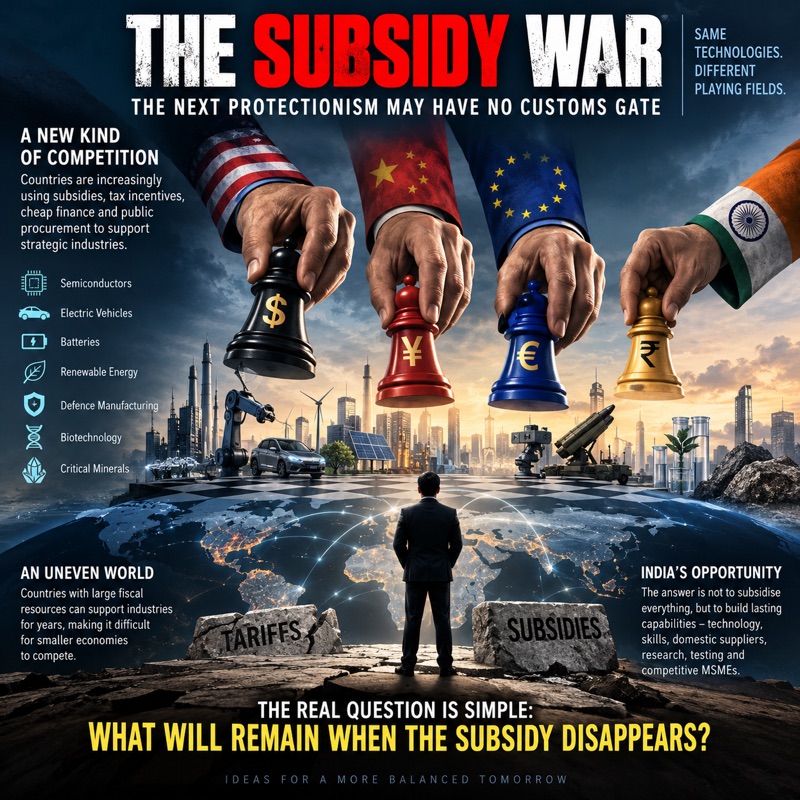
The Subsidy War: When Governments Become Competitors

For much of the last three decades, the visible face of protectionism was the tariff. Governments raised duties, imposed quotas or restricte...