
Beyond Tit-for-Tat: The Case for Introspection
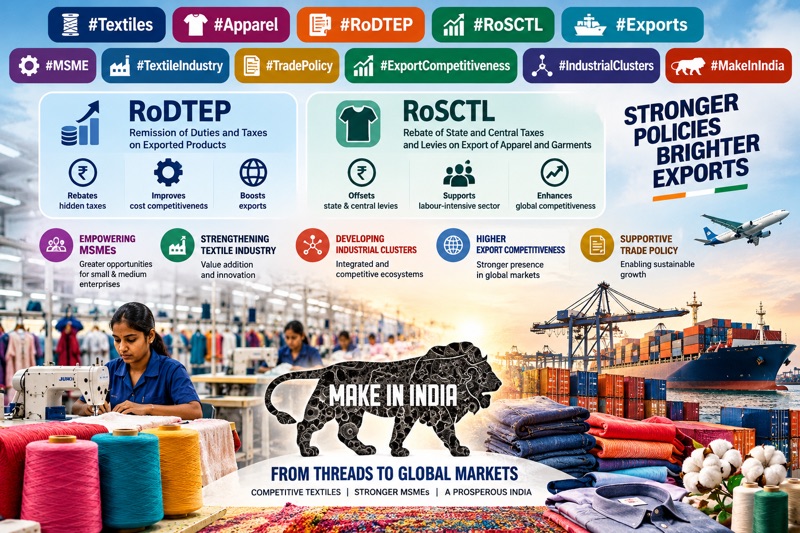
India’s MSMEs account for nearly 30% of GDP and employ over 110 million people. Yet, they remain heavily dependent on traditional production models, often lacking the technological sophistication and scale needed to compete in a tariff-heavy environment. Retaliatory tariffs against other economies may offer temporary relief to exporters, but they do little to address structural inefficiencies.
Instead, the present situation demands a candid self-assessment—examining productivity gaps, supply chain weaknesses, and the over-reliance on a narrow range of export markets.
Manufacturing: From Survival to Global Competitiveness
India’s manufacturing sector, despite ambitious initiatives like Make in India and the Production-Linked Incentive (PLI) schemes, still contributes only about 17% to GDP—far behind its potential and global benchmarks. The tariff shock should be viewed not just as a market-access hurdle but as a reminder to diversify exports, enhance quality standards, and move up the value chain.
Key measures could include:
Technology infusion for MSMEs through subsidized access to advanced machinery.
Cluster-based industrial upgrades to improve economies of scale.
Ease-of-compliance reforms to reduce bureaucratic friction.
Turning the Tariff Challenge into a Reform Opportunity
History shows that external shocks often accelerate domestic transformation. For example, India’s 1991 economic crisis forced structural liberalization, unlocking decades of growth. Today’s tariff environment offers a similar moment. If approached strategically, it can:
Push MSMEs toward product innovation and diversification.
Encourage domestic value addition to reduce import dependence in manufacturing.
Strengthen trade diplomacy, using reforms as leverage in negotiations.
A Balanced Path Forward
Rather than engaging in aggressive tariff retaliation that risks escalating into trade wars, India should:
1. Reform domestically to boost resilience.
2. Expand trade partnerships beyond traditional markets.
3. Use the crisis narrative to mobilize both public and private investment into manufacturing competitiveness.
Tariffs, while painful in the short term, can be powerful drivers of change if they prompt the right policy responses. By focusing on MSME modernization, manufacturing efficiency, and long-term competitiveness, India can transform a protectionist challenge into a springboard for sustainable growth. The choice is between reactionary measures that offer temporary relief and strategic reforms that deliver lasting strength—and the latter is the path worth taking.
#TariffChallenge
#MSMEReform
#ManufacturingCompetitiveness
#TradeDiplomacy
#ValueAddition
#EconomicResilience
#ProductInnovation
#ExportDiversification
#PolicyReforms
#GlobalCompetitiveness




No comments:
Post a Comment