
This shift marks a structural change comparable to the trade liberalisation waves of the 1990s or the China-centric supply chain expansion of the 2000s. The difference is that this time, the driver is not tariffs or wages, but embedded emissions.
From Environmental Externality to Cost Variable
Historically, carbon emissions were classic externalities—economically real but financially invisible. That invisibility allowed carbon-heavy manufacturing to flourish as long as energy was cheap and regulations uneven. CBAM-style rules fundamentally alter this equation by pricing carbon at the border, converting emissions into a measurable and monetisable cost.
What matters now is not just how efficiently a factory produces, but how cleanly it produces. A tonne of steel, cement, aluminium, or chemicals carries with it a carbon signature that increasingly determines market access, pricing power, and buyer preference. In effect, carbon intensity is becoming a shadow tariff, embedded in supply chains rather than imposed at customs desks.
Factory Location in the Age of Carbon Geography
As carbon pricing spreads across jurisdictions and procurement rules tighten, factory location decisions are being re-evaluated through a new lens: carbon geography. Proximity to low-carbon electricity—renewables, nuclear, or hydro—now rivals proximity to ports and highways. Regions with cleaner grids, reliable green power contracts, and transparent emissions accounting gain a structural advantage.
This is already reshaping industrial clustering. Instead of chasing the lowest labour cost, firms are increasingly clustering near decarbonised energy ecosystems, green hydrogen hubs, and circular-material zones. Over time, this may create a bifurcated global manufacturing system: one segment optimised for low-cost domestic markets, and another optimised for low-carbon export markets.
Product Design as a Carbon Strategy
Carbon rules are not only influencing where factories are built, but also what they produce and how products are designed. Lightweighting, modularity, recyclability, and material substitution are becoming strategic decisions rather than engineering afterthoughts. Design teams are now required to think in lifecycle terms—raw material extraction, processing, transport, usage, and end-of-life recovery.
This shift rewards firms that integrate carbon accounting early in the design stage. Products engineered for lower embedded emissions enjoy longer shelf lives in regulated markets and face fewer disruptions as standards tighten. Over time, carbon-efficient design becomes a form of intellectual property, difficult to replicate and increasingly valuable.
Green Procurement and the Power of Buyers
Government and large institutional buyers are emerging as powerful enforcers of carbon discipline. Green procurement rules—covering infrastructure, defence, transport, and public utilities—create guaranteed demand for low-carbon products. Unlike carbon taxes, which penalise behaviour, procurement rules reward compliance, accelerating industrial transformation without explicit bans.
Once large buyers move, private supply chains follow. Tier-1 suppliers pass carbon requirements downstream, forcing SMEs and component manufacturers to adapt or exit premium markets. The result is a cascading effect where carbon discipline travels through value chains, reshaping industrial ecosystems from the top down.
A Historical Parallel: Standards as Silent Trade Policy
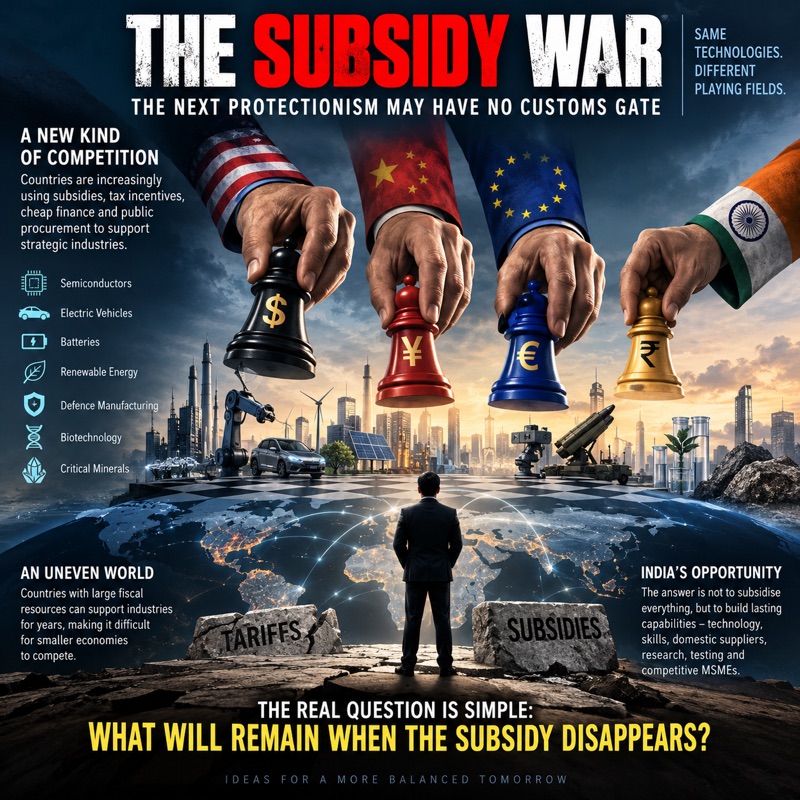
There is a historical echo here. Just as technical standards, safety norms, and quality certifications once quietly reshaped global trade, carbon standards are now emerging as the next generation of industrial governance. Countries that set the rules shape markets without overt protectionism; countries that fail to adapt risk being locked into low-value, high-emission segments of global production.
The critical difference is speed. Climate timelines compress adjustment windows. Unlike earlier regulatory shifts, firms have less time to amortise old assets or relocate gradually. This raises the risk of stranded industrial capacity and uneven development, particularly for late-industrialising economies.
The Futuristic Outlook: Carbon as Industrial Strategy
Looking ahead, carbon rules will increasingly blur the line between climate policy and industrial policy. Nations that align decarbonisation with manufacturing competitiveness—through grid reform, green finance, and emissions-linked incentives—will attract the next wave of investment. Those that treat carbon rules as external impositions will struggle with declining export relevance.
In this emerging order, carbon efficiency is not a moral advantage; it is an economic one. The factory of the future will be judged not just by output and cost, but by its emissions profile, data transparency, and adaptability to tightening rules. Industrial success will depend less on scale alone and more on carbon intelligence embedded across design, production, and logistics.
The quiet truth is this: carbon rules are not ending industrialisation—they are redefining it. And the map of global manufacturing is being redrawn accordingly.
#CarbonCompetitiveness #CBAM #GreenManufacturing #IndustrialLocation #EmbeddedEmissions #GreenProcurement #LowCarbonSupplyChains #ProductDesign #CarbonPricing #FutureIndustry




No comments:
Post a Comment